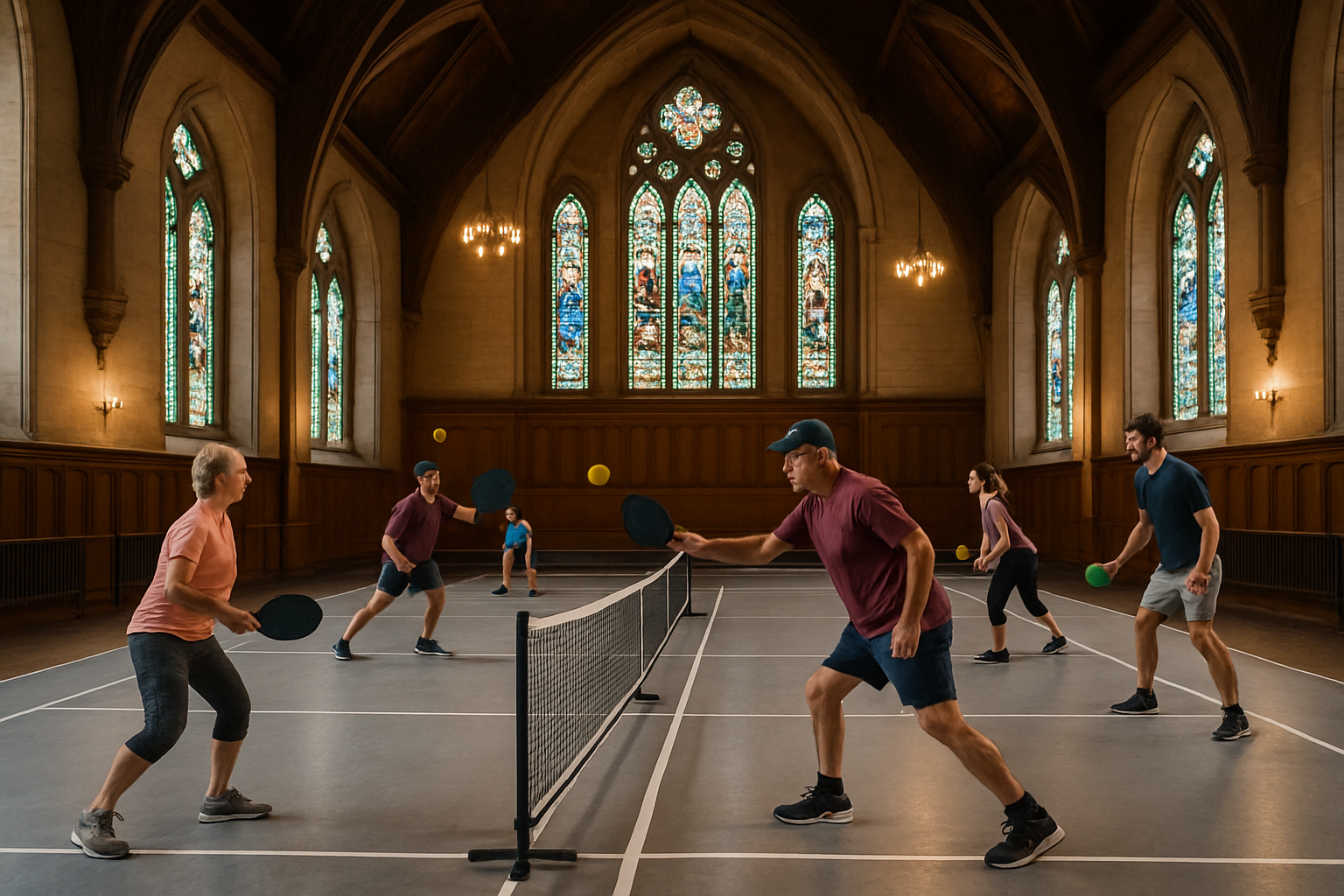
Three Quebec investors say they've found a way to get people back to church — transforming one into a pickleball court. But not everyone is convinced this could be a sustainable solution for the province's many empty churches.
The innovative approach comes as churches across Quebec face unprecedented challenges with declining membership and mounting financial pressures. Jean-Martin Bisson, co-owner of Amen Pickleball, stands proudly in front of a converted church interior where the fastest-growing sport in North America has found an unexpected home among sacred architecture.
The Crisis Facing Quebec Churches
Quebec's religious landscape has undergone dramatic transformation over recent decades, mirroring broader secularization trends observed across developed nations. The province's churches are experiencing steep membership declines, creating financial vulnerabilities that threaten their continued operation and community service roles.
This crisis reflects patterns documented globally, including Germany's unprecedented religious exodus where approximately 1.2 million people left Catholic and evangelical church communities in 2025, representing one of the steepest membership declines in German religious history. Similar trends have emerged across France, Netherlands, Belgium, and Scandinavian countries, suggesting Quebec's challenges are part of a broader European-influenced secularization movement.
The financial implications are severe. Reduced congregation sizes mean decreased donations, threatening not only regular operations but also the extensive social service networks many churches provide, including community programs, food banks, and gathering spaces that have served Quebec communities for generations.
Pickleball: The Fastest-Growing Sport Meets Sacred Spaces
Pickleball, a paddle sport combining elements of tennis, badminton, and ping-pong, has exploded in popularity across North America. The sport's appeal spans generations, offering low-impact recreation suitable for players from teenagers to seniors, making it an ideal community-building activity.
The conversion process involves installing professional courts within church interiors, utilizing high vaulted ceilings that provide adequate clearance for gameplay while preserving much of the original architectural character. The sacred atmosphere, combined with recreational activity, creates a unique environment that attracts both traditional churchgoers and new community members.
"We're bringing people back to these sacred spaces, just in a different way,"
— Jean-Martin Bisson, Co-owner, Amen Pickleball
The business model generates revenue through court rentals, membership fees, equipment sales, and organized tournaments. For struggling churches, this represents a potential lifeline that maintains community function while addressing immediate financial pressures.
Community Response and Cultural Considerations
The pickleball church concept has generated mixed reactions within Quebec communities. Supporters emphasize the preservation of community gathering spaces and the innovative approach to maintaining religious buildings that might otherwise face closure or demolition. The intergenerational nature of pickleball has created new social connections within these traditional sacred spaces.
However, some community members express concerns about the commercialization of religious spaces and question whether recreational activities align with the spiritual purposes these buildings were intended to serve. Traditional parishioners worry about the loss of contemplative atmosphere essential to religious practice.
Cultural considerations are particularly important in Quebec, where religious heritage remains deeply embedded in community identity despite declining active participation. The balance between preservation and adaptation requires sensitive navigation of historical significance while addressing contemporary community needs.
Examining Long-Term Sustainability
While the pickleball court conversion offers immediate financial relief, experts question whether this approach provides sustainable long-term solutions for Quebec's broader church crisis. Several factors influence viability:
- Market Saturation: As more facilities convert to pickleball courts, competition may reduce individual revenue potential
- Maintenance Costs: Historic church buildings often require specialized, expensive maintenance that recreational revenue may not fully cover
- Demographic Trends: Continued population shifts toward urban centers may limit rural church conversion success
- Alternative Uses: Other communities have successfully converted churches to cultural centers, housing, or educational facilities
The success of church-to-recreational facility conversions depends heavily on local demographics, existing recreational infrastructure, and community support. Areas with limited sports facilities may see greater success than regions with abundant recreational options.
International Precedents and Alternative Approaches
Quebec's pickleball church initiative reflects broader global trends in religious building adaptation. In the Netherlands, former churches have become concert halls, restaurants, and community centers. The United Kingdom has seen churches converted into climbing walls, breweries, and artist studios, often maintaining architectural integrity while serving new purposes.
Germany's church tax system provides insights into institutional adaptation challenges, where formal membership requirements create precise tracking of religious demographic shifts. Even with systematic funding mechanisms, German churches face parish closures and operational consolidation due to declining participation.
Successful adaptations typically require:
- Community engagement throughout the planning process
- Respect for architectural and cultural heritage
- Sustainable business models beyond initial novelty appeal
- Integration with existing community service functions
Economic and Social Impact Assessment
The economic implications of church conversions extend beyond immediate rental revenue. Successful recreational facilities can attract tournaments, leagues, and events that benefit local businesses through increased foot traffic. The social impact includes providing accessible recreation for aging populations and creating new community connections across traditional demographic boundaries.
However, the loss of traditional church functions — including pastoral care, spiritual counseling, and faith-based community support — represents significant social costs that recreational facilities cannot fully replace. These services often support vulnerable community members through life challenges, bereavement, and spiritual needs.
The conversion approach works best when integrated with broader community development strategies rather than viewed as isolated solutions to financial problems. Successful examples maintain some spiritual or community service functions alongside recreational activities.
Future Implications for Religious Institutions
The pickleball church experiment reflects broader questions about religious institution adaptation in increasingly secular societies. Success may depend on willingness to reimagine sacred space utilization while maintaining core spiritual and community service missions.
Future sustainability requires addressing fundamental demographic and cultural changes driving religious decline. This includes engaging younger generations through contemporary approaches while preserving meaningful spiritual traditions. Technology integration, community outreach innovation, and flexible service delivery may prove more effective long-term strategies than facility conversion alone.
The Quebec pickleball initiative represents one innovative response to religious institution challenges, but comprehensive solutions likely require multifaceted approaches addressing spiritual, social, and financial sustainability simultaneously. Success depends on maintaining authentic community connection while adapting to contemporary recreational and social needs.
Looking Ahead: Lessons for Other Communities
As Quebec's pickleball church experiment unfolds, other communities facing similar challenges will closely monitor results. The approach offers valuable insights into creative problem-solving for religious building preservation while addressing contemporary community recreation needs.
Key success factors emerging from early implementation include strong community consultation, respect for architectural heritage, sustainable financial planning, and integration with existing community services. The model may prove most effective in communities with limited recreational infrastructure and strong social cohesion.
Whether pickleball courts can truly "save" struggling churches remains an open question. The answer likely depends on each community's specific needs, demographics, and commitment to maintaining sacred spaces as vital community assets in evolving forms. The Quebec experiment represents innovative thinking about institutional adaptation that may inspire similar creative approaches across different cultural and geographic contexts.