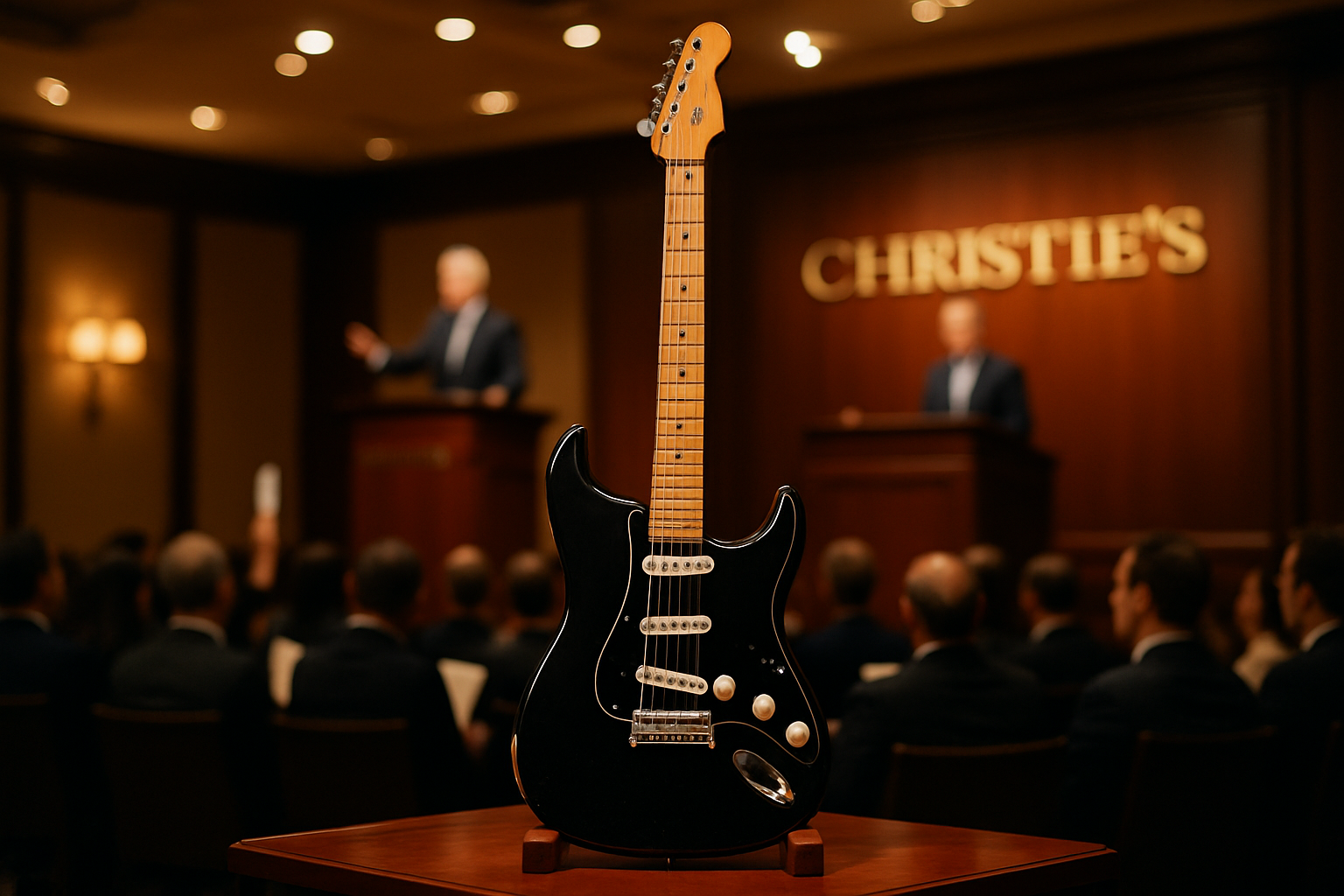
David Gilmour's legendary black Fender Stratocaster, known as "The Black Strat," shattered auction records by selling for an unprecedented $14.55 million, making it the most expensive guitar ever sold and marking a watershed moment in the music memorabilia market.
The historic sale, which took place at Christie's in New York as part of The Jim Irsay Collection: Hall of Fame auction on Thursday, March 13, 2026, obliterated the previous record of $6 million set in 2020 by a Kurt Cobain guitar from Nirvana. The Pink Floyd guitarist's iconic instrument commanded more than double the previous record, signaling a dramatic transformation in how the market values musical heritage.
The Black Strat: A Musical Legend
Gilmour's black Fender Stratocaster earned its legendary status through decades of use on some of rock music's most iconic recordings. The instrument was instrumental in creating the distinctive guitar sounds that defined Pink Floyd's most celebrated works, contributing to the band's status as one of the most influential progressive rock groups in history.
The guitar's provenance and its role in shaping the soundscape of albums that have sold hundreds of millions of copies worldwide contributed to its extraordinary valuation. Music historians and collectors have long recognized the instrument as one of the most significant guitars in rock history, making its record-breaking sale price a reflection of both its musical importance and cultural impact.
Beatles Piano Fetches Historic Price
The Christie's Hall of Fame auction also featured another remarkable lot: the piano used by John Lennon to compose Beatles songs, which fetched a record amount for Beatles memorabilia. While specific details of the final price were not disclosed in preliminary reports, the instrument's significance as a creative tool for one of the most influential songwriters in popular music history made it one of the most anticipated lots in the sale.
The piano represents a tangible connection to the creative process behind songs that changed the course of popular music, making it an invaluable piece for collectors seeking authentic artifacts from music's golden age.
Context of a Booming Market
These record-breaking sales occur within a broader context of unprecedented growth in the music memorabilia market. Earlier memory research indicates that February 2026 had already seen anticipation building for major Beatles instruments auctions, with industry experts predicting millionaire-figure results for authentic pieces with clear provenance.
The success of these auctions reflects several converging trends: the maturation of music memorabilia as a legitimate alternative investment class, the passing of many legendary musicians creating scarcity in authentic pieces, and the willingness of high-net-worth collectors to pay premium prices for cultural artifacts with documented historical significance.
Investment-Grade Collectibles
The extraordinary prices achieved demonstrate how music memorabilia has evolved from nostalgic collectibles to sophisticated investment vehicles. Similar to the $16.5 million Pokemon card sale by Logan Paul earlier in 2026, these transactions validate collectibles as legitimate assets attracting institutional interest and sophisticated investors.
The 142% increase over the previous guitar auction record suggests strong market confidence in musical instruments as stores of cultural and financial value. Industry analysts note that authentic instruments with clear provenance and historical significance are increasingly viewed as irreplaceable assets in an era of digital reproduction.
The Jim Irsay Collection Legacy
The Christie's Hall of Fame auction represents a significant moment for The Jim Irsay Collection, one of the world's most comprehensive assemblages of music and sports memorabilia. Indianapolis Colts owner Jim Irsay has spent decades assembling artifacts that tell the story of American cultural history through its most iconic objects.
The decision to offer these pieces at auction provides collectors and institutions with rare access to museum-quality artifacts while establishing new benchmarks for the market. The success of the sale validates Irsay's vision of music memorabilia as cultural patrimony deserving of institutional-level preservation and study.
Market Implications and Future Trends
The record-breaking results send strong signals about the future direction of the music memorabilia market. With authentic pieces from legendary artists becoming increasingly scarce, experts predict continued appreciation for instruments and artifacts with documented historical significance.
The success also highlights the importance of provenance and authentication in determining value. Both the Gilmour guitar and Lennon piano benefited from clear chains of ownership and documentation of their roles in creating beloved music, factors that are becoming increasingly crucial as the market matures.
"The extraordinary prices achieved for these instruments demonstrate that the market recognizes music memorabilia as cultural artifacts equivalent to fine art or historical documents."
— Music Industry Analyst
Cultural Preservation Through Private Collections
The high prices paid by private collectors raise important questions about cultural preservation and public access to musical heritage. While these record sales ensure the instruments will be preserved for future generations, they also place important cultural artifacts in private hands rather than public institutions.
This trend parallels developments in the art market, where private collectors increasingly compete with museums for historically significant pieces, sometimes ensuring better preservation but limiting public access to cultural treasures.
Global Context and Cultural Impact
The timing of these record sales coincides with a broader cultural renaissance in 2026, marked by increased appreciation for authentic cultural experiences and heritage preservation. The success of traditional festivals, art exhibitions, and cultural initiatives worldwide suggests growing recognition of culture as essential infrastructure for human flourishing.
In this context, the music memorabilia market serves as both an economic indicator and a measure of society's commitment to preserving its cultural legacy. The willingness to pay premium prices for these instruments reflects broader values about the importance of musical heritage and the role of private collectors in cultural preservation.
Looking Forward
As the music memorabilia market continues to mature, several trends are likely to shape its future development. Increased emphasis on authentication and provenance, growing recognition of musical instruments as investment-grade assets, and the ongoing scarcity of authentic pieces from legendary artists all point toward continued market strength.
The success of the March 2026 Christie's sale establishes new benchmarks that will influence future valuations and market participation. For collectors, investors, and cultural institutions, these results provide both validation of the market's potential and guidance for future acquisition strategies.
The record-breaking sales of David Gilmour's Black Strat and John Lennon's piano mark more than just financial milestones—they represent recognition of musical instruments as irreplaceable cultural artifacts worthy of the highest preservation and valuation standards. As the market continues to evolve, these transactions will likely be remembered as pivotal moments in the transformation of music memorabilia from nostalgic collectibles to essential components of cultural heritage preservation.