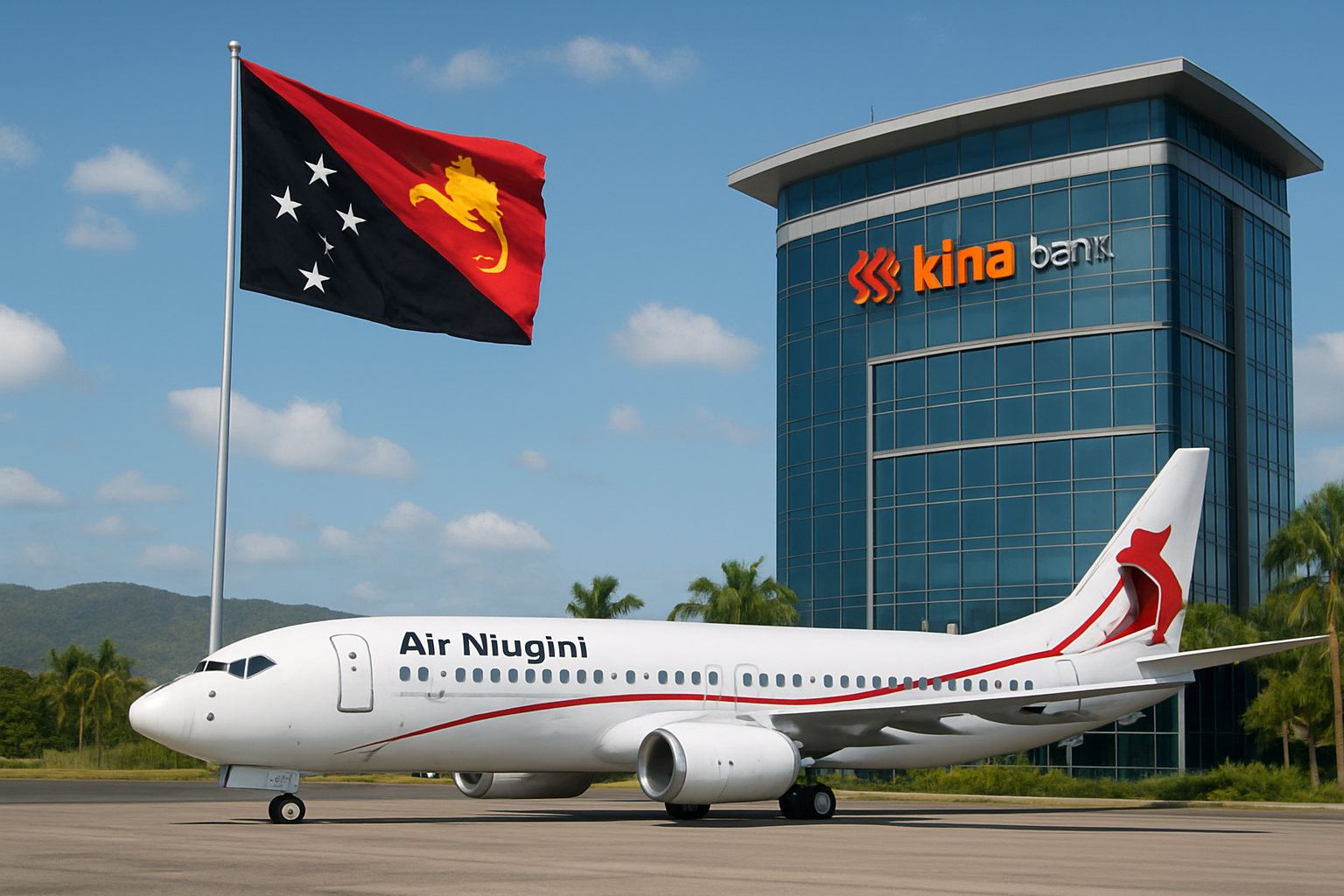
Papua New Guinea's aviation and banking sectors are charting ambitious new courses in March 2026, with Air Niugini resuming critical domestic services while embracing international competition, and Kina Bank demonstrating resilience amid global financial compliance challenges that have placed the nation under increased scrutiny.
The developments come as the Pacific nation continues its infrastructure modernization efforts, building on previous successes while addressing ongoing challenges in connectivity and financial sector regulation that are crucial to its economic development.
Air Niugini's Strategic Revival and Competitive Welcome
National flag carrier Air Niugini has resumed flights to Wewak's Boram Airport, restoring vital connectivity to the East Sepik provincial capital after previous service disruptions. The resumption represents a significant milestone in the airline's operational recovery and commitment to serving Papua New Guinea's remote communities across its challenging geography of scattered islands and mountainous terrain.
More striking is Air Niugini's confident response to Qantas's entry into the lucrative Port Moresby-Sydney route, traditionally dominated by the Papua New Guinea carrier. Rather than viewing the Australian giant's arrival as a threat, Air Niugini leadership has publicly welcomed what they term a "product war," asserting that their national flag carrier's service offerings will outperform the competition.
"We relish this competition because it will demonstrate the quality and value of our national airline's product,"
— Air Niugini Executive, responding to Qantas route competition
This competitive confidence reflects broader changes in Papua New Guinea's aviation landscape, building on the Civil Aviation Development Investment Program (CADIP) Phase 3 initiatives that have seen significant improvements to key airports including Mt. Hagen Kagamuga Airport upgrades and the ongoing Kiunga Airport terminal construction, which has reached 30% completion.
Infrastructure Challenges and Funding Realities
Despite these positive developments, Papua New Guinea continues to grapple with substantial infrastructure funding challenges. Works Secretary Gibson Holemba has consistently highlighted that the Connect PNG program remains severely underfunded, despite its vital importance for national integration across the country's 800+ languages and remote geographic barriers.
The funding shortfall represents a critical challenge for a nation where connectivity is not just economic necessity but essential for national unity. Papua New Guinea's unique geography—featuring remote mountain valleys and scattered islands—makes infrastructure development particularly complex and expensive, requiring innovative financing approaches and sustained political commitment.
However, the aviation sector's recent progress, including Air Niugini's operational improvements and route expansions, demonstrates the potential benefits of strategic infrastructure investment in connecting communities and supporting economic development.
Banking Sector Navigates Grey-Listing Waters
In the financial sector, Kina Bank has moved to address concerns about Papua New Guinea's placement on international grey-listing for anti-money laundering and counter-terrorism financing compliance. The bank's leadership expressed confidence that the grey-listing status would not materially affect its operational performance, signaling resilience in the face of enhanced international scrutiny.
Grey-listing by the Financial Action Task Force (FATF) places countries under increased monitoring for deficiencies in their anti-money laundering and counter-terrorism financing frameworks. For Papua New Guinea, this designation requires strengthened oversight mechanisms while ensuring that legitimate banking operations and international trade continue unimpeded.
The government has responded by strengthening banking oversight protocols while implementing protective measures for small businesses and everyday customers who form the backbone of the domestic economy. These balanced approaches aim to address international compliance concerns without disrupting essential financial services for Papua New Guinea's citizens and businesses.
Broader Economic Context and Regional Integration
These developments occur within the broader context of Papua New Guinea's ongoing economic transformation and regional integration efforts. The aviation improvements support the country's tourism and business connectivity goals, while banking sector reforms align with international standards that facilitate trade and investment flows.
The Pacific nation's strategic location positions it as a potential hub for regional connectivity, supporting broader Asia-Pacific economic integration objectives. Air Niugini's competitive positioning against international carriers like Qantas demonstrates growing confidence in Papua New Guinea's ability to compete in regional aviation markets.
Furthermore, the banking sector's proactive approach to compliance challenges reflects institutional maturation and commitment to meeting international standards while protecting domestic economic interests. This balance is crucial for maintaining access to global financial systems while serving local development needs.
Challenges and Opportunities Ahead
Looking forward, Papua New Guinea faces both significant challenges and promising opportunities. The persistent underfunding of connectivity programs like Connect PNG highlights the ongoing tension between infrastructure needs and fiscal constraints. However, the success of targeted investments in aviation infrastructure demonstrates the potential returns from strategic development initiatives.
In the banking sector, successfully navigating the grey-listing period will require sustained compliance efforts and potentially significant regulatory improvements. However, Kina Bank's confident outlook suggests that Papua New Guinea's financial institutions are prepared to meet these challenges while continuing to serve their customers effectively.
The aviation sector's competitive dynamics, exemplified by Air Niugini's welcoming stance toward Qantas competition, could drive service improvements and innovation that benefit travelers while strengthening Papua New Guinea's position in regional aviation networks.
International Context and Global Trends
These developments align with broader global trends in aviation recovery and financial sector compliance. The international aviation industry has seen unprecedented disruptions in recent months, making stable, competitive services like those offered by Air Niugini increasingly valuable for maintaining regional connectivity.
Similarly, enhanced financial compliance standards worldwide have placed pressure on banking systems in emerging economies, making Papua New Guinea's proactive approach to addressing grey-listing concerns particularly significant for maintaining international economic relationships.
The country's experience navigating these dual challenges in aviation and banking provides insights for other Pacific island nations and emerging economies facing similar development and compliance pressures in an increasingly interconnected global economy.
As Papua New Guinea continues to balance domestic development needs with international standards and competitive pressures, the resilience demonstrated by Air Niugini and Kina Bank suggests a maturing economy capable of adapting to global challenges while pursuing its development objectives. The coming months will test whether these positive indicators translate into sustained progress across both critical sectors.