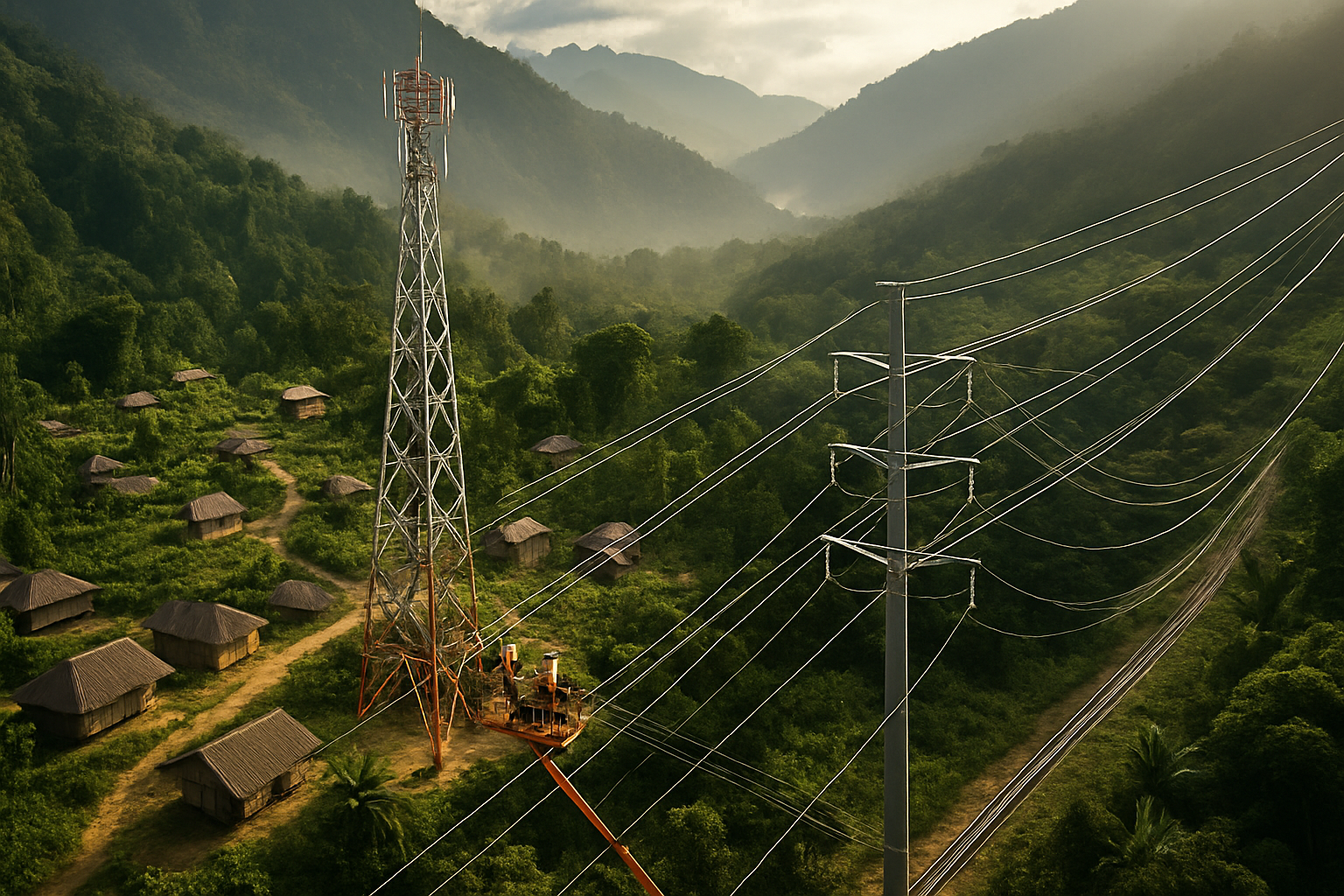
Papua New Guinea is grappling with a critical infrastructure funding shortfall that has left remote communities isolated while the government announces a K120 million power investment to address chronic blackouts in its second-largest city, exposing the broader challenges of connecting the Pacific nation's scattered populations.
The dichotomy between urgent urban infrastructure needs and rural connectivity gaps was starkly illustrated this week as Papua New Guinea's Works Secretary Gibson Holemba revealed that the Connect PNG program has been severely underfunded, while separate announcements confirmed major power infrastructure investments targeting Lae's persistent electricity crisis.
Connect PNG Program Faces Critical Funding Shortfall
Secretary Holemba's admission that the Connect PNG program has been chronically underfunded highlights the government's struggle to bridge infrastructure gaps across one of the world's most geographically challenging nations. The program, designed to enhance connectivity between remote communities and urban centers, has failed to receive adequate resources despite its critical importance for national development.
Papua New Guinea's unique geography—featuring over 800 languages spoken across remote mountain valleys and scattered islands—makes infrastructure development particularly complex and expensive. Traditional approaches to connectivity have proven insufficient for reaching communities that remain largely isolated from modern communications and transportation networks.
K120 Million Power Investment Targets Urban Crisis
While rural connectivity struggles with funding constraints, the government has committed K120 million to address Lae's chronic power shortages. The industrial hub, Papua New Guinea's second-largest city and crucial economic center, has suffered from persistent blackouts that have hampered business operations and quality of life for hundreds of thousands of residents.
The power projects represent a significant investment in urban infrastructure reliability, but the contrast with rural underfunding illustrates the difficult choices facing a nation with limited resources and vast infrastructure needs. Lae's economic importance as a manufacturing and port center has likely influenced the priority given to its power infrastructure, while remote communities continue waiting for basic connectivity improvements.
Global Context of Remote Infrastructure Development
Papua New Guinea's infrastructure challenges reflect broader global patterns affecting remote and developing regions worldwide. Recent international developments demonstrate both the potential and the obstacles facing infrastructure investment in challenging environments.
The global infrastructure surge of 2026 has seen unprecedented investment across continents, with Vietnam committing $120 billion to expressways, Kenya accelerating major projects, and multiple nations pursuing regional connectivity initiatives. However, these developments have primarily focused on economically viable corridors rather than remote area development.
"Infrastructure development in remote areas requires innovative financing models and long-term commitment beyond traditional economic calculations."
— Infrastructure Development Expert
Regional Integration vs Remote Access
The contrast between Papua New Guinea's infrastructure priorities and broader regional development patterns highlights a fundamental tension in development planning. While regional integration projects like the African Continental Free Trade Area (AfCFTA) and Asian highway networks receive substantial international support, remote area connectivity often lacks similar backing.
Papua New Guinea's position in the Pacific region compounds these challenges, as island nations face unique obstacles in achieving connectivity. Unlike continental infrastructure projects that can leverage cross-border economic benefits, Pacific island connectivity projects must justify substantial investments for relatively small populations scattered across vast oceanic distances.
Technology Solutions for Connectivity Challenges
Recent technological developments offer potential solutions for Papua New Guinea's remote connectivity challenges. Satellite internet systems, mobile telecommunications networks, and innovative power generation technologies designed for challenging environments could provide alternatives to traditional infrastructure approaches.
The global technology sector's focus on emerging markets has produced solutions specifically targeting areas where conventional infrastructure deployment is economically unfeasible. These technologies could enable Papua New Guinea to leapfrog traditional infrastructure limitations while addressing the chronic underfunding identified by government officials.
Economic Development Implications
The infrastructure funding disparity between urban centers like Lae and remote communities has significant implications for Papua New Guinea's economic development trajectory. While reliable power in industrial centers supports manufacturing and business development, connectivity gaps in rural areas limit agricultural modernization, education access, and healthcare delivery.
International development patterns suggest that balanced infrastructure investment, addressing both urban efficiency and rural connectivity, produces more sustainable long-term growth. Countries achieving successful development outcomes typically maintain infrastructure investment ratios that serve both immediate economic centers and longer-term national integration objectives.
Climate Resilience and Infrastructure Planning
Papua New Guinea's infrastructure challenges are compounded by climate vulnerability, as the Pacific region faces increasing extreme weather events that threaten both existing infrastructure and future development plans. The 2025 temperature records, with Papua New Guinea confirming it as one of the warmest years in the Western Pacific, emphasize the need for climate-resilient infrastructure approaches.
Climate adaptation requirements add complexity and cost to infrastructure projects, particularly in remote areas where access for maintenance and repairs is already challenging. The government's infrastructure planning must increasingly incorporate climate resilience considerations alongside traditional connectivity and power reliability objectives.
International Cooperation and Financing
Papua New Guinea's infrastructure challenges align with global trends toward international cooperation in infrastructure financing. Recent developments including the Asian Infrastructure Investment Bank partnerships and regional development initiatives suggest opportunities for external support in addressing connectivity gaps.
The country's strategic location in the Pacific region positions it as potentially significant for regional connectivity projects, particularly those linking Asia-Pacific economies. International partners increasingly recognize infrastructure connectivity as essential for regional stability and economic integration, potentially creating opportunities for financing remote area development.
Implementation Challenges and Opportunities
The revelation of Connect PNG underfunding highlights broader implementation challenges facing Papua New Guinea's infrastructure sector. Coordination between different infrastructure priorities, sustainable financing mechanisms, and technical capacity requirements all influence project success rates.
However, recent global infrastructure success stories demonstrate that focused investment, international cooperation, and innovative technology adoption can overcome challenging geographical and financial constraints. Papua New Guinea's approach to balancing immediate urban needs with longer-term connectivity objectives will influence development outcomes for years to come.
Future Development Trajectory
The contrast between substantial urban power investment and underfunded rural connectivity programs illustrates the complex choices facing Papua New Guinea's development planning. While the K120 million Lae power projects address immediate economic center needs, the broader challenge of national integration through comprehensive infrastructure connectivity remains unresolved.
Success in addressing these challenges will likely require innovative financing approaches, enhanced international cooperation, and technology solutions adapted to Papua New Guinea's unique geographical and economic circumstances. The government's recognition of funding shortfalls represents an important first step toward developing more comprehensive infrastructure strategies that serve both urban efficiency and national integration objectives.