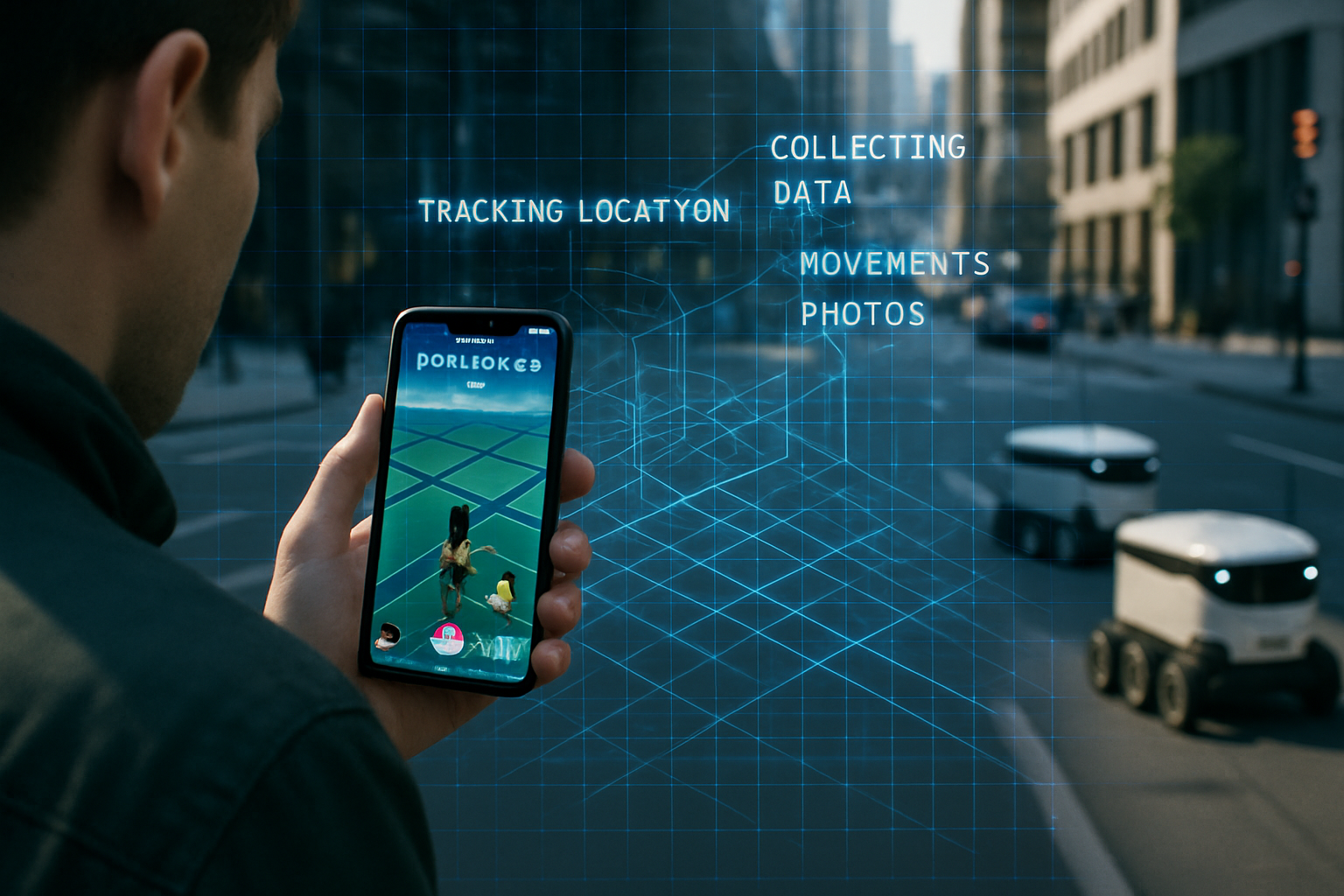
The popular mobile game Pokemon Go has transformed into a sophisticated data collection operation, with developer Niantic using millions of player photographs and precise location data to build comprehensive virtual world models designed to train autonomous delivery robots and navigation systems.
According to investigations by Austrian media outlet derStandard.at, what began as an augmented reality gaming experience has evolved into what privacy experts are calling "one of the largest crowdsourced mapping and data collection operations in digital history," affecting hundreds of millions of players worldwide who may be unaware their gaming activities are contributing to commercial AI training datasets.
From Gaming Platform to Data Goldmine
Niantic, the company behind Pokemon Go, has systematically leveraged the game's massive user base to create detailed three-dimensional maps of urban environments, parks, landmarks, and previously unmapped locations. Players, while hunting for virtual Pokemon creatures, unknowingly provide high-resolution photographs, precise GPS coordinates, and movement patterns that contribute to what the company describes as building "a virtual world model."
The scope of data collection extends far beyond simple gameplay metrics. Every photo taken through the Pokemon Go camera, every location visited, and every route traveled becomes part of a comprehensive dataset that Niantic processes using advanced machine learning algorithms. This information is then used to train autonomous systems, particularly delivery robots and navigation technologies, to understand and navigate real-world environments.
Privacy Concerns Mount Globally
The revelation comes amid an unprecedented global digital privacy crisis. Cyprus Data Protection Commissioner Maria Christofidou has repeatedly warned that "personal data has become the currency of the digital age," highlighting how seemingly innocent applications can create significant privacy vulnerabilities.
Privacy advocates express particular concern about the lack of transparent disclosure regarding how Pokemon Go data is being utilized. Many players downloaded the game for entertainment purposes without understanding they were contributing to commercial AI training operations that could have far-reaching implications for autonomous vehicle development, surveillance systems, and location-based services.
"Players believed they were simply catching virtual creatures, but they were actually mapping the world for corporate AI systems," said digital rights researcher Dr. Sarah Hoffman. "This represents a fundamental breach of trust between gaming platforms and users."
— Dr. Sarah Hoffman, Digital Rights Institute
The Technology Behind the Data Collection
Niantic's approach represents a sophisticated fusion of crowdsourced data collection and artificial intelligence. The company processes millions of photographs daily through computer vision algorithms that can identify objects, architectural features, street layouts, and environmental characteristics with remarkable precision.
This technology enables the creation of detailed digital twins of physical locations, providing autonomous systems with the environmental understanding necessary for safe navigation. Delivery robots, in particular, benefit from this data by learning to identify obstacles, understand pedestrian patterns, and navigate complex urban environments.
The Pokemon Go platform has proven particularly effective for data collection because players naturally explore diverse environments, from urban centers to suburban neighborhoods to rural locations, often venturing into areas that traditional mapping services might overlook.
Global Regulatory Response
The Pokemon Go data collection controversy emerges during a period of intense regulatory scrutiny of technology platforms. European nations are implementing unprecedented digital governance measures, with Spain leading the charge through criminal executive liability frameworks that could hold technology executives personally accountable for privacy violations.
The European Union has initiated comprehensive investigations into platform data collection practices, with potential penalties reaching 6% of global revenue for companies found in violation of privacy regulations. The Pokemon Go case may serve as a critical test for these new regulatory frameworks.
Meanwhile, alternative approaches are emerging globally. Malaysia emphasizes parental responsibility and digital literacy campaigns, while Oman has launched "Smart tech, safe choices" educational initiatives, representing different philosophies about digital governance and user protection.
Technical Infrastructure Challenges
The controversy unfolds against a backdrop of significant technical infrastructure constraints. The global semiconductor shortage has created a sixfold increase in memory chip prices, affecting Samsung, SK Hynix, and Micron production capabilities. This "critical vulnerability window" is expected to persist until 2027 when new fabrication facilities come online.
These constraints force companies like Niantic to maximize the efficiency of their data collection and processing operations, potentially intensifying their reliance on crowdsourced information from gaming platforms. The economic pressure to extract maximum value from existing datasets may contribute to more aggressive data utilization practices.
Industry-Wide Implications
The Pokemon Go data collection model represents broader trends in the technology industry, where seemingly unrelated services increasingly serve multiple commercial purposes. Gaming platforms, social media applications, and mobile services are evolving into comprehensive data collection operations that feed artificial intelligence systems across various industries.
This trend has contributed to what industry analysts term the "SaaSpocalypse" - a massive disruption in traditional software markets as AI-powered alternatives eliminate hundreds of billions in market capitalization from established technology companies.
Consumer trust erosion is already evident, with companies like Coupang experiencing a 3.2% user drop following data privacy concerns. The Pokemon Go revelation may accelerate user migration toward privacy-focused alternatives and increase demand for transparent data handling practices.
International Cooperation and Enforcement
Addressing the Pokemon Go data collection issue requires unprecedented international cooperation. Recent successes, such as the coordinated takedown of criminal networks like LeakBase involving Dutch police, Europol, FBI, and 13 countries, demonstrate the potential for effective cross-border action.
However, traditional enforcement mechanisms often prove inadequate against sophisticated technology companies that can rapidly relocate operations across jurisdictions. The Pokemon Go case highlights the need for harmonized international standards governing data collection, user consent, and commercial AI training practices.
Alternative Models and Solutions
Several regions are exploring alternative approaches to digital governance that could address the Pokemon Go controversy. Government-backed digital solutions, such as Slovakia's €1.3 billion digital euro project and Nigeria's successful 43% digital fuel sales system, demonstrate superior stability compared to private platform models.
Samsung's introduction of Privacy Display technology represents hardware-level privacy innovations that could provide users with greater control over their data. These developments suggest potential pathways for balancing technological innovation with privacy protection.
Looking Forward: March 2026 as a Critical Inflection Point
The Pokemon Go data collection controversy represents a critical test for democratic institutions seeking to regulate digital infrastructure while preserving beneficial technological connectivity. March 2026 is increasingly viewed as a pivotal moment that will determine whether digital technologies serve human flourishing or become surveillance tools beyond democratic accountability.
The resolution of this issue will establish precedents affecting global technology governance for decades to come. Success requires sophisticated international cooperation, robust legal frameworks, enhanced platform accountability, comprehensive public education, and transparent governance mechanisms that balance security with privacy protections.
The stakes extend beyond individual privacy concerns to encompass fundamental questions about democratic society preservation amid escalating technological change. The Pokemon Go case may ultimately determine whether users can maintain meaningful control over their personal data in an increasingly AI-driven world, or whether commercial interests will continue to exploit digital entertainment platforms for comprehensive surveillance and data extraction operations.