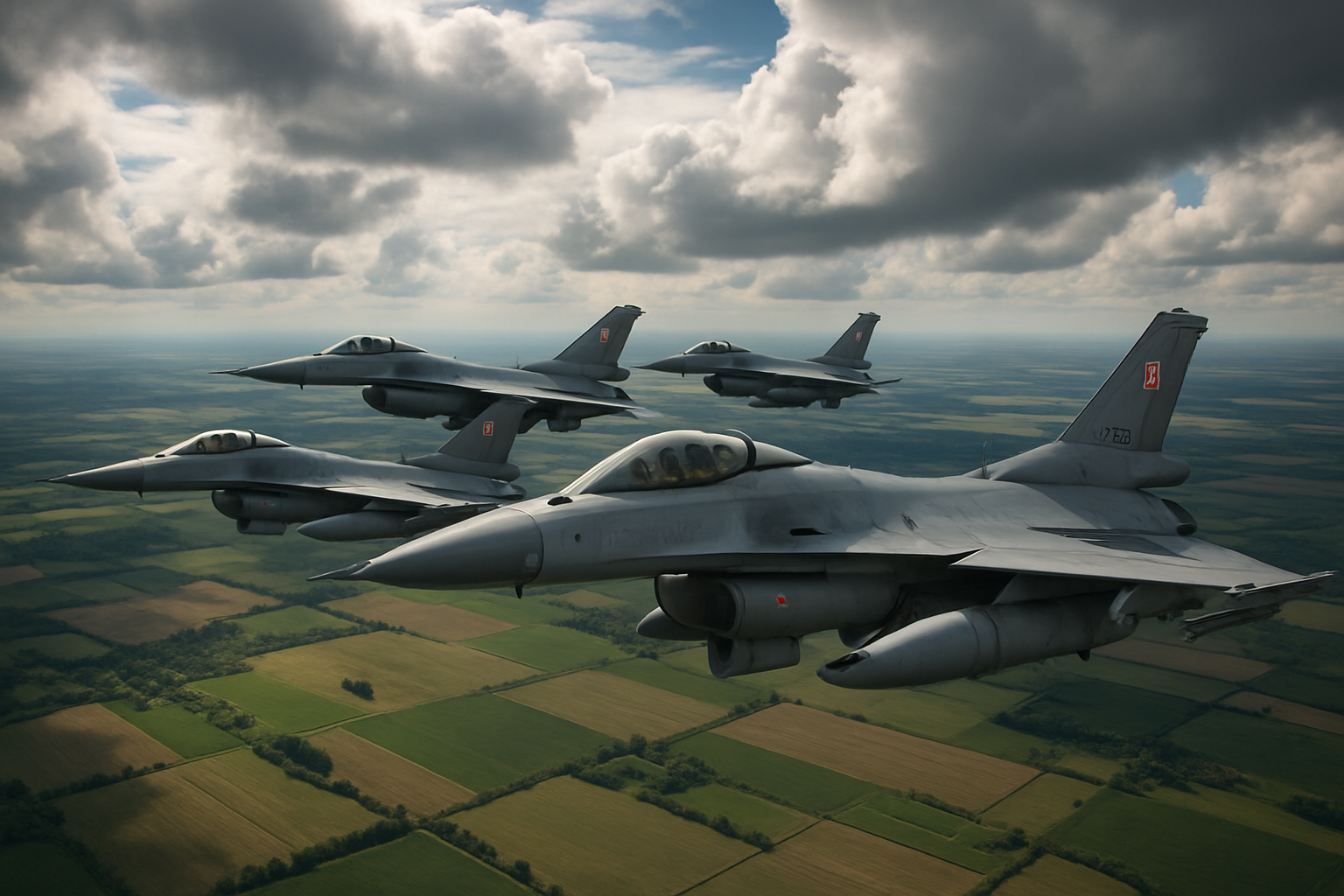
Poland scrambled fighter jets and temporarily suspended operations at two major eastern airports Saturday morning as Russia launched one of its most devastating attacks on western Ukrainian regions, forcing NATO member Poland to implement emergency security protocols along its 530-kilometer border with Ukraine.
The Polish military deployed fighter aircraft in response to coordinated Russian missile and drone strikes targeting the Lviv, Ivano-Frankivsk, Vinnytsia, and Ternopil oblasts - all located in western Ukraine near the Polish frontier. Airports in Lublin and Rzeszów, both situated within 100 kilometers of the Ukrainian border, were temporarily closed to civilian traffic due to what aviation authorities described as "unplanned military activity."
Massive Russian Assault on Western Ukraine
Russian forces launched a comprehensive assault beginning in the early morning hours, employing hundreds of missiles and drones against Ukrainian targets. The attacks primarily focused on energy infrastructure and civilian facilities across six western Ukrainian oblasts: Lviv, Ivano-Frankivsk, Vinnytsia, Ternopil, Rivne, and Kharkiv regions.
According to Ukrainian officials, the bombardment represents a significant escalation in Russian targeting of western Ukraine, regions that had previously experienced relatively fewer large-scale attacks compared to eastern and southern territories. The strikes caused widespread power outages and forced emergency services to activate warming centers as temperatures plummeted to minus-30 degrees Celsius in northern regions.
"The attacks on western Ukrainian oblasts create immediate security concerns for our eastern regions,"
— Polish Defense Ministry Statement
Polish Military Response
Polish authorities implemented a coordinated response involving multiple security agencies. The Polish Air Force scrambled fighter jets as a precautionary measure, with aircraft maintaining defensive patrols along the eastern border. The deployment followed established NATO protocols for responding to nearby military activities that could potentially affect member state security.
The Federal Aviation Administration of the United States (FAA) and Polish Air Navigation Services Agency (PANSA) jointly announced the temporary closure of airspace over Lublin and Rzeszów airports. The restrictions, described as necessary for "ensuring national security," remained in effect for several hours before normal operations resumed after 8:00 AM local time.
Polish military sources confirmed that while no violations of Polish airspace occurred, the proximity and scale of Russian attacks necessitated heightened defensive posturing. The response demonstrates Poland's commitment to protecting NATO's eastern flank while supporting neighboring Ukraine.
Cross-Border Security Implications
The incident highlights the complex security environment facing Poland as a frontline NATO member sharing an extensive border with Ukraine. Polish territory has occasionally been affected by stray missiles and drone debris throughout the nearly four-year conflict, leading to enhanced air defense preparations and rapid response protocols.
Poland hosts approximately 10,000 U.S. troops and significant NATO infrastructure as part of the alliance's enhanced eastern presence. The country serves as a crucial logistics hub for Western military aid to Ukraine while simultaneously protecting its own territorial integrity and civilian population.
Regional Impact and International Response
The attacks on western Ukraine carry particular significance given the region's role as a crucial transit corridor for humanitarian aid and military assistance flowing into Ukraine from Poland and other Western allies. The targeted oblasts house key transportation infrastructure and serve as staging areas for international support operations.
NATO Secretary-General Mark Rutte recently visited Kyiv and addressed the Ukrainian Parliament, condemning Russian attacks as sending a "bad signal" before diplomatic negotiations. The timing of Saturday's assault, occurring amid ongoing peace talks between Ukraine, Russia, and the United States in Abu Dhabi, underscores the complex dynamics surrounding current diplomatic efforts.
European Union officials are monitoring the situation closely, with several member states expressing concern about the escalating attacks near EU borders. Sweden and Denmark recently announced a €246 million air defense package for Ukraine, specifically including Tridon Mk2 systems designed to counter drone and missile threats.
Historical Context of Polish Responses
Saturday's action continues a pattern of Polish military responses to nearby Russian attacks. Since February 2022, Polish forces have repeatedly scrambled aircraft and closed airspace during major Russian offensives against Ukrainian territory. The country has maintained heightened alert status throughout the conflict, balancing support for Ukraine with protection of Polish citizens and infrastructure.
Previous incidents have included missile fragments landing in Polish territory, most notably in November 2022 when a Ukrainian air defense missile struck Przewodów village, killing two civilians. Such events have reinforced the need for robust air defense systems and rapid response capabilities along Poland's eastern border.
Ongoing Diplomatic Efforts
The attacks occurred as the second round of trilateral peace negotiations between Ukraine, Russia, and the United States continued in Abu Dhabi. The talks, mediated by UAE officials, represent the most significant diplomatic effort to resolve the conflict since Russia's invasion began nearly four years ago.
Ukrainian Defense Minister Rustem Umerov has described the negotiations as "substantial and productive," though fundamental disagreements over territorial control remain unresolved. The timing of Russian attacks during diplomatic proceedings has drawn criticism from international observers who view such actions as undermining peace efforts.
U.S. Special Envoy Steve Witkoff is leading American participation in the talks, which have already produced a historic prisoner exchange involving 314 individuals - the first such swap in five months. However, Saturday's attacks demonstrate the challenges of achieving lasting peace amid continued military escalation.
Energy Infrastructure Under Attack
The Russian assault specifically targeted Ukraine's energy infrastructure, continuing a systematic campaign that has left millions without reliable electricity and heating during extreme winter conditions. Ukrainian energy company DTEK described recent attacks as the "most powerful blow" of 2026 against the country's power grid.
Over 1,170 buildings in Kyiv lost heating during temperatures reaching minus-30 degrees Celsius, forcing authorities to activate emergency warming centers across affected regions. The attacks broke an informal agreement between the Trump administration and Russian leadership to avoid targeting energy facilities during diplomatic negotiations.
International organizations have condemned the targeting of civilian infrastructure as a violation of international humanitarian law. The World Bank has allocated $40 million for energy restoration efforts, while the European Union approved a historic €90 billion loan package to support Ukraine's defense and reconstruction needs.
Looking Forward
As Polish fighter jets returned to their bases and normal airport operations resumed, the incident underscores the ongoing security challenges facing NATO's eastern frontier. Poland's rapid response demonstrates the alliance's commitment to collective defense while highlighting the delicate balance between supporting Ukraine and protecting member state territory.
The attacks on western Ukraine mark a concerning escalation in Russian targeting patterns, potentially affecting future logistics operations and civilian safety near the Polish border. NATO officials continue monitoring the situation closely, with additional defensive measures being evaluated to ensure regional stability.
Polish authorities have confirmed that enhanced security protocols remain in effect along the eastern border, with continued coordination between civilian aviation authorities and military commands to ensure rapid response capabilities for any future incidents.