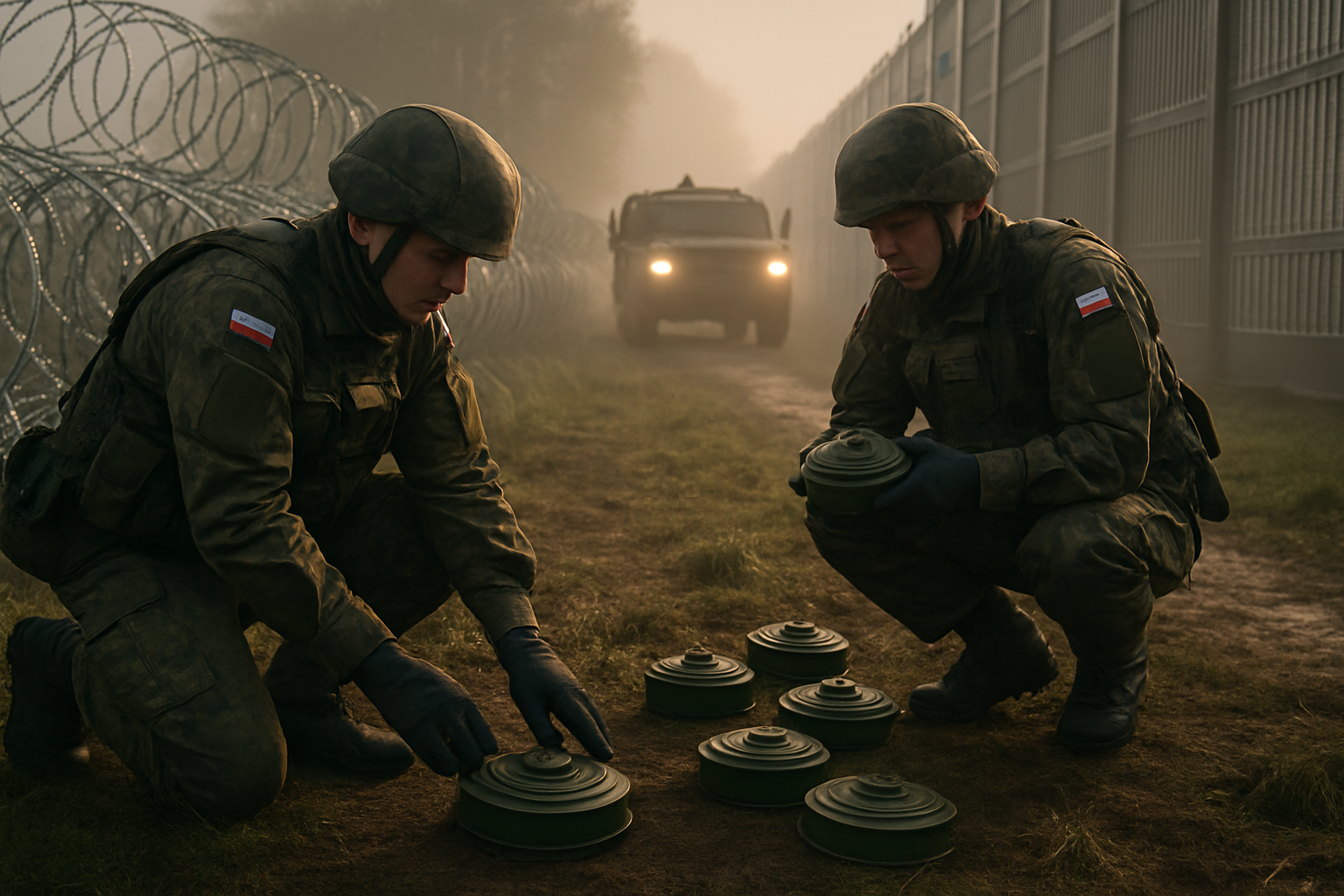
Poland formally withdrew from the Ottawa Convention on anti-personnel landmines on February 20, 2026, marking a historic shift in European security policy as the first Western nation to exit the international treaty since its establishment in 1997.
The decision, which took effect immediately, positions Poland to deploy both anti-personnel and anti-tank mines along its eastern border with Belarus and potentially Ukraine to counter what officials describe as an escalating Russian threat to NATO's eastern flank.
Strategic Defense Against Russian Expansion
Polish Deputy Defense Minister Pawel Zalewski announced the withdrawal during a press conference in Warsaw, emphasizing that the move represents a necessary adaptation to changed security circumstances since Russia's full-scale invasion of Ukraine in February 2022.
"Poland will use anti-personnel as well as anti-tank landmines to defend its eastern border against the growing threat from Russia. This is not a decision we take lightly, but one forced upon us by the deteriorating security environment."
— Pawel Zalewski, Polish Deputy Defense Minister
The announcement comes as Poland faces intensified security pressures along its 530-kilometer border with Ukraine and Belarus. Recent incidents include Russian missile and drone attacks targeting western Ukrainian regions near the Polish frontier, forcing Polish authorities to scramble fighter jets and temporarily close airports in Lublin and Rzeszów.
Historical Context and Treaty Background
Poland originally ratified the Ottawa Convention in 2012 and completed the destruction of its domestic anti-personnel mine stockpile in 2016, fulfilling its treaty obligations. The convention, formally known as the Convention on the Prohibition of the Use, Stockpiling, Production and Transfer of Anti-Personnel Mines and on their Destruction, currently has 164 state parties committed to eliminating these weapons.
The decision marks a significant reversal of Poland's previous humanitarian disarmament commitments and represents the first withdrawal by a NATO member state since the treaty's entry into force in 1999.
Regional Security Architecture Transformation
Poland's withdrawal reflects broader transformations in European security thinking following Russia's territorial aggression. The move aligns with President Karol Nawrocki's recent declaration that Poland must develop "nuclear potential" in response to Russian Oreshnik missile deployments in Belarus near the Polish border.
The decision occurs within the context of unprecedented military escalation in the region. Russian territorial gains accelerated to 481 square kilometers in January 2026 compared to 260 square kilometers in December 2025, while systematic attacks on civilian infrastructure have affected millions of Ukrainians during harsh winter conditions.
International Reactions and Diplomatic Implications
The withdrawal has drawn international attention as Poland positions itself at the forefront of discussions about European strategic autonomy. The decision coincides with ongoing trilateral peace negotiations between Ukraine, Russia, and the United States, including recent diplomatic breakthroughs such as a 314-prisoner exchange and the restoration of US-Russia military communications after a four-year suspension.
European divisions over security policy have become increasingly apparent, with Germany opposing direct engagement with Russian leadership while France and Italy support broader diplomatic initiatives. Poland's unilateral action on landmines demonstrates the challenges facing unified European responses to Russian aggression.
Military and Technical Considerations
Polish defense officials indicate that mine deployment will focus on creating defensive barriers along critical border sectors rather than offensive capabilities. The approach reflects lessons learned from ongoing conflict in Ukraine, where both sides have extensively used landmines for territorial control and defensive positioning.
Ukraine's experience has demonstrated both the tactical utility and humanitarian consequences of landmine warfare. Current estimates suggest over 10,000 Russian drones and bombs were launched in January 2026 alone, with systematic targeting of civilian infrastructure violating international humanitarian law.
Humanitarian Concerns and Legal Framework
The Ottawa Convention was established specifically to address the humanitarian impact of anti-personnel mines, which continue to kill and maim civilians long after conflicts end. Poland's withdrawal raises questions about the precedent for other nations facing security threats and the long-term viability of international humanitarian disarmament agreements.
Human rights organizations have expressed concern that Poland's action could encourage other countries to withdraw from the treaty, potentially undermining decades of progress in eliminating these weapons globally.
Nuclear Context and Escalation Concerns
Poland's decision occurs against the backdrop of unprecedented nuclear tensions following the expiration of the New START treaty between the United States and Russia on February 5, 2026. For the first time in over 50 years, the two nuclear superpowers controlling 80% of global nuclear weapons operate without bilateral constraints on their arsenals.
UN Secretary-General António Guterres has warned of a "grave turning point" with nuclear risks at their highest levels in decades, adding urgency to all security decisions in the region.
Economic and Alliance Implications
The withdrawal comes as Poland benefits from historic international support for regional security. The European Union recently approved a €90 billion loan package for Ukraine (the largest ever for a single nation), while Sweden and Denmark committed €246 million in air defense systems. Poland has also deployed fighter jets and enhanced border security measures throughout the ongoing conflict.
As a NATO member hosting 10,000 US troops and serving as a crucial logistics hub for Western aid to Ukraine, Poland's decision reflects the alliance's evolving approach to deterrence on its eastern flank.
Future Implications and Strategic Assessment
Poland's withdrawal from the Ottawa Convention represents more than a tactical military decision—it signals a fundamental shift in European security thinking from post-Cold War optimism to confrontational preparedness. The move reflects broader concerns about Russian territorial ambitions and the limitations of existing international legal frameworks in preventing aggression.
The decision will likely influence ongoing discussions about European strategic autonomy, including unprecedented conversations about expanding France's nuclear deterrent beyond national scope and creating alternative security arrangements less dependent on US guarantees.
As diplomatic efforts continue with a June 2026 deadline for comprehensive peace negotiations potentially involving presidential-level engagement in Washington, Poland's landmine deployment represents a practical hedge against diplomatic failure and continued regional instability.
The withdrawal marks a watershed moment testing whether international humanitarian law can be maintained during periods of existential security threat, with implications extending far beyond European borders to global norms governing warfare and civilian protection.