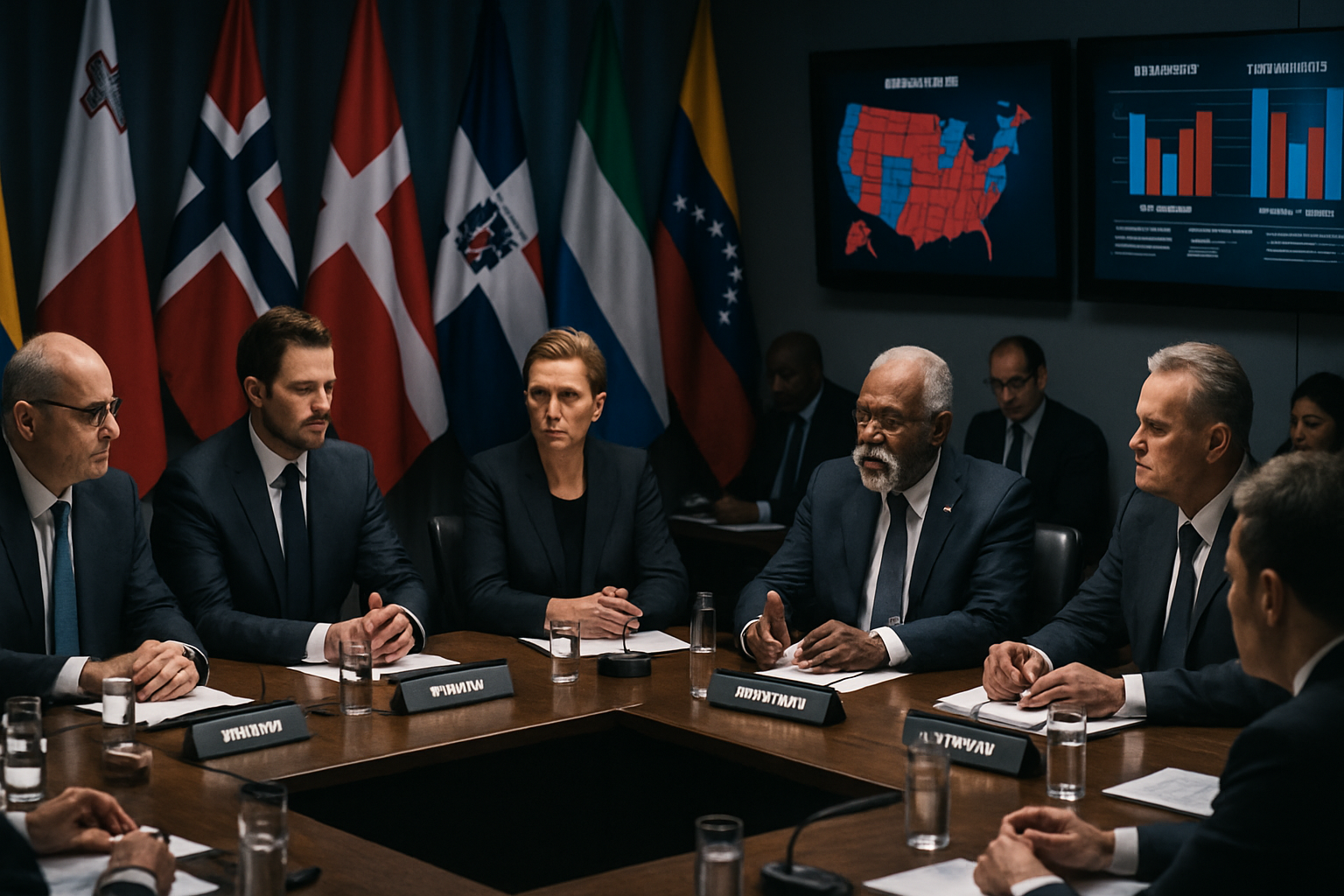
A wave of political developments across multiple continents in February 2026 has revealed the complex challenges facing democratic institutions worldwide, from electoral integrity crises in Denmark to controversial constitutional reforms in Venezuela and significant political transitions spanning Europe, Africa, and the Caribbean.
Denmark Confronts Electoral Corruption Crisis
Danish politics faces a significant integrity crisis as multiple political parties unite to ban the practice of mandate purchasing following revelations of direct cash offers to parliament members. The scandal has emerged as a central issue in upcoming electoral preparations, with party leaders across the political spectrum condemning what one politician described as "worse filth" undermining democratic representation.
The controversy highlights broader concerns about financial influence in electoral processes that extend beyond Denmark's borders. Political analysts suggest this represents part of a global pattern where traditional democratic safeguards face new challenges from undisclosed financial incentives targeting elected officials.
Venezuelan Political Restructuring Under Scrutiny
Opposition leader Enrique Márquez delivered a significant address focused on future-oriented political recovery rather than retribution, stating "I don't come to claim vengeance, I come to claim the future." This message signals a potential shift in Venezuelan opposition strategy toward reconciliation-based approaches amid ongoing political transitions.
The development occurs against a backdrop of complex regional dynamics where traditional opposition figures navigate between exile, domestic political participation, and international diplomatic pressure. Márquez's emphasis on forward-looking governance suggests emerging pragmatic approaches to Venezuela's prolonged political crisis.
Sierra Leone's Electoral Commission Appointment Sparks Controversy
The appointment of Edmond Sylvester Alpha as the new Commissioner of the Electoral Commission for Sierra Leone generated significant controversy following his celebratory dance that went viral on social media. Alpha's reaction to parliamentary approval drew mixed public responses, with critics questioning the appropriateness of his celebration while supporters viewed it as authentic joy.
"The new Commissioner's celebration reflects either genuine enthusiasm for democratic service or concerning judgment about institutional dignity. The public's mixed reaction suggests deeper questions about electoral leadership expectations."
— Political analyst observing West African democratic developments
The appointment came despite opposition boycotts of the approval process, highlighting ongoing tensions within Sierra Leone's political landscape. Alpha's extensive experience and academic background contrast with concerns about institutional conduct expectations for electoral leadership roles.
Baltic Security and Travel Advisory Updates
Lithuania updated travel recommendations for its citizens regarding Jordan and Persian Gulf region countries due to escalating military actions between Israel, the United States, and Iran that began on February 28. The Foreign Ministry now advises against travel to Bahrain, Iraq, United Arab Emirates, Qatar, Kuwait, Oman, and Saudi Arabia.
This diplomatic response reflects broader European security concerns about regional conflicts affecting civilian travel safety. The expanded advisory list demonstrates how localized military tensions create cascading effects on international mobility and diplomatic relations across continents.
Regional Security Implications
The Lithuanian advisory represents part of coordinated European responses to Middle Eastern tensions that increasingly affect global travel patterns and diplomatic relationships. European nations are balancing citizen safety concerns with maintaining diplomatic engagement in strategically important regions.
Malta's Judicial and Political Realignment
Malta experiences dual political developments as the Momentum movement seeks coalition partners for upcoming general elections while Opposition Leader Alex Borg proposes anti-deadlock mechanisms to resolve the ongoing Chief Justice appointment crisis. Momentum emphasizes transparency, meritocracy, and effective governance as core principles for potential political alliances.
The Chief Justice appointment deadlock has created institutional tensions between government and opposition, prompting Borg's proposal that outgoing Chief Justice Mark Chetcuti remain in office until succession agreement is reached. This represents broader challenges in maintaining judicial independence during periods of political transition.
Norwegian Political Leadership Transitions
Oslo's political landscape shifted with Julianne Ofstad's appointment as new county leader of the Progress Party, reflecting ongoing leadership changes within Norwegian regional politics. Ofstad, currently serving as deputy mayor of Oslo, brings administrative experience to her new party leadership role during a period of significant policy debates.
The appointment occurs amid broader discussions about urban governance, immigration policy, and economic management that characterize contemporary Norwegian political discourse. Her leadership transition reflects evolving dynamics within Norway's multi-party democratic system.
Dominican Republic Security Sector Reforms
President Luis Abinader implemented comprehensive changes to the National Police and Armed Forces through decrees 133-26 and 135-26, including appointment of General Esteban Figuereo García as new deputy director general of the National Police and General Ernesto Rafael Rodríguez García as inspector general.
These strategic appointments and promotions represent significant institutional restructuring within the Dominican Republic's security apparatus. The changes include honorable retirements and promotional adjustments designed to modernize both law enforcement and military leadership structures during a period of regional security challenges.
Security Modernization Context
The comprehensive reforms reflect broader Caribbean trends toward professionalizing security institutions while adapting to contemporary challenges including transnational crime, migration pressures, and evolving regional cooperation requirements.
Global Democratic Evolution Patterns
The diverse political developments across these seven nations reveal several emerging patterns in contemporary democratic governance. Electoral integrity concerns span from mandate purchasing in Northern Europe to electoral commission controversies in West Africa, suggesting universal challenges in maintaining public trust in democratic institutions.
Institutional adaptation appears increasingly necessary as traditional democratic frameworks encounter new pressures from financial influence, media scrutiny, international tensions, and evolving citizen expectations for transparency and accountability.
International Cooperation and Sovereignty
The period's events demonstrate increasing intersection between domestic political developments and international relationships. Lithuania's travel advisories reflect regional conflict spillover effects, while Venezuela's opposition strategies consider both domestic reconciliation and international diplomatic engagement.
These interconnections suggest that national political development increasingly requires balancing domestic governance needs with international cooperation requirements, particularly in areas of security, economic development, and institutional reform.
Looking Forward: Democratic Resilience Testing
The February 2026 political developments provide important insights into democratic resilience under contemporary pressures. Success in addressing electoral integrity, institutional deadlocks, security modernization, and regional cooperation challenges will likely influence broader patterns of democratic evolution worldwide.
As nations navigate complex transitions involving judicial independence, electoral reform, security restructuring, and international engagement, the lessons learned from these diverse experiences may provide valuable templates for democratic governance adaptation in an increasingly interconnected world.
The outcomes of these various political transitions will be closely monitored by international observers as indicators of democratic institutional capacity to adapt to evolving challenges while maintaining core principles of accountability, transparency, and representative governance.