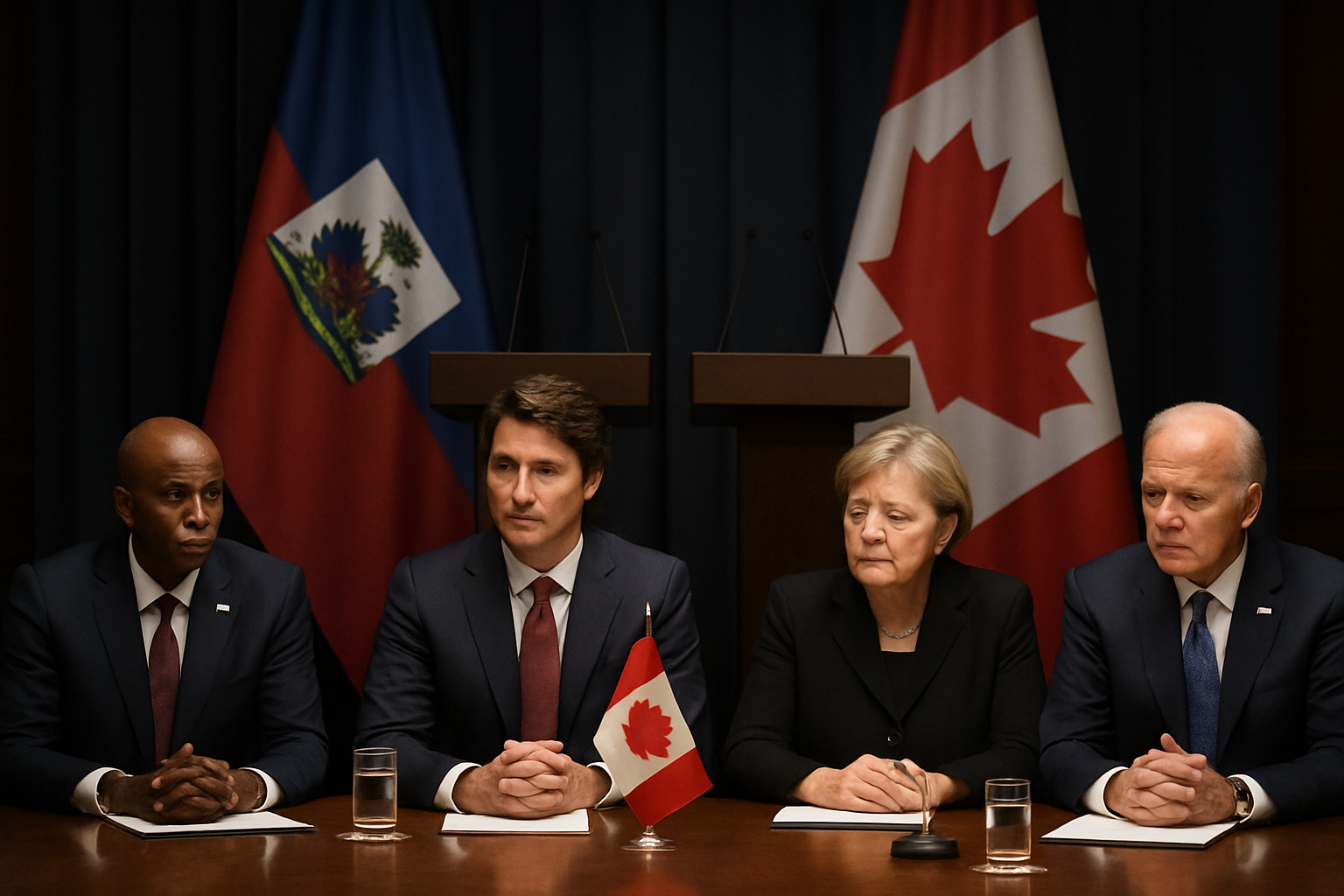
In a stark illustration of democracy's divergent paths, February 7, 2026, witnessed two significant political developments that underscore the complex challenges facing modern governance: Haiti's transition to de facto one-man rule under Prime Minister Alix Didier Fils-Aimé, and Canada's Prince Edward Island completing a Conservative leadership transition with Rob Lantz's victory.
These parallel developments, occurring within hours of each other, represent fundamentally different approaches to political leadership during periods of crisis and transition. While Canada demonstrates the resilience of democratic institutions through peaceful power transfers, Haiti's situation reveals how institutional voids can enable dangerous concentrations of authority.
Haiti's Dangerous Democratic Drift
The expiration of Haiti's Transitional Presidential Council (CPT) mandate has effectively transformed Prime Minister Alix Didier Fils-Aimé into the Caribbean nation's sole head of state, marking a concerning shift toward authoritarian governance. Speaking at a handover ceremony at Villa d'Accueil in Port-au-Prince, Fils-Aimé officially assumed unprecedented executive authority in a country already devastated by gang violence, economic collapse, and institutional breakdown.
According to analysis from Rezo Nòdwès, Fils-Aimé represents "a pure product of the Haitian crisis: a man shaped by institutional void, nourished by transition, and strengthened by the voluntary weakness of those supposedly governing." The report describes him as wielding "two firmly attached hats: Prime Minister by political arrangement, influential economic sector actor by personal trajectory."
This dual role is particularly troubling given Haiti's history of authoritarian rule and the current security crisis that has left much of the country under gang control. The concentration of both political and economic influence in a single individual, operating without the traditional checks and balances of a functioning democracy, raises serious questions about Haiti's path forward.
Canada's Democratic Resilience
In sharp contrast, Prince Edward Island's political transition exemplifies democratic stability and institutional continuity. Rob Lantz, who had served as interim premier since February 2025 following Dennis King's resignation, secured victory in the Conservative leadership race, demonstrating the party's ability to manage succession effectively.
Lantz's return to the premier's office represents more than a simple leadership change—it illustrates the strength of Canada's democratic institutions at both federal and provincial levels. The Globe and Mail's coverage emphasizes the orderly nature of the transition, with clear succession planning and party unity throughout the process.
The timing of this announcement, coming as political systems worldwide face unprecedented pressures, serves as a reminder that robust democratic institutions can weather leadership transitions without descending into crisis or institutional collapse.
Historical Context of Democratic Fragility
The contrasting situations in Haiti and Canada must be understood within the broader context of 2026's global political landscape. According to memory archives, recent months have witnessed unprecedented challenges to democratic governance worldwide, from the Jeffrey Epstein files crisis affecting multiple European governments to constitutional deadlocks in Albania and budget crises across France and Bulgaria.
Haiti's descent toward one-man rule particularly mirrors concerning patterns observed in other transitional societies. The absence of functioning democratic institutions—parliament, independent judiciary, or effective civil society—has created conditions where individual actors can accumulate disproportionate power without meaningful accountability.
As noted in previous analyses of global political transitions, female leadership has emerged as a significant trend in 2026, with Japan's Sanae Takaichi securing electoral victory and various European nations seeing women take prominent roles. However, Haiti's situation demonstrates how institutional weakness can override positive representational trends when basic governance structures collapse.
Economic Dimensions of Political Power
The Haitian situation gains additional complexity through Fils-Aimé's described role as both political leader and economic sector influence. This concentration of economic and political authority in a single individual represents exactly the kind of power consolidation that democratic institutions are designed to prevent.
Meanwhile, Canada's stable democratic transition occurs within a context of economic policy continuity and institutional strength. Rob Lantz's leadership comes at a time when Canadian politics, under Prime Minister Mark Carney, has demonstrated pragmatic approaches to economic challenges, including recent electric vehicle policy adjustments and federal workplace reforms.
The contrast is striking: while Canada manages policy debates within established democratic frameworks, Haiti lacks the institutional capacity for such governance discussions, instead relying on individual decision-making by increasingly powerful political figures.
Regional and International Implications
These developments carry significant implications for regional stability and international relations. Haiti's drift toward authoritarian governance occurs amid ongoing diplomatic efforts involving the United States, with various international actors attempting to support democratic transition. However, the concentration of power in Fils-Aimé's hands may complicate these diplomatic initiatives.
Canada's stable democratic transitions, by contrast, reinforce its position as a reliable international partner during a period of global political uncertainty. The orderly succession in Prince Edward Island, though a provincial matter, contributes to Canada's broader image as a stable democracy capable of managing political change without institutional crisis.
"In a country on its knees, he advances with two hats solidly fastened: Prime Minister by political arrangement, influential economic sector actor by personal trajectory. This duality is not a coincidence, it's a weapon."
— Rezo Nòdwès analysis of Alix Didier Fils-Aimé
The Broader Crisis of Democratic Governance
The simultaneous occurrence of Haiti's authoritarian drift and Canada's democratic stability reflects broader global tensions between democratic resilience and institutional breakdown. Recent memory archives reveal similar patterns across multiple continents, from European constitutional crises to African democratic backsliding and Asian political fragmentation.
What makes the Haiti-Canada comparison particularly instructive is the geographical proximity and shared hemispheric context. Both nations operate within the same international system, yet their institutional responses to political challenges could not be more different.
Haiti's situation demonstrates how quickly democratic institutions can erode when faced with multiple crises simultaneously. The combination of security threats, economic collapse, and political instability has created conditions where traditional democratic safeguards become ineffective, enabling individual power accumulation.
International Response and Future Challenges
The international community's response to these contrasting developments will likely reflect broader tensions about intervention versus sovereignty. While Canada's democratic transitions require no external involvement, Haiti's situation presents complex questions about how international actors can support democratic governance without enabling further authoritarianism.
Previous international interventions in Haiti have often failed to establish lasting democratic institutions, suggesting that external support alone cannot substitute for genuine domestic democratic culture and institutional strength. Fils-Aimé's consolidation of power occurs despite, or perhaps because of, ongoing international attention to Haiti's crisis.
The timing of these developments, coming amid global discussions about democratic renewal and institutional reform, underscores the urgency of understanding what enables some societies to maintain democratic governance during crises while others descend into authoritarianism.
Lessons for Democratic Governance
The contrasting trajectories of Haiti and Canada offer several crucial lessons for understanding democratic resilience in the 21st century. Strong institutional frameworks, established succession procedures, and robust civil society oversight appear essential for maintaining democratic governance during transitional periods.
Canada's experience demonstrates that even smaller political jurisdictions can maintain democratic stability when proper institutions and procedures exist. Prince Edward Island's smooth leadership transition, despite occurring during challenging economic times, reflects the strength of established democratic norms and institutional continuity.
Haiti's situation, conversely, illustrates how institutional weakness can enable rapid authoritarian consolidation, even in contexts where international actors are paying close attention. The transformation of Fils-Aimé from transitional figure to de facto sole ruler occurred within existing legal frameworks, demonstrating how democratic forms can mask authoritarian substance.
As political systems worldwide face mounting pressures from economic uncertainty, security challenges, and social change, the experiences of Haiti and Canada in February 2026 serve as stark reminders of democracy's fragility and resilience. The choices made by political leaders during these critical moments—whether to strengthen institutions or exploit their weaknesses—will shape governance structures for years to come.
The international community must grapple with these contrasting models as it seeks to support democratic governance globally while respecting national sovereignty and addressing the complex challenges that enable authoritarian drift in vulnerable societies.