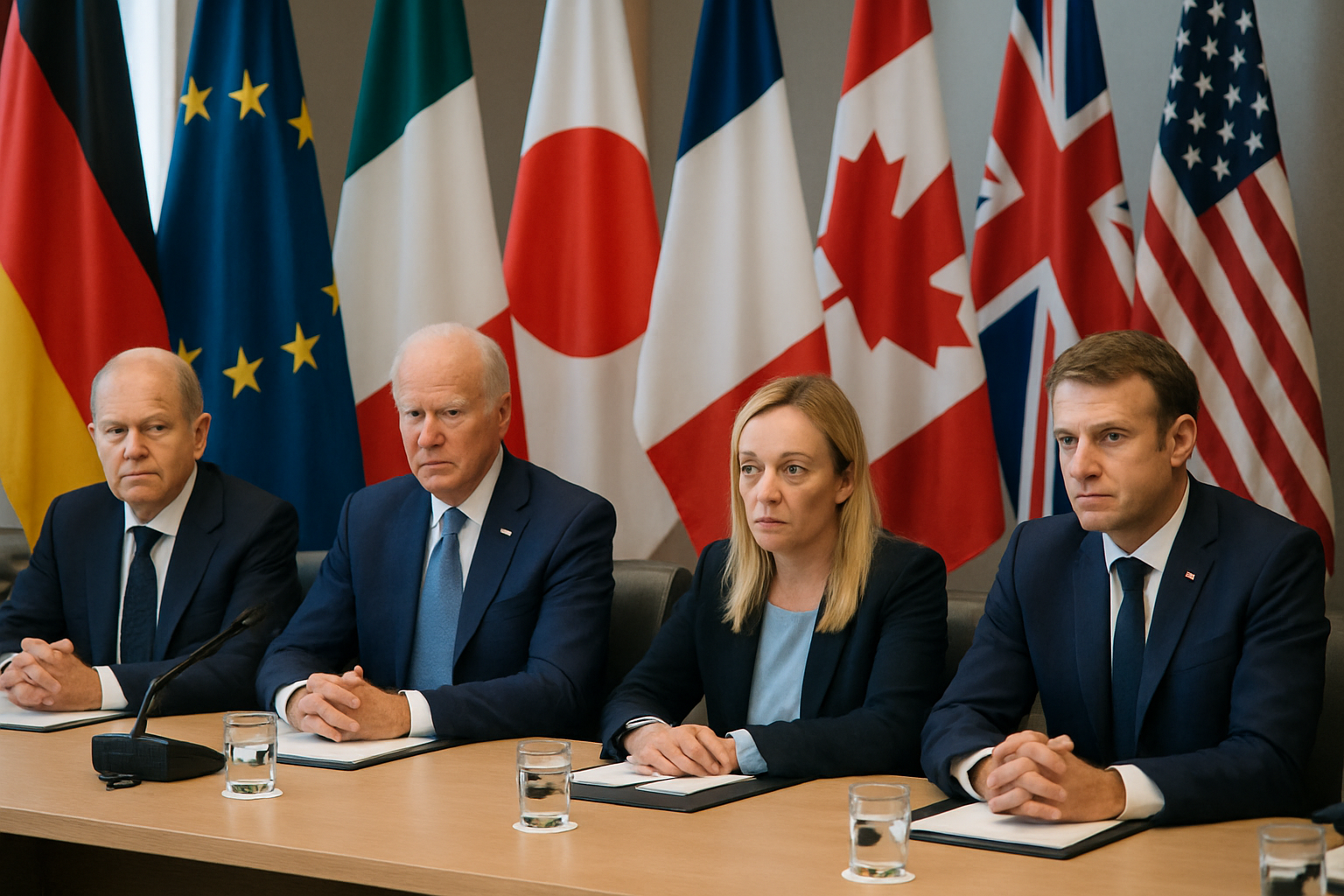
Political upheaval across multiple continents this week has exposed the fragility of democratic institutions while highlighting emerging patterns of resistance against traditional governance structures, with developments spanning from Bolivia's electoral disputes to Canada's separatist movements creating ripple effects across the international community.
The convergence of political crises across Bolivia, Canada, Italy, Malaysia, Senegal, and other nations represents more than isolated incidents—it signals a fundamental transformation in how democratic governance operates under 21st-century pressures. From electoral integrity challenges to diplomatic standoffs and separatist rhetoric, these developments collectively illustrate the complex interplay between domestic politics and international relations.
Bolivia's Electoral Integrity Crisis Deepens
Bolivia's political landscape faced significant turbulence this week as the Nueva Generación Patriótica (NGP) party justified its controversial withdrawal from La Paz's gubernatorial runoff election, creating a constitutional crisis that reverberates throughout South America's democratic institutions.
Speaking from the United States, NGP leader Édgar Uriona defended his party's decision to decline participation in the second round, making explosive allegations against candidate René Yahuasi. "We will not tolerate the ambition of people who want to use us as a platform to reach power and harm the country," Uriona declared, characterizing Yahuasi as a "Trojan horse" for former president Evo Morales' political interests.
The NGP's withdrawal forced the Supreme Electoral Tribunal (TSE) to declare Luis Revilla the winner by default, a decision that has sparked intense debate about electoral legitimacy and democratic processes. Uriona's claims that his party is "preventing disaster for more than a million people" and "saving the department" reflect the deep political polarization that continues to characterize Bolivian politics years after Morales' departure from power.
The crisis extends beyond domestic politics, intersecting with Bolivia's international relationships. The nation found itself at the center of a diplomatic controversy involving Argentina, the United Kingdom, and the sensitive issue of the Malvinas (Falkland) Islands. Bolivia's support for Argentina's sovereignty claims prompted sharp criticism from UK Ambassador Richard Porter, who warned that "any public intervention in our sovereign affairs will be responded to publicly with force and immediately."
Argentina's Foreign Ministry responded by thanking Bolivia for its support, emphasizing that the Malvinas question represents a regional concern that transcends bilateral relationships. This diplomatic tension illustrates how domestic political decisions can rapidly escalate into international incidents, particularly when they touch upon unresolved territorial disputes.
Canada Confronts Internal Separatist Pressures
North of the border, Canada faces its own governance challenges as separatist sentiment gains momentum in Alberta, presenting Prime Minister Mark Carney's government with a significant test of federal unity. The situation escalated when Alberta separatists announced alternative plans to force a referendum on provincial independence, regardless of ongoing court challenges to their campaign.
The separatist movement has been complicated by legal challenges from the Sturgeon Lake Cree Nation, which seeks to shut down the campaign entirely. A judge is set to hear demands that could fundamentally alter the trajectory of the independence movement, highlighting the complex intersection of indigenous rights and provincial autonomy within Canada's federal system.
This development occurs against the backdrop of broader tensions between Alberta and the federal government, particularly regarding energy policy, equalization payments, and regulatory oversight of resource development. The separatist rhetoric represents the most direct challenge to Canadian unity from elected officials in recent memory, echoing historical Quebec sovereignty movements while focusing on economic rather than cultural grievances.
The timing proves particularly challenging for Carney's Liberal government, which faces economic pressures and competence questions while Conservative leader Pierre Poilievre maintains strong polling leads. The emergence of serious separatist sentiment in Alberta creates additional complexity for a government already struggling to maintain national cohesion amid regional disparities and international pressures.
Italy's Political Fragmentation Continues
Italy's political landscape remains in flux as the country continues to grapple with fragmented party systems and evolving voter priorities. Recent polling data suggests a complex electoral environment where traditional party loyalties face increasing challenges from new movements and shifting demographic trends.
According to Italian media reports, the upcoming electoral period could see significant changes in party alignments, with particular attention focused on the performance of various political movements that have emerged in recent years. These developments occur as Italy continues to navigate its role within the European Union while addressing domestic concerns about economic policy, immigration, and institutional reform.
The political fragmentation reflects broader European trends where traditional party systems struggle to adapt to new voter expectations and changing social dynamics. Italian voters increasingly focus on practical governance issues rather than ideological positioning, a trend that could reshape traditional political alignments and create opportunities for new forms of coalition building.
Malaysia's Political Evolution and Integrity Questions
In Malaysia, political veteran Rafizi Ramli faced renewed scrutiny over his role in the controversial "Kajang Move" of 2014, a political maneuver that removed Khalid Ibrahim from the Selangor chief minister position. The PKR MP's response—declaring "no regrets" and defending the move as being about "integrity"—illustrates the ongoing tensions within Malaysia's political establishment regarding past decisions and their current implications.
The renewed focus on the Kajang Move reflects broader questions about political accountability and institutional integrity within Malaysia's democratic system. Claims that Rafizi is being "punished by God" for his role in Khalid's ouster demonstrate the intersection of religious considerations and political discourse in Malaysian public life, highlighting the complex cultural and political dynamics that shape the nation's governance.
These developments occur as Malaysia continues to navigate its role as a middle power in an increasingly complex regional security environment, balancing relationships with major powers while addressing domestic political challenges and maintaining economic growth momentum.
Senegal's Economic Challenges and Political Messaging
Senegal faces significant economic pressures as Prime Minister Ousmane Sonko announced the need for citizens to "prepare for difficult times," signaling upcoming economic restrictions that reflect broader challenges facing the West African nation. Sonko's warnings about challenging periods ahead demonstrate the difficult balance between political honesty and public confidence that leaders must navigate during economic downturns.
Despite economic challenges, Sonko's messaging to Senegal's predominantly young population emphasized confidence and potential: "I have a thousand times more confidence in you, the young people." This approach illustrates the strategic importance of youth engagement in contemporary African politics, where demographic trends heavily favor younger voters who demand accountability and economic opportunity.
The economic restrictions announced by Sonko's government reflect broader regional and global economic pressures affecting developing nations, including supply chain disruptions, commodity price volatility, and the ongoing impacts of global economic uncertainty on emerging markets.
Regional Implications and Global Patterns
These diverse political developments reveal several common patterns that transcend national boundaries. Democratic institutions across multiple continents face pressures from populist movements, economic challenges, and changing voter expectations. Traditional party systems struggle to adapt to new political realities while maintaining institutional legitimacy and effectiveness.
The intersection of domestic politics and international relations has become increasingly complex, as demonstrated by Bolivia's diplomatic tensions with the UK over its support for Argentina's Malvinas claims. Similarly, Canada's internal separatist movements have implications for its international relationships and capacity to project stability and unity on the global stage.
Economic factors play a crucial role in shaping political outcomes, from Senegal's acknowledgment of difficult economic times ahead to Alberta's grievances about federal economic policies. The ability of governments to address economic challenges while maintaining political stability has become a key determinant of political success across diverse political systems.
Youth demographics continue to reshape political landscapes globally, with younger voters demanding accountability, transparency, and effective governance over traditional party loyalty. This trend is evident across all the nations examined, suggesting a fundamental shift in how political legitimacy is constructed and maintained.
International Cooperation and Diplomatic Challenges
The week's developments also highlight the challenges facing international cooperation in an era of increasing political fragmentation. Bolivia's diplomatic tensions with the UK over the Malvinas issue demonstrate how historical grievances can complicate contemporary international relationships, while Canada's internal divisions potentially affect its capacity to serve as a reliable international partner.
These challenges occur within a broader context of shifting global power dynamics, where middle powers must navigate between major power competition while addressing domestic political pressures. The success or failure of democratic institutions in managing these pressures will likely influence international stability and cooperation in the coming years.
The role of international observers and multilateral institutions in supporting democratic processes remains crucial, particularly in contexts where electoral integrity faces challenges. The international community's response to these developments will likely establish precedents for how democratic backsliding or institutional stress is addressed in the future.
Looking Ahead: Democratic Resilience Under Pressure
The political developments across these six nations represent more than temporary turbulence—they signal fundamental questions about democratic governance in the 21st century. The ability of democratic institutions to adapt to changing voter expectations while maintaining effectiveness and legitimacy faces unprecedented tests.
Success in navigating these challenges will require innovative approaches to governance that address economic inequality, demographic change, and evolving citizen expectations. Political leaders must balance honesty about challenges with hope for the future, as demonstrated by Senegal's dual message of difficult times ahead but confidence in youth potential.
The international dimension of these challenges suggests that no nation can address them in isolation. Cooperative approaches to economic development, democratic governance, and conflict resolution will likely prove essential for maintaining stability and prosperity in an interconnected world facing multiple simultaneous pressures.
As these political developments continue to unfold, they will likely establish precedents for how democratic societies address fundamental challenges to their governance systems. The outcomes will influence not only the nations directly involved but the broader international community's approach to democratic support, conflict prevention, and cooperative governance in an increasingly complex global environment.