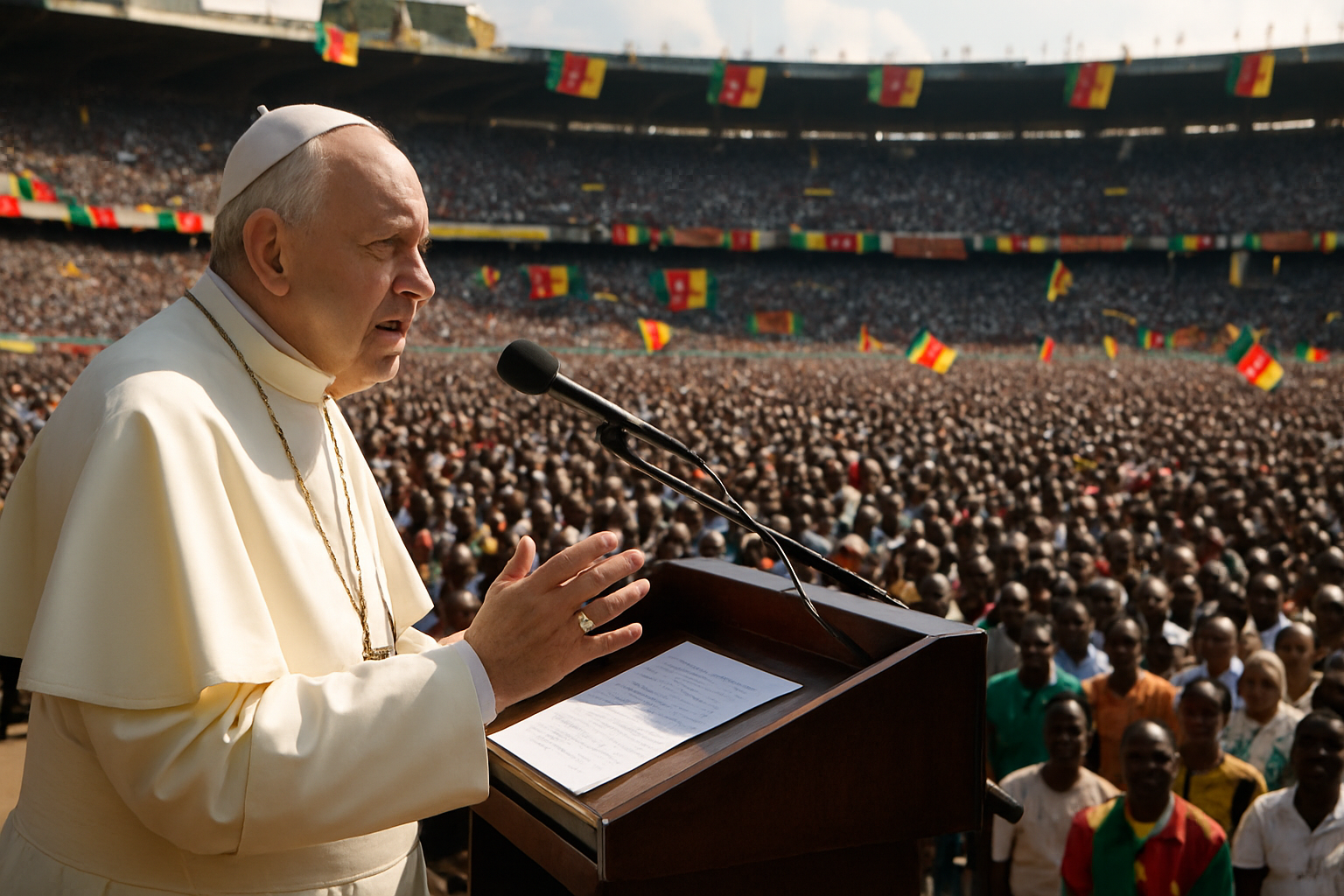
Pope Leo XIV's historic 10-day African tour reached a dramatic crescendo in Cameroon as hundreds of thousands of faithful packed Japoma Stadium in Douala for what Vatican officials describe as the largest papal gathering of his pontificate, while the first American pope delivered his most forceful condemnation yet of global "tyrants ravaging the world."
The extraordinary Mass on Friday drew an estimated 600,000 people to Cameroon's economic capital, marking the pinnacle of a tour that has already seen the Pope make history as the first pontiff to visit Algeria in Catholic Church history and engage in unprecedented diplomatic confrontations with world leaders.
Unprecedented Crowds and Condemnation of Global Tyranny
Speaking to massive crowds in Bamenda, the largest city in Cameroon's conflict-affected anglophone regions, Pope Leo XIV departed from traditional diplomatic protocols to issue direct moral challenges to world powers. "The world is ravaged by a handful of tyrants who spend billions on wars while ignoring humanitarian needs," the Pope declared, in what Vatican sources confirm represents the strongest papal criticism of global leaders in modern Vatican history.
The Pope's remarks took aim at what he called "masters of war" who "pretend not to know that it takes just a moment to destroy, but often not even a lifetime is enough to rebuild." His condemnation extended to leaders who "turn a blind eye to the billions spent on killing and devastation, while the resources needed for healing, education, and restoration are nowhere to be found."
"I have no fear of the Trump administration and no fear of loudly proclaiming the Gospel message, because that is what I am here for."
— Pope Leo XIV, responding to recent attacks
Diplomatic Revolution and Trump Administration Tensions
The Pope's forceful rhetoric comes amid an unprecedented diplomatic crisis with the Trump administration, following President Trump's attacks on the Pope as "WEAK on Crime, terrible for Foreign Policy" and the controversy over AI-generated religious imagery. The confrontation has escalated to include criticism from Vice President JD Vance, who told the Pope to "be careful when he talks about matters of theology."
Vatican sources confirm a fundamental shift in papal diplomacy under Pope Leo XIV, abandoning centuries of careful diplomatic language for what officials describe as "moral authority over diplomatic comfort." This represents a dramatic departure from traditional Vatican protocols, positioning the Holy See as an uncompromising voice for peace in international affairs.
International support for the Vatican's position has been overwhelming, with Italian Prime Minister Giorgia Meloni calling Trump's attacks "unacceptable," Iranian President Pezeshkian condemning them as "profanation of Jesus," and multiple European leaders expressing concern over the unprecedented nature of the confrontation between an American president and the first American pope.
Historic Algeria Visit and Interfaith Bridge-Building
The Cameroon phase follows Pope Leo XIV's successful completion of the first papal visit to Algeria in Catholic Church history, where he conducted a spiritual pilgrimage to ancient Hippo (modern Annaba), the birthplace of Saint Augustine—patron saint of the Pope's Augustinian order. The visit carried profound personal significance for the American pontiff and created what Vatican officials described as "Catholic-Muslim spiritual convergence."
President Abdelmadjid Tebboune welcomed the Pope as "the best advocate for peace in the world" during conflicts "particularly in the Middle East," demonstrating the successful interfaith dialogue that has characterized the tour. The timing during the final days of Ramadan provided unprecedented opportunities for interfaith understanding between Catholic and Muslim communities.
Addressing Cameroon's Decade-Long Conflict
The Pope's visit to Bamenda holds special significance as it addresses Cameroon's simmering anglophone conflict, which has claimed thousands of lives over nearly a decade. Speaking directly to the affected communities, Pope Leo XIV called for a "decisive change of course towards peace" and condemned the exploitation of land and resources that has fueled the conflict.
This direct engagement with contemporary political challenges exemplifies the Vatican's new approach under Pope Leo XIV, prioritizing direct pastoral work over ceremonial protocols. The visit demonstrates the Church's commitment to conflict mediation and peace-building in regions affected by violence.
Continental Significance and Future Plans
The 10-day African tour spans four nations—Algeria, Cameroon, Angola, and Equatorial Guinea—acknowledging Africa as the fastest-growing Catholic region worldwide with over 1.4 billion believers. Vatican officials describe it as the most ambitious papal journey of Pope Leo XIV's pontificate, establishing new paradigms for 21st-century papal engagement with the Global South.
The tour's comprehensive scope includes 11 cities, 25 speeches, and 8 masses, representing a fundamental shift from ceremonial visits to substantive engagement with contemporary challenges. Following Cameroon, the Pope will continue to Angola and Equatorial Guinea, completing what observers describe as a template-setting tour for Vatican diplomacy in the developing world.
Equatorial Guinea prepares to welcome the Pope as the first church leader to visit since Pope John Paul II almost half a century ago, with 80% of the country's population being Catholic. The visit underscores the Vatican's commitment to reaching all Catholic communities regardless of size or geopolitical significance.
Template-Setting Moment for Papal Diplomacy
Vatican experts describe Pope Leo XIV's African tour as potentially template-setting for 21st-century papal diplomacy, testing whether moral authority can effectively challenge political power in international affairs. The success of maintaining papal independence despite unprecedented political pressure from the American administration could strengthen Vatican global influence for decades.
The confrontation between America's first pope and the current American president represents a fundamental test of moral authority versus political power that may define religious leadership in international affairs for generations to come. The Pope's unwavering peace advocacy despite direct attacks establishes new precedents for Vatican engagement with global challenges.
As the historic tour continues, Pope Leo XIV's combination of massive popular support in Africa and moral clarity on global issues positions the Vatican as an increasingly important voice in international affairs, demonstrating that ancient spiritual traditions continue to provide contemporary moral guidance for a world seeking peace and justice.