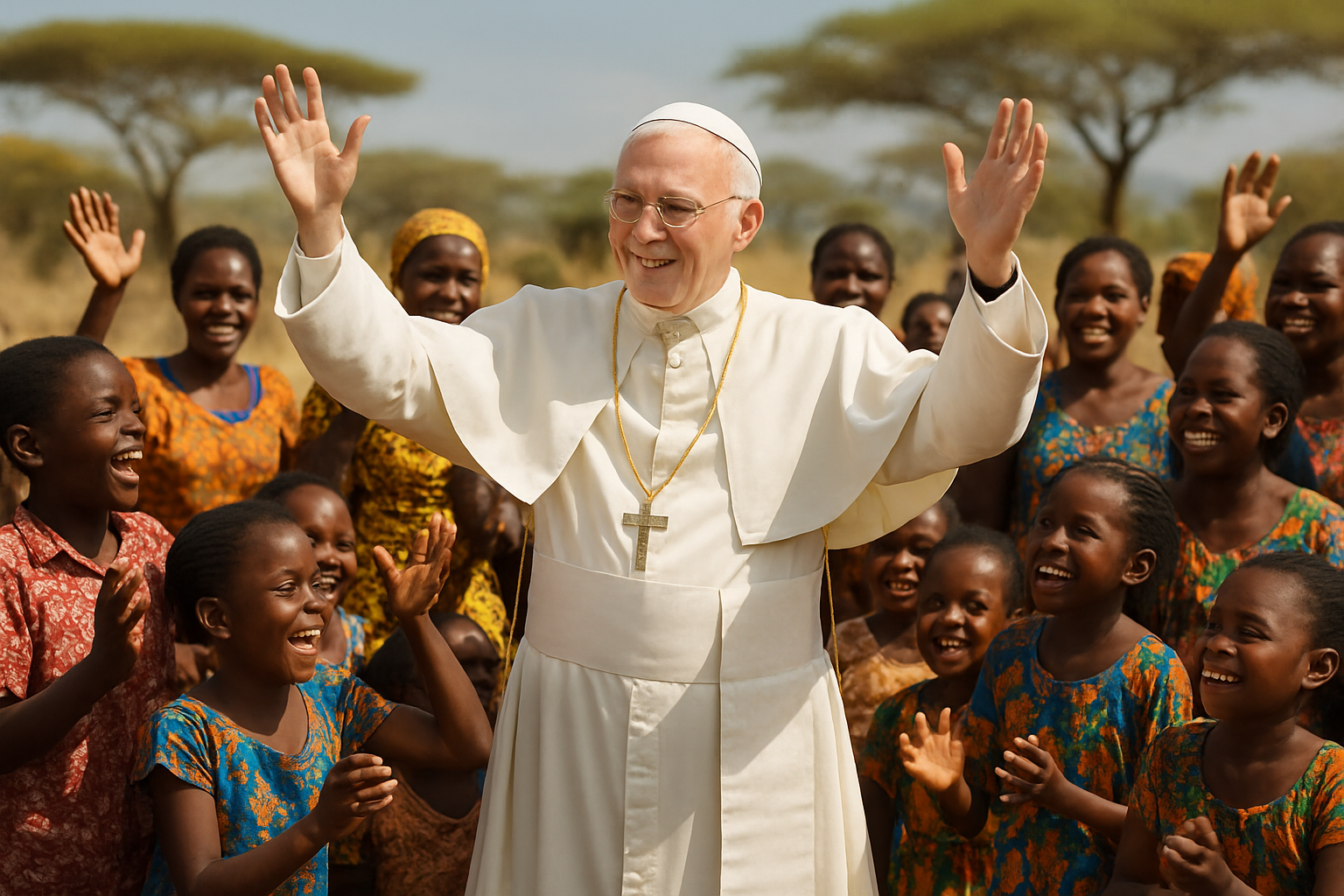
Pope Leo XIV, the first American pontiff in Catholic history, embarked Monday on the most ambitious papal African tour in decades, visiting four countries across 10 days while urging international leaders to provide greater attention and assistance to the continent's 1.4 billion inhabitants.
The historic journey, which includes 11 cities and 18 flights, marks the first time a pope will visit Algeria in papal history, underscoring Pope Leo XIV's commitment to Catholic-Muslim dialogue and interfaith bridge-building across North Africa. The tour represents a cornerstone of the American Pope's global outreach strategy since his election in May 2025.
Basketball Demonstration Captures Global Attention
In an unprecedented moment that captured worldwide headlines, members of the legendary Harlem Globetrotters basketball team taught Pope Leo XIV to spin a basketball on his finger during his weekly general audience at Saint Peter's Square on Wednesday. The demonstration drew thunderous cheers from thousands of faithful gathered in the square and millions watching via global broadcasts.
The basketball lesson provided a lighthearted prelude to the Pope's serious diplomatic mission across Africa, demonstrating his approachable leadership style that has characterized his pontificate. Vatican sources described the moment as "purely spontaneous" and reflective of Pope Leo XIV's commitment to engaging with diverse cultural expressions.
"The Holy Father's willingness to learn from these skilled athletes shows his openness to all peoples and cultures, which will serve him well during his African journey."
— Cardinal Giuseppe Bertello, Vatican Official
Historic Algeria Visit Breaks Centuries of Precedent
The tour's most significant diplomatic achievement will be Pope Leo XIV's arrival in Algeria, marking the first papal visit to the North African nation in Catholic Church history. The visit holds particular symbolic importance as Algeria is the birthplace of Saint Augustine, patron saint of Pope Leo XIV's Augustinian Order.
Vatican diplomats have spent months preparing for the Algeria visit, coordinating with President Abdelmadjid Tebboune's administration to ensure the historic encounter serves broader Catholic-Muslim dialogue initiatives. The visit represents a watershed moment for interfaith relations in North Africa and the broader Middle East region.
According to a cardinal familiar with the planning process, the Algeria visit "acknowledges Africa's growing Catholic population and continental importance for the Church's global future, representing over 1.4 billion people and the fastest-growing Catholic region worldwide."
Comprehensive Four-Country Itinerary
Following Algeria, Pope Leo XIV will conduct an extensive visit to Cameroon from April 15-18, the longest duration of any single country on the tour. The Cameroon leg includes stops in Yaoundé, Douala, and significantly, Bamenda in the North-West region, where the Vatican will attempt to mediate ongoing tensions through its established conflict resolution role.
The tour continues to Angola, where the Pope will visit Luanda, Muxima, and Saurimo, followed by the final leg in Equatorial Guinea covering Malabo, Mongomo, and Bata. Each location has been selected to address specific regional challenges while reinforcing Catholic community bonds across diverse African cultures.
Context of Global Diplomatic Engagement
The African tour represents the centerpiece of Pope Leo XIV's 2026 international outreach, building on his successful March 28 visit to Monaco—the first papal visit to the Principality in 488 years—and his planned June 6-12 visit to Spain focusing on migration issues affecting European-African relations.
The timing coincides with Pope Leo XIV's increasingly forceful peace advocacy following his strongest condemnations yet of global warfare during recent Holy Week celebrations. His Palm Sunday declaration that God rejects leaders with "hands full of blood" and his personal carrying of the cross during Good Friday ceremonies established a new tone for papal moral leadership.

Diplomatic Significance and Regional Impact
The tour occurs against the backdrop of sophisticated African continental integration, including the implementation of the African Continental Free Trade Area (AfCFTA) and major infrastructure developments such as Algeria's Gara Djebilet railway and Angola's Lobito Corridor revival connecting Atlantic ports to mineral-rich regions.
Vatican sources indicate the Pope's visits have been coordinated with local governments treating them as major state occasions, reflecting both the diplomatic weight of papal visits and the growing importance of Africa in global Catholic demographics and Church future planning.
The Algeria visit particularly demonstrates Pope Leo XIV's commitment to bridge-building between faiths, building on his successful outreach during his Turkey-Lebanon visit in late 2025 and his recent Monaco visit during Ramadan, which Vatican officials described as creating "Catholic-Muslim spiritual convergence."
Broader Implications for Papal Diplomacy
Church analysts view the African tour as template-setting for Pope Leo XIV's distinctive approach to papal diplomacy, emphasizing direct engagement with global challenges rather than traditional ceremonial protocols. His first year as pontiff has been marked by unprecedented personal participation in religious ceremonies and increasingly direct moral challenges to world leaders.
The basketball demonstration with the Harlem Globetrotters, while seemingly lighthearted, reflects this broader papal philosophy of accessibility and cultural engagement that has characterized his American background and leadership style since his May 2025 election.
"Pope Leo XIV represents a new model of papal leadership for the 21st century—direct, accessible, and willing to engage with contemporary global challenges through moral clarity rather than diplomatic comfort."
— Dr. Margaret Chen, Vatican Affairs Analyst
Challenges and Expectations
The ambitious 10-day, four-country schedule represents logistical challenges unprecedented in recent papal travel. The 18 flights across diverse African terrain, varying security environments, and complex diplomatic protocols will test Vatican organizational capabilities and Pope Leo XIV's personal stamina.
However, Vatican advance teams have spent months coordinating with African security services, diplomatic missions, and local Church hierarchies to ensure the tour proceeds smoothly while maximizing pastoral and diplomatic impact across the continent.
Previous setbacks, including the cancellation of a Cuban bishops' meeting due to Cuba's aviation fuel crisis and complete energy isolation, have made the successful execution of the African tour particularly significant for demonstrating Vatican diplomatic effectiveness under Pope Leo XIV's leadership.
Historical Context and Future Implications
The tour represents the most extensive papal engagement with Africa since Pope John Paul II's multiple African visits in the 1980s and 1990s, but with significantly expanded scope reflecting Africa's growing global importance and the Catholic Church's shifting demographic center toward the Global South.
Church demographers note that Africa now represents the fastest-growing Catholic region worldwide, with implications for future Church leadership, theological development, and global Catholic priorities. Pope Leo XIV's extensive African engagement acknowledges these demographic realities while attempting to strengthen Vatican influence across the continent.
The successful completion of this tour will likely establish Pope Leo XIV as the most internationally engaged American Pope in history and could influence future papal travel patterns toward increased engagement with the Global South rather than traditional European-focused diplomacy.
As Pope Leo XIV begins this historic journey, his basketball lesson with the Harlem Globetrotters serves as a fitting symbol of his unconventional approach to papal leadership—serious about global challenges while remaining approachable and willing to engage with diverse cultural expressions that define the modern world.