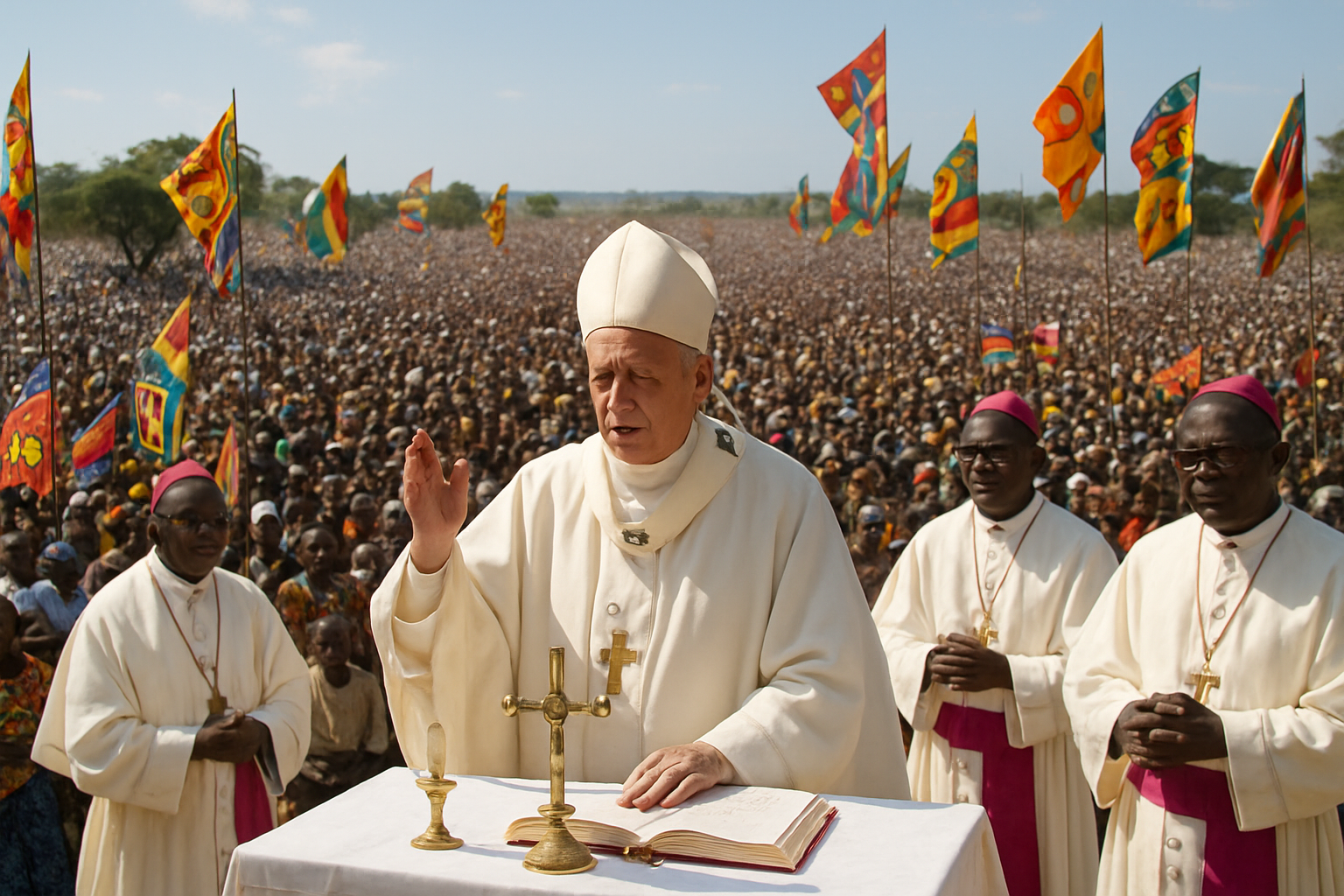
Pope Leo XIV delivered a powerful call for hope and anti-corruption action before an estimated 100,000 faithful gathered outside the Angolan capital of Luanda on Sunday, as part of his groundbreaking 11-day African tour that has captured global attention.
The mass congregation witnessed the first American-born Pope in Catholic history continue his direct engagement approach, urging Angolans to "build hope for the future" while confronting systemic corruption during what marks his most ambitious papal journey to date.
Historic African Tour Reaches Critical Phase
The Angola visit represents the third major stop in Pope Leo XIV's unprecedented 11-day African tour, which began April 13 with the first papal visit to Algeria in Catholic Church history. The comprehensive journey spans four nations – Algeria, Cameroon, Angola, and Equatorial Guinea – acknowledging Africa as the fastest-growing Catholic region worldwide with over 1.4 billion believers.
Sunday's massive outdoor celebration near Luanda demonstrated the extraordinary popular support the American Pope has generated throughout his African mission, with crowds filling the landscape as far as the eye could see under the bright African sun.
"The message is clear: we must build hope for the future and break the chains of corruption that hold back progress."
— Pope Leo XIV, addressing the Angolan congregation
Direct Challenge to Corruption
Pope Leo XIV's Angola address continued his pattern of direct moral engagement with contemporary challenges, specifically targeting corruption as a barrier to human dignity and social progress. The papal message resonated particularly strongly in Angola, where concerns about governance and resource management have long affected the oil-rich nation.
According to multiple sources covering the visit, the Pope's anti-corruption message was delivered with the same moral clarity that has characterized his entire African tour, representing a fundamental departure from traditional diplomatic protocols toward what Vatican sources describe as "moral authority over diplomatic comfort."
Broader Peace Advocacy Context
The Angola visit occurs amid Pope Leo XIV's broader peace advocacy campaign that has generated international attention and some controversy. Throughout his African tour, the Pope has delivered increasingly forceful condemnations of global warfare, including denouncing what he called "tyrants ravaging the world" during his Cameroon visit.
These statements have created unprecedented tensions with the Trump administration, with President Trump previously calling the Pope "WEAK on Crime, terrible for Foreign Policy," while Vice President JD Vance criticized papal theological statements. However, Pope Leo XIV clarified during his flight to Angola that his condemnation of global "tyrants" was "prepared two weeks ago, well before the president ever commented on myself."
International Support and Diplomatic Revolution
Despite tensions with the Trump administration, Pope Leo XIV has received overwhelming international support for his peace advocacy. Italian Prime Minister Meloni called Trump's criticisms "unacceptable," while Iranian President Pezeshkian and multiple European leaders have defended the Vatican's position.
Vatican experts describe the Pope's approach as potentially "template-setting" for 21st-century papal diplomacy, testing whether moral authority can effectively challenge political power in international affairs. The success of maintaining papal independence despite political pressure could strengthen Vatican global influence for decades.
Algeria Success Sets Precedent
The Angola visit builds on Pope Leo XIV's historic success in Algeria, where he became the first Pope ever to visit the Muslim-majority nation. The Algeria portion included a deeply significant spiritual pilgrimage to ancient Hippo (modern Annaba), where Saint Augustine – patron saint of the Pope's Augustinian order – lived and wrote his theological masterworks in the 5th century.
President Abdelmadjid Tebboune welcomed Pope Leo XIV as the "best advocate for peace in the world" during the Algeria farewell ceremony. The visit created what Vatican sources called "Catholic-Muslim spiritual convergence" during the conclusion of Ramadan, establishing new precedents for Vatican engagement with Muslim-majority nations.
African Catholic Growth and Global Significance
The comprehensive African tour acknowledges the continent's central importance to the Catholic Church's future, with Africa representing the fastest-growing Catholic region globally. The 11-day journey includes 11 cities, 25 speeches, and 8 masses, making it the most ambitious papal journey of Pope Leo XIV's pontificate.
Angola specifically receives significant attention as an oil-rich nation central to African continental integration through initiatives like the African Continental Free Trade Area (AfCFTA) and China's Belt and Road Initiative via the Lobito Corridor railway project.
Continuing Diplomatic Innovation
Pope Leo XIV's African tour represents more than ceremonial visits – it demonstrates the Vatican's commitment to direct engagement with contemporary global challenges. The approach emphasizes addressing development needs through diplomatic innovation while advancing interfaith dialogue and peace advocacy.
The Pope's Angola clarification regarding his "tyrants" comments demonstrates sophisticated Vatican diplomacy, balancing tension reduction with unwavering commitment to peace advocacy. This represents a watershed moment for Vatican diplomacy and papal independence under unprecedented political pressure from the American administration.
Looking Ahead: Equatorial Guinea Conclusion
Following the Angola visit, Pope Leo XIV will conclude his historic African tour with stops in Equatorial Guinea, where the 80% Catholic population is preparing for the first Church leader visit since Pope John Paul II half a century ago. This demonstrates the Vatican's commitment to reaching all communities regardless of size or geopolitical significance.
The African tour's success provides a framework for future Vatican diplomatic initiatives across Africa and the Global South, establishing new paradigms for papal engagement that prioritize direct pastoral work over traditional ceremonial protocols.
As Pope Leo XIV's groundbreaking African mission approaches its conclusion, the massive turnout in Angola and the positive international response demonstrate the continued global influence of papal moral authority in addressing 21st-century challenges through innovative diplomatic engagement that bridges ancient spiritual traditions with contemporary global needs.