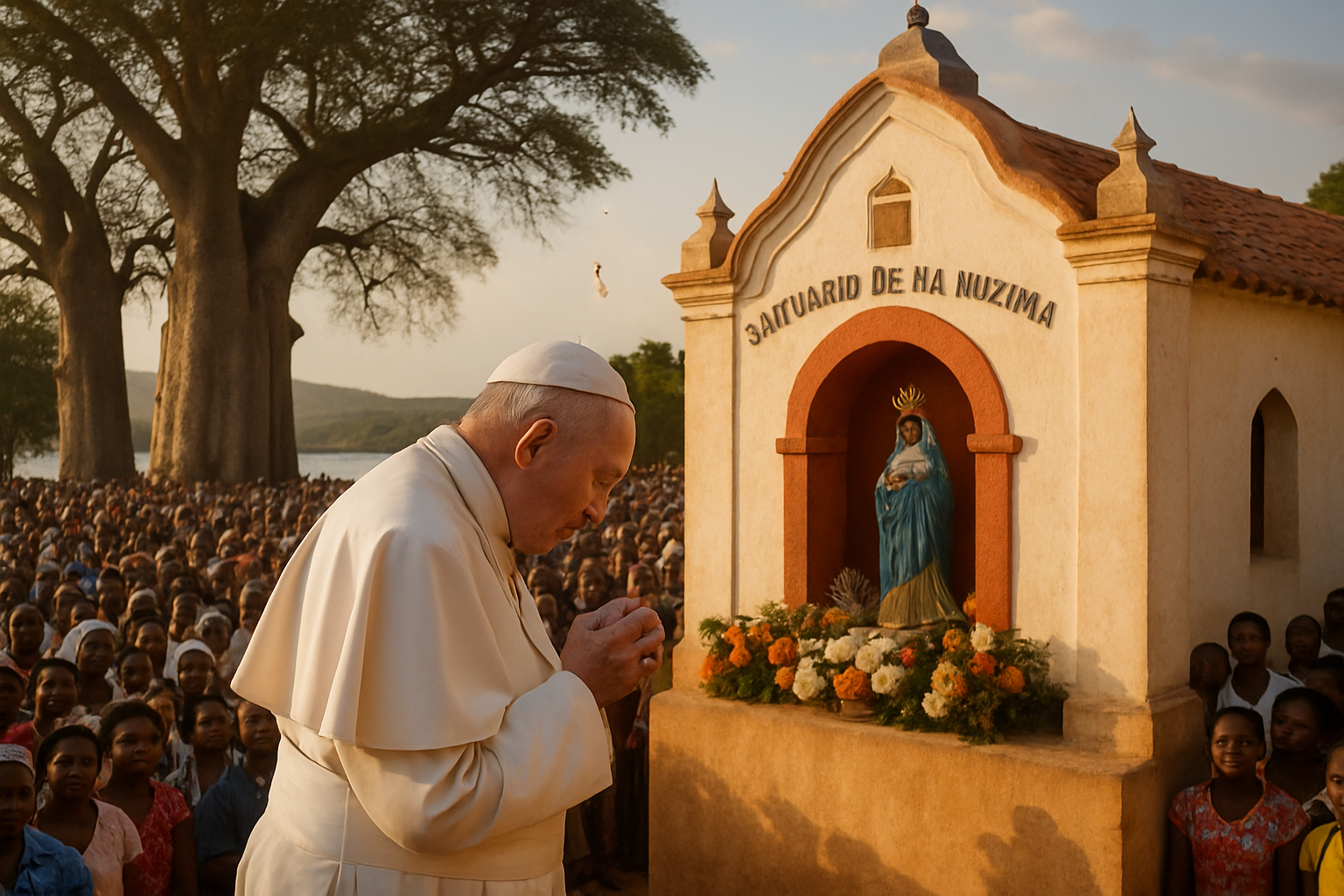
Pope Leo XIV made a deeply symbolic journey to the Sanctuary of Mama Muxima in Angola on Sunday, praying at the Catholic shrine that sits at the site of a former Portuguese slave trade hub, as the first American pontiff continued his historic 11-day African tour with messages of reconciliation and healing.
The 74-year-old Pope recalled the "sorrow and great suffering" that Angolans endured for centuries during his visit to the sanctuary, nestled in the Angolan savannahs among baobab trees at the edge of the Kwanza River. The site became a major Catholic pilgrimage destination after believers reported an appearance by the Virgin Mary around 1833, but its location carries the weight of Angola's traumatic colonial past.
A Site of Pain Transformed into Hope
The Sanctuary of Mama Muxima stands as a powerful symbol of spiritual transformation, built on land that once served as one of the most important hubs of the African slave trade during Portugal's colonial rule. For centuries, enslaved Africans were forced through this region on their way to the Americas, making the Pope's visit particularly significant as the first American pontiff to address this historical connection directly.
During his time at the sanctuary, Pope Leo XIV led prayers and reflected on the need for healing from historical wounds. The visit represents a continuation of his broader message throughout the African tour, emphasizing reconciliation between nations and peoples while acknowledging past injustices.
"The Church of Our Lady of Muxima became a place of pilgrimage where the faithful come to seek comfort and strength from the Virgin Mary."
— Local Catholic Official
Diplomatic Tensions Cast Shadow Over Sacred Visit
The Pope's Angola visit occurs amid unprecedented diplomatic tensions between the Vatican and the Trump administration. Algerian President Abdelmadjid Tebboune publicly congratulated Culture Minister efforts in ensuring the success of Pope Leo XIV's visit to Algeria, highlighting international support for the papal tour even as relations with Washington deteriorate.
The diplomatic crisis reached new heights when Vice President JD Vance criticized the Pope's theological statements, telling the pontiff to "be careful when he talks about matters of theology" during a Georgia event. This unprecedented rebuke of papal authority by an American vice president has drawn international condemnation, with Italian Prime Minister Giorgia Meloni calling Trump's attacks on the Pope "unacceptable."
Opposition leader Adalberto Costa Júnior praised Pope Leo XIV for his "powerful message" in support of the Angolan people during Saturday's events, demonstrating broad political support for the papal visit across party lines within Angola.
Angola Phase of Historic African Tour
The Angola segment represents the third phase of Pope Leo XIV's ambitious 10-day African tour, which began April 13 with his historic visit to Algeria—the first papal visit to that nation in Catholic Church history. The tour has already taken the Pope through Algeria and Cameroon, with Angola being followed by a final stop in Equatorial Guinea.
In Luanda earlier in his visit, Pope Leo XIV celebrated Mass in the Kilamba district, drawing massive crowds estimated at over 100,000 faithful. Portuguese media reported that the Pope's second day in Angola was "marked by proximity" to the people, highlighting his accessible leadership style that has characterized his pontificate since his election in May 2025.
The Pope also used his time in Angola to address contemporary challenges facing the nation, reportedly warning against the "logic of extractivism" that has exploited Angola's vast oil and mineral resources. He urged authorities not to "have fear of dissidence" in a country that has been dominated by the same political party since its 1975 independence from Portugal.
Continuing Vatican Diplomatic Revolution
Vatican sources confirm that Pope Leo XIV's approach represents a fundamental shift toward what they describe as "moral authority over diplomatic comfort"—a departure from traditional Vatican protocols that favored careful diplomatic language. This evolution has been evident throughout his African tour, from his Algeria breakthrough to his strong condemnations of global "tyrants" during his Cameroon visit.
The Pope's peace advocacy has escalated dramatically since taking office, evolving from initial expressions of "deep concern" to direct moral challenges against world leaders. His Palm Sunday declaration that God rejects prayers from leaders with "hands full of blood" marked a watershed moment in papal rhetoric.
This template-setting approach to 21st-century papal diplomacy has drawn overwhelming international support. Iranian President Pezeshkian condemned attacks on the Pope, Brazilian President Lula defended papal peace advocacy, and multiple European leaders have referenced papal appeals in their own diplomatic initiatives.
Africa as the Church's Future
The Pope's 11-day tour across four African nations acknowledges Africa as the fastest-growing Catholic region worldwide, with over 1.4 billion believers representing more than a fifth of the world's Catholics. The comprehensive itinerary includes 11 cities, 25 speeches, and 8 masses, making it the most ambitious papal journey of Leo XIV's pontificate.
The visit to Angola marks the third papal visit to the country, following John Paul II in 1992 and Benedict XVI in 2009. However, Pope Leo XIV's visit carries unique significance as the first American pontiff to address the historical connections between Angola's colonial past and the Americas directly.
The sanctuary visit demonstrates the Vatican's commitment to addressing historical injustices while promoting healing and reconciliation. By choosing to pray at a site so deeply connected to the transatlantic slave trade, Pope Leo XIV has made a powerful statement about the Church's role in acknowledging past wrongs and working toward a more just future.
A Message of Hope and Reconciliation
As Pope Leo XIV concluded his prayers at the Sanctuary of Mama Muxima, his visit stood as a testament to the power of spiritual transformation. The shrine, built on land that once witnessed human trafficking and suffering, now serves as a place where millions of pilgrims come seeking hope and divine intervention.
The Pope's presence at this historically significant site sends a clear message about the possibility of redemption and healing, even from the deepest wounds of history. His call for reconciliation resonates not only in Angola but across the African continent and beyond, as the global community grapples with the ongoing legacies of colonialism and injustice.
The Angola visit reinforces Pope Leo XIV's emerging legacy as a pontiff willing to confront difficult historical truths while offering a path forward through faith, dialogue, and mutual understanding. As his African tour continues, the first American Pope is establishing new precedents for Vatican engagement with the Global South, prioritizing direct pastoral work over traditional ceremonial protocols.