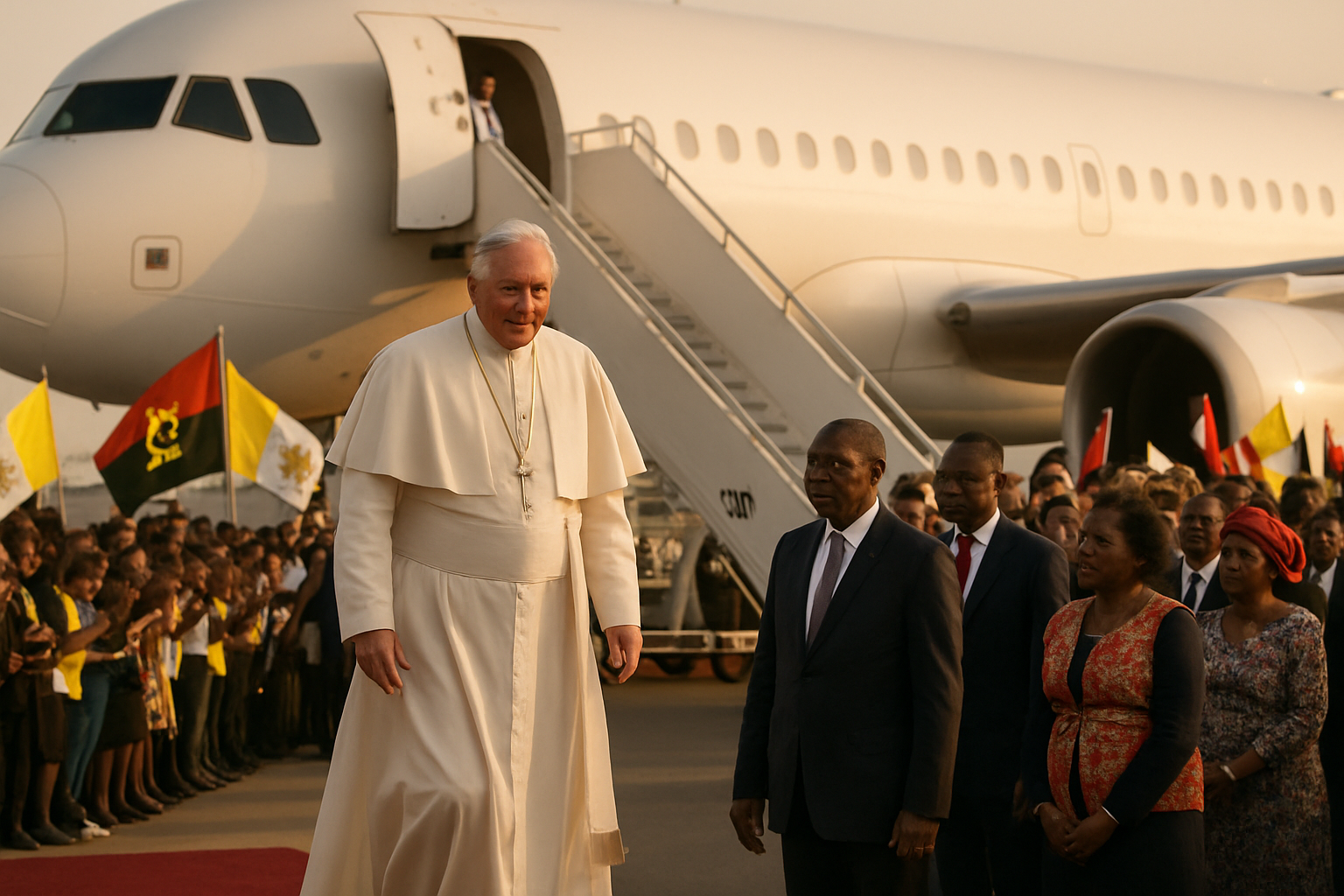
Pope Leo XIV arrived in Luanda, Angola this afternoon, beginning what Vatican officials describe as the most significant papal visit to Africa in decades amid escalating diplomatic tensions with the Trump administration over the pontiff's unwavering peace advocacy.
The first American-born Pope descended from his papal aircraft to be greeted by thousands of faithful Angolans and government officials, marking the beginning of an 11-day, four-nation African tour that includes the historic first papal visit to Algeria in Catholic Church history. The visit comes as excitement builds across Angola's capital, where crowds have been preparing to welcome the pontiff during his comprehensive tour across the continent.
Historic Papal Engagement with Africa
Pope Leo XIV becomes only the third pontiff to visit Angola, following Pope John Paul II in 1992 and Pope Benedict XVI in 2009. However, this visit carries unprecedented significance as it acknowledges Africa as the fastest-growing Catholic region worldwide, representing over 1.4 billion believers—more than a fifth of the global Catholic population.
The comprehensive African tour spans four nations from April 13-23, including Algeria, Cameroon, Angola, and Equatorial Guinea, encompassing 11 cities, 25 speeches, and eight masses. Vatican sources describe it as the most ambitious papal journey of Leo XIV's pontificate, demonstrating the Holy See's evolving diplomatic approach under the American Pope.
Unprecedented Vatican-White House Crisis
The Angola visit unfolds against the backdrop of the most serious Vatican-White House diplomatic breach in modern history. The crisis escalated dramatically when Pope Leo XIV declared he has "no fear of the Trump administration and no fear of loudly proclaiming the Gospel message," directly rejecting Trump's attacks on papal authority.
President Trump has repeatedly criticized the Pope as "WEAK on Crime, terrible for Foreign Policy," while Vice President JD Vance, a Catholic convert, told the Pope to "be careful when he talks about matters of theology" during a Georgia event—marking unprecedented criticism of papal theological authority by a sitting American administration.
"I am not a politician, and I have no intention to debate with [Trump]. The message is the same: to promote peace."
— Pope Leo XIV, responding to Trump administration attacks
Vatican Diplomacy Revolution
Vatican sources confirm the Pope has adopted what officials describe as "moral authority over diplomatic comfort"—a fundamental departure from traditional Vatican protocols that favor careful diplomatic language. This shift represents the most significant evolution in papal diplomacy since the Second Vatican Council, with the first American Pope directly challenging world leaders rather than employing ceremonial diplomatic approaches.
The Pope's rhetoric has escalated dramatically since his election in May 2025, evolving from expressions of "deep concern" to direct moral challenges. During Palm Sunday, he condemned leaders with "hands full of blood," and on Easter delivered his strongest warfare condemnation yet, declaring "Let those who have weapons lay them down!"
International Support for Vatican Position
The Pope's stance has garnered widespread international support, creating an unprecedented coalition defending papal independence. Italian Prime Minister Giorgia Meloni called Trump's attacks "unacceptable," while Iranian President Pezeshkian condemned AI-generated religious imagery as an "insult to the Pope." Malta's Archbishop Scicluna expressed concern over "unrestrained and unjustifiable attacks" on the Catholic Church head.
Brazilian President Lula defended papal peace advocacy, stating "no one should be afraid," while multiple European leaders have increasingly referenced papal peace appeals in their own diplomatic initiatives. The crisis has particularly resonated among American Catholics, with traditional Trump supporters expressing "unprecedented dismay" at attacks on the first American Pope.
Template-Setting Diplomatic Precedents
The Pope's African tour follows his successful historic visits to Algeria (the first papal visit to a Muslim-majority nation in Catholic Church history) and Cameroon, where he delivered the strongest condemnation yet of global "tyrants ravaging the world" who "spend billions on wars while ignoring humanitarian needs."
In Algeria, Pope Leo XIV conducted a spiritual pilgrimage to ancient Hippo (modern Annaba) where Saint Augustine—patron saint of the Pope's Augustinian order—lived and wrote his theological masterworks in the 5th century. President Abdelmadjid Tebboune welcomed the Pope as the "best advocate for peace in the world," creating what Vatican officials described as "Catholic-Muslim spiritual convergence."
Angola's Strategic Significance
Angola holds particular importance for the Vatican's African strategy, representing both the continent's rapid Catholic growth and its increasing geopolitical significance. The oil-rich nation has emerged as a key partner in China's Belt and Road Initiative, with major infrastructure projects including the Lobito Corridor railway connecting Angola to broader regional trade networks.
The papal visit coincides with Angola's growing role in African continental integration through the African Continental Free Trade Area (AfCFTA) implementation, positioning the country as a strategic bridge between African development and global economic partnerships.
Implications for American Catholic Community
The unprecedented confrontation between America's first Pope and the current American president has created a constitutional crisis within the American Catholic community, caught between political loyalty and religious conviction. Catholic voters, a crucial swing demographic, face an unprecedented situation with the president attacking the first American pontiff.
Catholic author George Weigel observed that "American Catholics are understanding their mistake—they voted for a narcissist," reflecting growing concern among traditional Catholic Trump supporters about attacks on papal authority. The crisis creates significant challenges for Republican leaders attempting to balance Trump loyalty with religious convictions during electoral considerations.
21st-Century Papal Diplomacy
Vatican experts describe Pope Leo XIV's approach as potentially template-setting for 21st-century papal diplomacy, testing whether ancient spiritual traditions can provide contemporary moral guidance in an interconnected world facing global challenges. The success of maintaining papal independence despite direct political pressure from the American administration could strengthen Vatican global influence for decades.
The Pope's African tour demonstrates this new paradigm, combining massive popular support—including 600,000 people attending Mass at Japoma Stadium in Douala, Cameroon—with moral clarity on global issues, positioning the Vatican as an increasingly important voice in international affairs.
Looking Ahead
Pope Leo XIV's Angola visit represents a defining moment in both Vatican diplomacy and international religious authority, as the first American Pope navigates unprecedented tensions with the American government while strengthening the Church's engagement with the Global South. The visit's success reinforces Vatican independence and moral authority while advancing interfaith dialogue and peace advocacy across Africa's fastest-growing Catholic region.
As the Pope continues his historic African tour, the world watches whether moral authority can effectively challenge political power in defining 21st-century global governance, with implications that will resonate through Catholic communities worldwide for years to come.