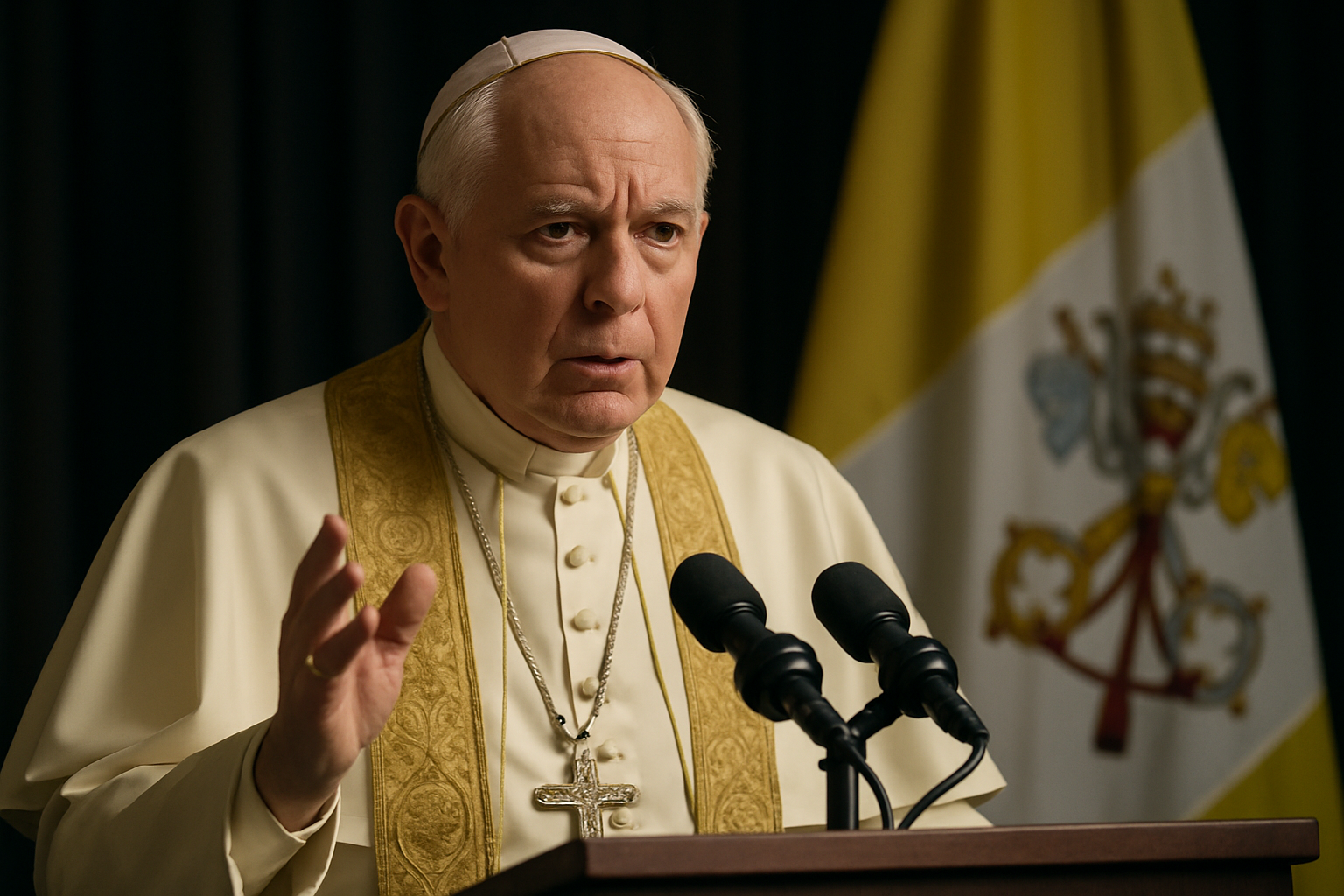
Pope Leo XIV moved to clarify his recent condemnation of global "tyrants" was not specifically directed at President Donald Trump, as the unprecedented diplomatic crisis between the Vatican and White House continues to escalate during the pontiff's historic African tour.
Speaking to reporters aboard his papal flight to Angola on Saturday, the first American-born pope in Catholic history sought to defuse tensions by explaining that his speech in Cameroon decrying that the world was being "ravaged by a handful of tyrants" was prepared two weeks before Trump's harsh criticism of the Vatican.
"That speech was prepared two weeks ago, well before the president ever commented on myself and on the message of peace that I am promoting," Pope Leo XIV told journalists, according to Cyprus Mail reports. The pontiff emphasized that media reporting about his Africa tour comments "has not been accurate in all its aspects."
The Genesis of the Crisis
The diplomatic breakdown between the Vatican and the Trump administration reached historic proportions after Trump posted on Truth Social calling the Pope "WEAK on Crime, and terrible for Foreign Policy." The president also shared an AI-generated image depicting himself in a Jesus-like pose, drawing widespread condemnation from Christian leaders globally.
The escalation intensified when Vice President JD Vance, a Catholic convert, publicly criticized the Pope's theological statements, telling the pontiff to "be careful when he talks about matters of theology" during a Georgia event—marking the first time a sitting U.S. vice president has challenged papal theological authority.
"I am not a politician, and I have no intention to debate with [Trump]. The message is the same: to promote peace. I have no fear of the Trump administration and no fear of loudly proclaiming the Gospel message."
— Pope Leo XIV
Historic African Tour Context
The clarification comes as Pope Leo XIV continues his groundbreaking 10-day African tour, which began April 13 with the first papal visit to Algeria in Catholic Church history. The tour, spanning four nations including Cameroon, Angola, and Equatorial Guinea, acknowledges Africa as the fastest-growing Catholic region worldwide with over 1.4 billion believers.
During his visit to Bamenda in Cameroon's conflict-affected anglophone regions, the Pope delivered some of his strongest criticism yet of global leaders, declaring that "masters of war pretend not to know it takes a moment to destroy, a lifetime not enough to rebuild." This speech, which many interpreted as directed at Trump, was actually the source of the current clarification.
International Support for the Vatican
The diplomatic crisis has drawn international attention and widespread support for the Vatican's position. Italian Prime Minister Giorgia Meloni called Trump's attacks on the Pope "unacceptable," while Iranian President Pezeshkian condemned the AI religious imagery as "profanation of Jesus not acceptable for any free person."
Maltese Archbishop Charles Scicluna expressed concern over what he termed an "unrestrained and unjustifiable attack" on the Catholic Church's leader. Brazilian President Luiz Inácio Lula da Silva defended papal peace advocacy, stating "no one should be afraid" of the Pope's moral authority.
Vatican Diplomacy Revolution
The crisis represents a fundamental shift in Vatican diplomacy under Pope Leo XIV, who has prioritized what Vatican sources describe as "moral authority over diplomatic comfort"—a dramatic departure from traditional Vatican protocols that typically favor careful diplomatic language.
Since his election in May 2025 following Pope Francis's death, the American pontiff has escalated his peace rhetoric from early expressions of "deep concern" to direct moral challenges against world leaders. His approach has included personally carrying the cross during Good Friday ceremonies (the first Pope to do so since 1994) and delivering increasingly forceful condemnations of warfare.
Catholic Community Division
The unprecedented situation of an American president attacking the first American pope has created significant division within the U.S. Catholic community. Traditional Trump supporters have expressed what observers describe as "unprecedented dismay" at attacks on papal authority.
Catholic author George Weigel noted that "American Catholics are understanding their mistake—they voted for a narcissist." The crisis has placed Catholic voters in the difficult position of choosing between political loyalty and religious conviction regarding their first American pontiff.
Algeria: A Historic Milestone
The Pope's clarification came as he successfully concluded the first papal visit to Algeria in Catholic Church history. The visit held profound spiritual significance as Algeria is the birthplace of Saint Augustine, the patron saint of the Pope's Augustinian order.
President Abdelmadjid Tebboune welcomed the Pope as the "best advocate for peace in the world" during the visit, which created what Vatican sources described as a "Catholic-Muslim spiritual convergence" during the final days of Ramadan. The Algeria visit established precedents for Vatican engagement with Muslim-majority nations, emphasizing dialogue over confrontation.
Template-Setting Implications
Vatican experts describe the current confrontation as potentially template-setting for 21st-century papal diplomacy. The success or failure of maintaining papal independence despite direct political pressure from the American administration could strengthen Vatican global influence for decades.
The crisis tests whether ancient spiritual traditions can provide contemporary moral guidance in an increasingly interconnected world facing global conflicts that threaten energy security, nuclear governance, and territorial stability.
Continuing African Engagement
As Pope Leo XIV continues to Angola for the third leg of his ambitious African tour, the diplomatic tensions with Washington remain unresolved. The tour's comprehensive scope—including 11 cities, 25 speeches, and 8 masses across four countries—demonstrates the Vatican's commitment to Global South engagement while addressing contemporary challenges through direct pastoral work rather than ceremonial protocols.
The tour represents the most ambitious papal journey of Pope Leo XIV's pontificate, establishing new paradigms for Vatican engagement with the developing world while navigating unprecedented political pressure from his homeland.
Looking Forward
The Pope's clarification may provide an opportunity for de-escalation, though fundamental differences remain between the Vatican's peace advocacy and the Trump administration's foreign policy approach. The first American pope's commitment to "moral authority over diplomatic comfort" suggests continued tensions as global conflicts persist.
As the papal aircraft continued toward Angola, Pope Leo XIV's message remained clear: despite political pressure, the Vatican will continue its mission of promoting peace and dialogue across religious and cultural divides, regardless of the political consequences at home.