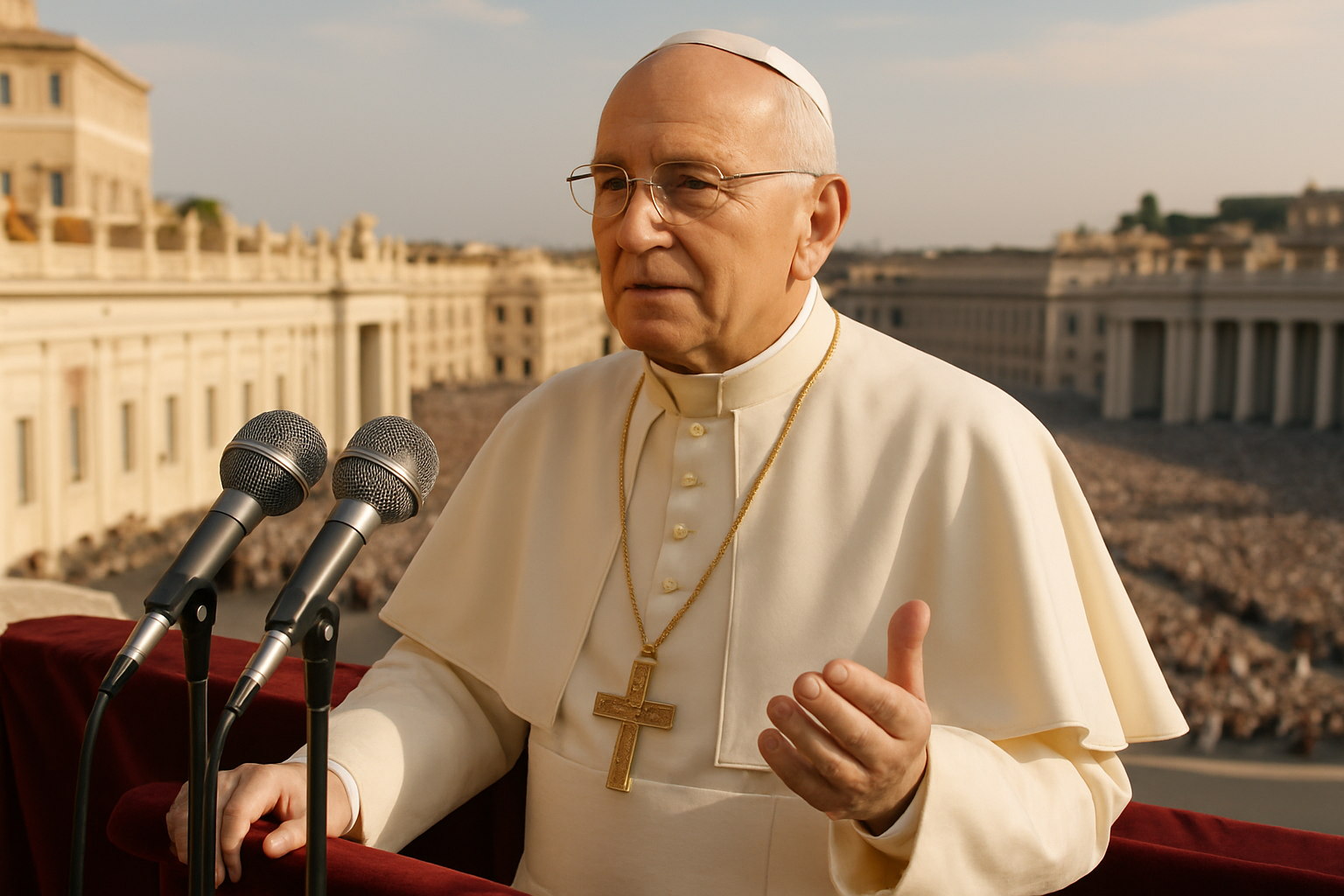
Pope Leo XIV attempted to ease unprecedented tensions with the Trump administration during his papal flight to Angola on Saturday, clarifying that his condemnation of global "tyrants ravaging the world" was not directed at President Trump, while maintaining his unwavering commitment to peace advocacy despite the most serious Vatican-White House diplomatic crisis in modern history.
Speaking to journalists aboard the papal plane, the first American pontiff explained that his strongly-worded speech condemning world leaders was "prepared two weeks ago, well before the president ever commented on myself." The clarification came as the Pope continued his historic 10-day African tour, which includes the first papal visit to Algeria in Catholic Church history.
Despite the attempted de-escalation, Pope Leo XIV stood firm on his core message, telling reporters that debating with Trump was "not in my interest at all" while reaffirming his dedication to promoting peace through moral authority rather than political engagement.
Historic Vatican-White House Crisis Reaches Unprecedented Depths
The diplomatic crisis between the Vatican and the Trump administration has escalated to levels unseen in modern times, with the president calling Pope Leo XIV "WEAK on Crime, terrible for Foreign Policy" on Truth Social and posting controversial AI-generated religious imagery depicting himself in Christ-like poses.
Vice President JD Vance further inflamed tensions by publicly criticizing the Pope's theological statements, telling the pontiff to "be careful when he talks about matters of theology" during a Georgia event. This marked an unprecedented rebuke of papal authority by a sitting vice president and deepened the most serious diplomatic breach between the Vatican and White House in modern history.
"I have no fear of the Trump administration and no fear of loudly proclaiming the Gospel message, because that is what I am here for."
— Pope Leo XIV
The Pope's defiant stance has drawn overwhelming international support, with Italian Prime Minister Giorgia Meloni calling Trump's attacks "unacceptable," Iranian President Pezeshkian condemning the AI religious imagery as "profanation of Jesus," and multiple European leaders defending Vatican independence.
Algeria Visit Marks Historic Catholic-Muslim Dialogue
Pope Leo XIV's clarification came as he successfully completed the first papal visit to Algeria in Catholic Church history. The three-day visit (April 13-15) included a profound spiritual pilgrimage to ancient Hippo (modern Annaba), where Saint Augustine - the patron saint of the Pope's Augustinian order - lived and wrote his theological masterworks in the 5th century.
President Abdelmadjid Tebboune personally oversaw the farewell ceremony at Houari Boumediene International Airport, declaring the Pope the "best advocate for peace in the world" during ongoing Middle East conflicts. The visit, occurring during the final days of Ramadan, created what Vatican sources described as a "Catholic-Muslim spiritual convergence."
The historic breakthrough establishes precedents for Vatican engagement with Muslim-majority nations and demonstrates Pope Leo XIV's commitment to interfaith dialogue over confrontation. The Algeria visit serves as the foundation for the Pope's broader diplomatic revolution, prioritizing "moral authority over diplomatic comfort" - a fundamental departure from traditional Vatican protocols.
American Catholic Community Faces Unprecedented Crisis
The confrontation between America's first pope and the current American president has created a constitutional crisis within the Catholic community, with traditional Trump supporters expressing "unprecedented dismay" at attacks on papal authority. Catholic author George Weigel characterized the situation starkly: "American Catholics are understanding their mistake - they voted for a narcissist."
The crisis poses fundamental questions about the balance between political loyalty and religious conviction for the crucial swing demographic of Catholic voters. The unprecedented situation of an American president attacking an American pope creates challenges for Republican leaders seeking to balance Trump loyalty with religious convictions.
Vatican Diplomatic Revolution Under First American Pope
Pope Leo XIV's approach represents a template-setting shift in 21st-century papal diplomacy. His evolution from early expressions of "deep concern" to direct moral challenges - including his Palm Sunday condemnation of leaders with "hands full of blood" and his personal carrying of the cross on Good Friday - demonstrates a fundamental transformation in Vatican international engagement.
Vatican experts describe this as a watershed moment testing moral authority versus political power in global governance. The success of maintaining papal independence despite direct political pressure from the most powerful American officials could strengthen Vatican global influence for decades.
The Pope's comprehensive African tour continues through April 23, including visits to Cameroon, Angola, and Equatorial Guinea. This ambitious journey across four nations acknowledges Africa as the fastest-growing Catholic region worldwide, with over 1.4 billion believers representing more than a fifth of the world's Catholics.
International Support Strengthens Vatican Position
The international response has overwhelmingly favored the Vatican's position. Brazilian President Lula defended papal peace advocacy, stating "no one should be afraid" of the Pope's moral challenges. European leaders have increasingly referenced papal peace appeals in their own diplomatic initiatives, demonstrating the growing influence of Vatican moral authority in international affairs.
Maltese Archbishop Charles Scicluna expressed concern over the "unrestrained and unjustifiable attack" on the head of the Catholic Church, while multiple nations have privately questioned the impact on U.S. international credibility.
Template-Setting Moment for Religious Leadership
The ongoing confrontation represents a fundamental test of whether ancient spiritual traditions can provide contemporary moral guidance to a world seeking peace amid global conflicts threatening energy security, nuclear governance, and territorial stability.
Pope Leo XIV's unwavering peace advocacy, despite unprecedented political pressure, establishes a new paradigm for papal engagement with global challenges. His approach prioritizes prophetic witness over diplomatic accommodation, with implications that will resonate throughout Catholic communities worldwide for years to come.
As the Pope continues his historic African mission, emphasizing Catholic-Muslim dialogue and peace advocacy, the resolution of this crisis may determine the role of religious authority in international affairs for the 21st century. The success of maintaining Vatican independence could provide a framework for moral leadership in addressing contemporary global challenges, while failure might signal the limits of religious influence in modern governance.