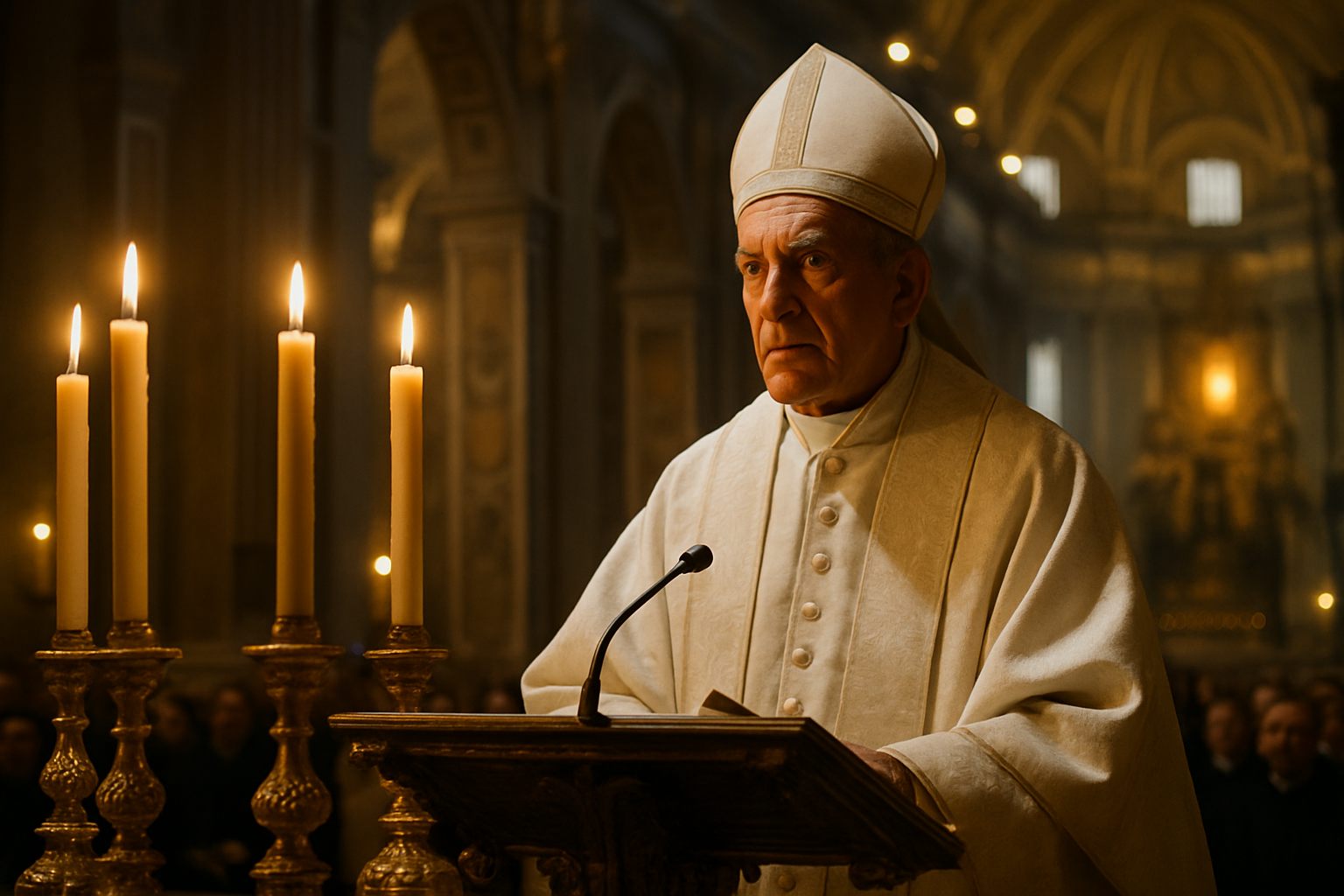
Pope Leo XIV delivered his strongest condemnation of warfare yet during a special Easter peace vigil at St. Peter's Basilica Saturday evening, denouncing the "delusion of omnipotence" fueling the US-Israeli war in Iran and demanding world leaders abandon the pursuit of power through violence.
In what Vatican sources describe as the most forceful papal intervention in international affairs since his May 2025 election, the American-born Pope Leo XIV used his first Easter season as pontiff to issue an unprecedented moral challenge to global leaders engaged in warfare, specifically addressing the crisis that has brought the world to the brink of regional war.
"We must stop the delusion of omnipotence that makes itself increasingly aggressive and unpredictable," Pope Leo XIV declared during the evening vigil attended by thousands at St. Peter's Square, his words broadcast to millions worldwide. "Prayer must be a barrier against the delirium of omnipotence that drags God's name into discourses of death."
Vatican Escalates Diplomatic Pressure
The Pope's Easter intervention represents the culmination of an extraordinary diplomatic campaign that began with "deep concern" in March and has evolved into direct moral confrontation with world leaders. This marks the most dramatic escalation in papal rhetoric since his Palm Sunday declaration that God rejects the prayers of leaders with "hands full of blood."
According to multiple Vatican sources, the Pope specifically referenced the ongoing US-Israeli military operations in Iran, which have created what UN Secretary-General António Guterres calls "the greatest test of multilateral cooperation in the modern era." The conflict has resulted in over 18,000 flight cancellations worldwide, oil prices exceeding $100 per barrel, and the closure of the Strait of Hormuz affecting 40% of global oil transit.
"In the kingdom of God, there is no place for sword or drone. Let those who have weapons lay them down! Let those who have the power to unleash wars choose peace!"
— Pope Leo XIV, Easter Peace Vigil
The timing of the Pope's intervention coincides with what diplomatic sources describe as the most dangerous international crisis since the Cold War ended. The death of Iranian Supreme Leader Ali Khamenei on March 1, killed in Operation Epic Fury alongside over 40 senior Iranian officials, has triggered massive retaliation through "Operation True Promise 4" that has drawn in multiple nations across the Middle East and beyond.
Breaking With Diplomatic Tradition
Vatican insiders confirm that Pope Leo XIV has deliberately abandoned the traditional papal approach of diplomatic language in favor of what one senior cardinal called "moral authority over diplomatic comfort." This represents a fundamental shift in how the Holy See engages with international crises.
The Pope's Easter message departed significantly from the customary "Urbi et Orbi" blessing format, instead focusing entirely on the urgent need for global peace. Unlike his predecessors who typically named specific conflicts, Pope Leo XIV issued a universal condemnation of warfare while making clear references to current events.
Italian media noted the Pope's specific denunciation of the "continuous violations of international law" and his call to "listen to the voice of children in conflict zones." This directly references the humanitarian catastrophe unfolding across multiple theaters, including the Minab school attack in Iran that killed between 165-185 students and the systematic targeting of medical personnel in Lebanon, where 26 paramedics have been killed since March.
Historical Context of Papal Peace Appeals
The Vatican's peace advocacy has intensified dramatically since Pope Leo XIV moved into the renovated Apostolic Palace in March 2026. His March 15 ceasefire appeal marked the strongest papal intervention yet, followed by increasingly forceful statements culminating in Saturday's Easter vigil.
This represents a departure from the diplomatic protocols of his predecessors. German media has characterized Pope Leo XIV as "no self-promoter like predecessors," focusing on substantive theological and moral guidance rather than ceremonial oversight. His personal carrying of the cross during Good Friday ceremonies marked the first time a pope had performed this act since 1994.
Global Crisis Reaches Breaking Point
The Pope's intervention comes as the Iran crisis enters a critical phase that threatens to expand beyond the Middle East. European territory was attacked for the first time since World War II when Iranian drones struck RAF Akrotiri in Cyprus, prompting an unprecedented naval coalition response including HMS Dragon and vessels from Spain, Italy, France, Netherlands, and Greece.
The humanitarian toll continues mounting across multiple fronts:
- Iran: 787+ civilian casualties according to Red Crescent reports
- Lebanon: 1.2 million displaced (25% of population), systematic targeting of medical infrastructure
- Gaza: Over 1,600 documented ceasefire violations resulting in 680+ Palestinian deaths during the supposed peace period
- Global: 18,000+ flights cancelled worldwide in aviation crisis approaching COVID-19 scale
Nuclear governance has also reached a critical juncture. The New START treaty between the United States and Russia expired on February 5, 2026, marking the first time in over 50 years without binding nuclear arms control between superpowers. Iran continues enriching uranium to 60% purity with over 400 kilograms of near-weapons-grade material.
Religious Freedom Under Threat
The Pope's Easter message gains additional urgency from recent restrictions on religious observances in conflict zones. On Palm Sunday, Israeli authorities prevented Cardinal Pierbattista Pizzaballa, Latin Patriarch of Jerusalem, from entering the Church of the Holy Sepulchre for traditional liturgy—the first such restriction in centuries at Christianity's holiest site.
The incident, which drew condemnation from Italy, France, and eight Arab nations, represents what Vatican sources describe as an unprecedented challenge to religious freedom during Christianity's holiest season. The restrictions affected 2.4 billion Christians during Holy Week while simultaneously limiting access for 2 billion Muslims during Ramadan.
Pakistan Mediation Efforts
Despite the Pope's moral intervention, diplomatic efforts continue through unprecedented middle-power mediation. Pakistani Prime Minister Shehbaz Sharif and Field Marshal Asim Munir have emerged as crucial diplomatic brokers, achieving what observers call the "Islamabad Accord"—a temporary ceasefire that prevented what President Trump had threatened as an attack where "a whole civilization will die tonight."
The Pakistani mediation, conducted through a "message relay system" when direct communication proved impossible, represents what UN officials describe as innovative diplomatic intervention when traditional mechanisms fail. However, critical loopholes remain, particularly regarding Lebanon, which Netanyahu explicitly excluded from ceasefire frameworks despite Pakistan's assurance that the agreement covers "all fronts."
Template-Setting Moment for 21st Century Diplomacy
Vatican diplomatic experts emphasize that Pope Leo XIV's Easter intervention represents a template-setting moment for how religious authority engages with international crises in the 21st century. The Pope's direct moral challenges to world leaders claiming divine justification for warfare mark a significant evolution from traditional diplomatic protocols.
The stakes extend far beyond the current crisis. Success in containing the conflict could provide a diplomatic framework for future nuclear and territorial disputes. Failure may accelerate military solutions over diplomatic approaches, potentially reshaping international conflict resolution for decades.
"This is our God: Jesus, King of Peace, who rejects war, whom no one can use to justify war. He does not listen to the prayers of those who wage war, but rejects them, saying: 'Even though you make many prayers, I will not listen: your hands are full of blood.'"
— Pope Leo XIV, Palm Sunday Address, March 29, 2026
Upcoming Vatican Initiatives
The Pope's Easter peace appeal sets the stage for several upcoming Vatican initiatives, including a historic Africa tour from April 13-23 that will include the first papal visit to Algeria in Catholic history, focusing on interfaith dialogue. The Vatican has also announced plans for additional peace vigils providing concrete action beyond rhetorical appeals.
Vatican sources indicate that Pope Leo XIV's direct approach to international affairs represents a fundamental shift toward "creative use of traditional celebrations to address contemporary crises." This establishes a new template for papal engagement with global challenges through moral authority rather than diplomatic comfort.
International Response and Future Implications
The Pope's Easter intervention has drawn widespread international attention, with European leaders referencing papal appeals in their own diplomatic initiatives. French President Emmanuel Macron has offered to host direct Israel-Lebanon talks in Paris—the first such negotiations since the November 2024 ceasefire collapse.
As the crisis continues to test what Guterres calls "the greatest test of multilateral cooperation in the modern era," Pope Leo XIV's Easter message establishes the Vatican as an uncompromising voice for peace transcending traditional diplomatic boundaries. His moral challenges to world leaders represent what may be remembered as a defining moment for Vatican leadership in 21st-century international affairs.
The coming weeks will test whether the Pope's unprecedented moral intervention can influence the trajectory of the world's most dangerous crisis since the Cold War ended, as millions await to see if ancient spiritual traditions can provide contemporary guidance for a world desperately seeking peace, hope, and renewal amid the "delusion of omnipotence" that threatens global stability.