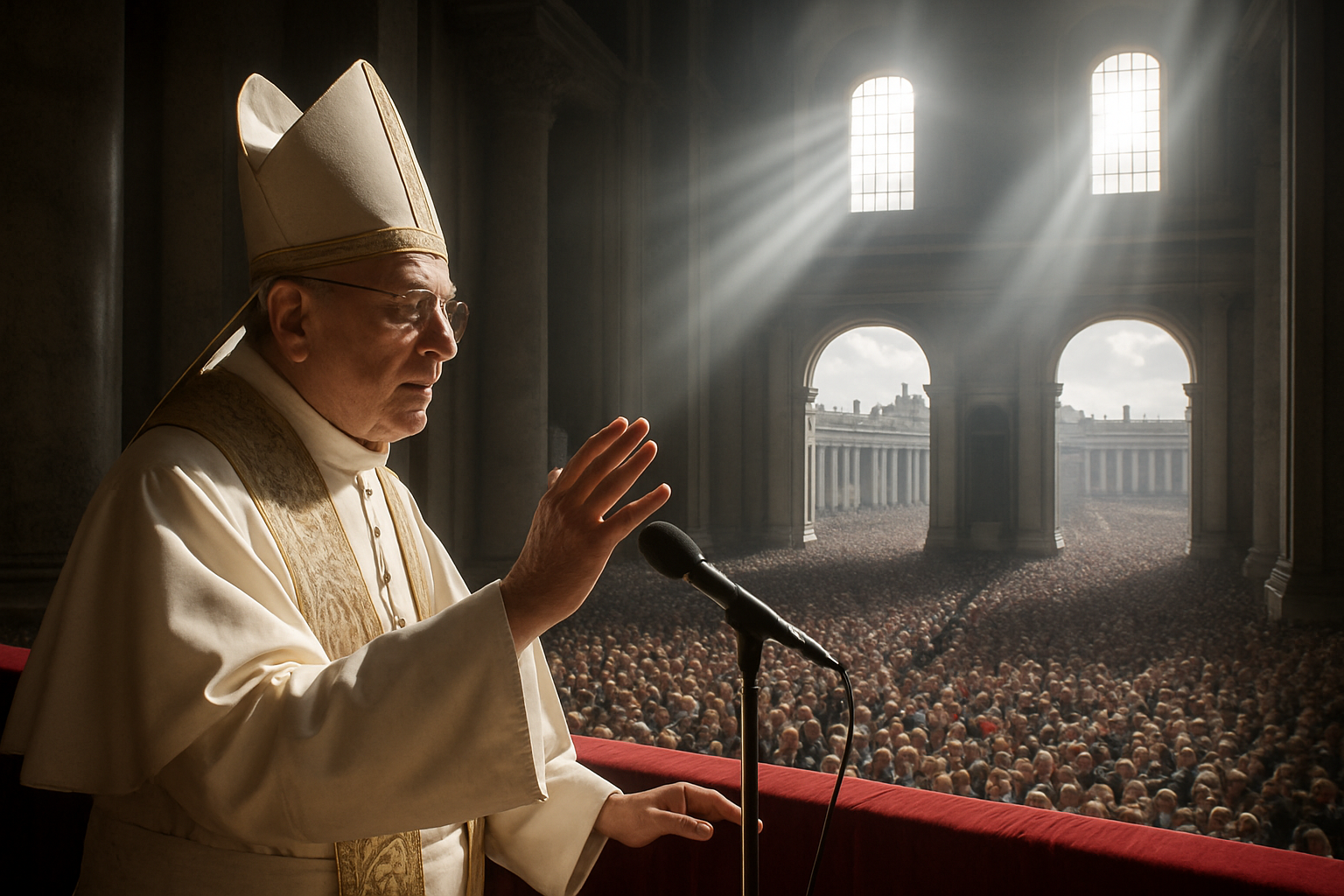
Pope Leo XIV marked his first Easter Sunday as pontiff with an impassioned call for global peace, delivering the traditional "Urbi et Orbi" blessing from the balcony of St. Peter's Basilica while urging world leaders to "choose peace" amid mounting international conflicts.
The first American-born Pope addressed thousands gathered in St. Peter's Square and millions watching worldwide, emphasizing Easter's message of hope and resurrection while condemning the "violence of war that kills and destroys." His Easter message represented the strongest peace appeal of his pontificate to date, building on increasingly forceful statements throughout Holy Week.
Unprecedented Call to "Lay Down Weapons"
In a significant departure from recent papal tradition, Pope Leo XIV chose not to list specific global conflicts by name during his "Urbi et Orbi" (To the City and the World) blessing. Instead, he issued a universal appeal that resonated across multiple crisis zones, declaring: "Let those who have weapons lay them down! Let those who have the power to unleash wars choose peace!"
The Pope's message took on particular urgency given the backdrop of ongoing conflicts in the Middle East and Ukraine. Speaking in 10 languages to the diverse crowd below, he lamented that people "become accustomed to violence, resign themselves to it and become indifferent to it."
"Violence can never lead to the justice, stability and peace that the people are waiting for."
— Pope Leo XIV, Easter 2026 Message
Evolution of Papal Peace Advocacy
Sunday's message represented the culmination of Pope Leo XIV's escalating peace advocacy since assuming the papacy in May 2025. His rhetoric has evolved from early expressions of "deep concern" to increasingly direct moral challenges against warfare. During Palm Sunday, he delivered his strongest condemnation yet, declaring that God rejects prayers from leaders with "hands full of blood."
The American Pope's approach has marked a departure from traditional diplomatic protocols, with Vatican sources indicating a shift toward moral authority over diplomatic comfort. This directness was evident throughout Holy Week, including his historic decision to personally carry the wooden cross during Good Friday ceremonies at Rome's Colosseum—the first Pope to do so since 1994.
Global Context of Crisis
Pope Leo XIV's Easter message occurred against a backdrop of unprecedented global challenges. The Middle East crisis has resulted in over 18,000 flight cancellations worldwide, with oil prices surpassing $100 per barrel as the Strait of Hormuz remains effectively closed, affecting 40% of global oil transit. In Ukraine, the conflict approaches its fourth anniversary with no resolution in sight, while the recent expiration of the New START nuclear treaty has eliminated constraints between the world's largest nuclear powers for the first time in over 50 years.
The Pope's condemnation of the "idolatry of profit" alongside the "violence of war" reflected his broader concern about global inequalities that fuel conflicts. His message resonated particularly strongly given the international community's struggle to find diplomatic solutions to mounting crises.
A Message of Hope Amid Darkness
Despite the somber context, Pope Leo XIV's Easter message emphasized the fundamental Christian message of resurrection and renewal. Speaking from the renovated Apostolic Palace, where he recently took residence after a ten-month renovation, the Pope called for hearts to be "transformed" by the Easter message of hope.
The ceremony itself embodied this message of renewal. After celebrating Easter Vigil the previous evening, where he baptized ten adults from various countries and carried the paschal candle through St. Peter's Basilica, the Pope's Easter Sunday address demonstrated the ancient traditions finding contemporary expression through pastoral leadership.
International Response and Significance
The Pope's Easter message received widespread attention across international media and diplomatic circles. European leaders, who have been grappling with the Ukraine crisis and Middle East tensions, referenced papal appeals in their own statements. Italian President Sergio Mattarella emphasized "peaceful coexistence" in his Easter message, while religious leaders worldwide echoed the Pope's call for dialogue over conflict.
The message takes on additional significance given Pope Leo XIV's upcoming initiatives, including a historic Africa tour from April 13-23 that will include the first-ever papal visit to Algeria, emphasizing Catholic-Muslim dialogue. The Vatican has also announced a special peace vigil for April 11, providing concrete action beyond rhetorical appeals.
Defining Moment for Pontificate
Sunday's Easter message appears to establish the template for Pope Leo XIV's pontificate—direct moral engagement with global challenges, uncompromising peace advocacy, and creative use of traditional celebrations to address contemporary crises. Unlike his predecessors who often relied on diplomatic language, the first American Pope has shown a willingness to issue direct moral challenges to world leaders.
Vatican observers note this approach reflects both the Pope's background and the urgency of current global challenges. His Easter message demonstrated how ancient spiritual traditions can provide contemporary moral guidance for a world seeking peace, hope, and renewal.
Looking Forward
As Pope Leo XIV's inaugural Easter as pontiff concludes, his message of peace amid global conflicts establishes him as a moral voice willing to transcend traditional diplomatic boundaries. His call for leaders to "choose peace" resonates not only with Catholic faithful but with all those working for peace and human dignity.
The success of his Easter message, coupled with the positive reception of his Holy Week ceremonies, suggests that Pope Leo XIV's direct approach to moral leadership may indeed provide the spiritual guidance needed in these challenging times. As he prepares for his upcoming African tour and continued peace advocacy, his Easter message will likely be remembered as a defining moment when the Vatican positioned itself as an uncompromising voice for peace in an increasingly troubled world.