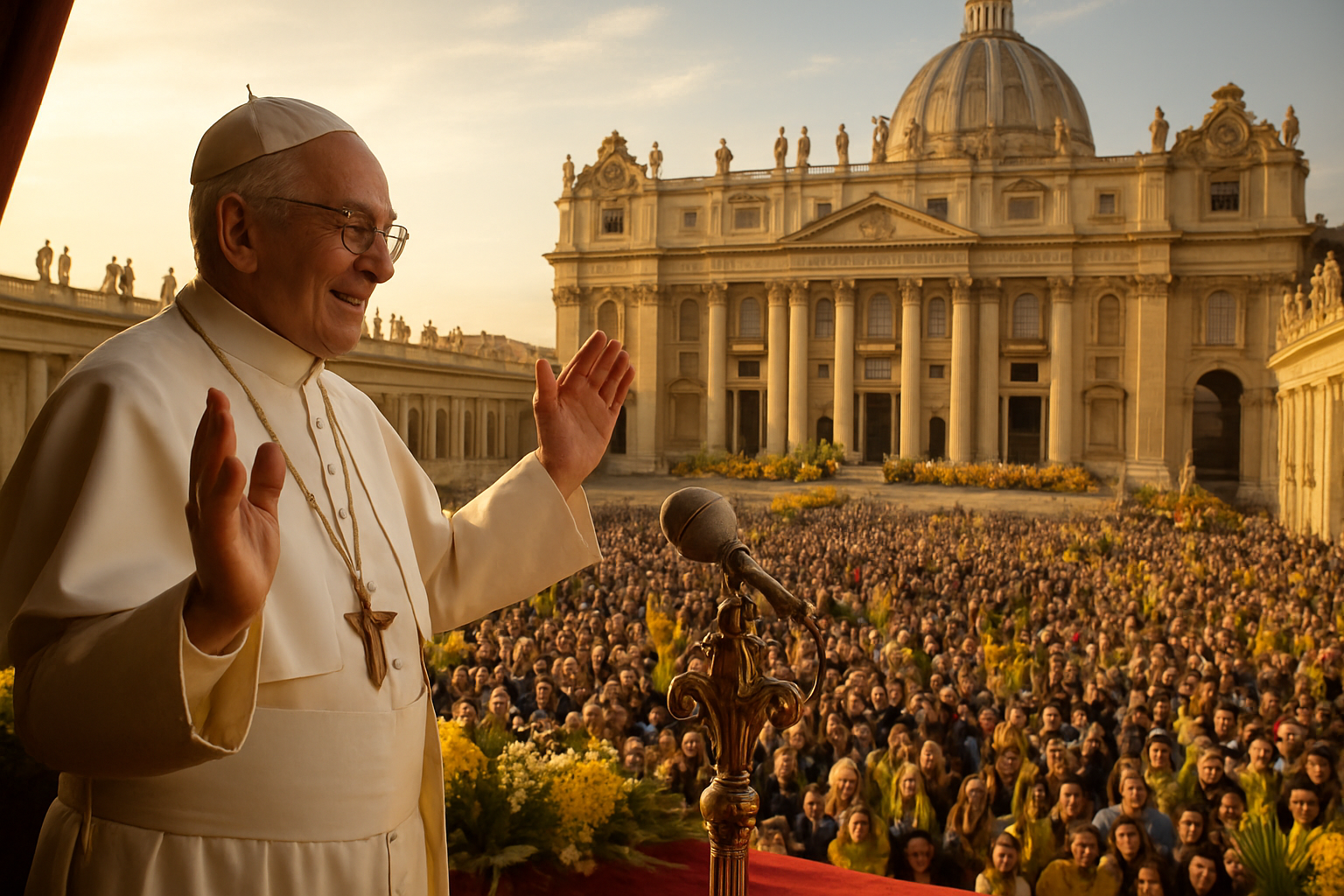
Pope Leo XIV delivered his first Easter message as pontiff on Sunday, issuing his strongest call yet for global peace from the balcony of St. Peter's Basilica during the traditional "Urbi et Orbi" blessing, marking a historic milestone for the first American pope in Catholic Church history.
Speaking to over 50,000 faithful gathered in St. Peter's Square and millions watching worldwide, Pope Leo XIV departed from diplomatic tradition by delivering a direct moral challenge to world leaders, declaring: "Let those who have weapons lay them down! Let those who have the power to unleash wars choose peace!"
Evolution of Papal Peace Advocacy
The Easter message represented the culmination of an escalating series of papal appeals since the American-born pontiff's election in May 2025. His rhetoric has evolved dramatically from early expressions of "deep concern" to increasingly forceful moral challenges against warfare.
Most notably, during Palm Sunday on March 29, Pope Leo XIV delivered what Vatican observers described as his strongest condemnation of warfare yet, declaring that God rejects prayers of leaders who start wars and have "hands full of blood." This marked a significant departure from traditional papal diplomacy toward moral clarity over diplomatic protocol.
The escalation continued through Holy Week with unprecedented personal gestures. On Good Friday, Pope Leo XIV became the first pontiff since 1994 to personally carry the wooden cross through all 14 stations of the Way of the Cross at Rome's Colosseum, demonstrating his leadership style of direct engagement with Christian symbols rather than ceremonial oversight.
Global Context of the Message
The pope's Easter appeal comes amid multiple international crises affecting global security. The Middle East remains in turmoil with ongoing conflicts in Iran, while oil prices have surged past $80 per barrel due to the closure of the Strait of Hormuz, which affects 40% of global oil transit. Over 18,000 flights have been cancelled worldwide, representing the most extensive aviation disruption since the COVID-19 pandemic.
The nuclear landscape has also become more precarious. The New START treaty between the United States and Russia expired on February 5, 2026, marking the first time in over 50 years without nuclear arms control agreements between the superpowers. UN Secretary-General António Guterres has warned that nuclear risks are now "at their highest level in decades."
Against this backdrop, the Vatican has positioned itself as a moral authority during a period of international diplomatic failures. Pope Leo XIV's intervention from the renovated Apostolic Palace signals the full engagement of papal authority in international peace efforts.
Unprecedented Religious Freedom Challenges
The Easter celebrations occurred amid what many are calling unprecedented restrictions on religious freedom. During Palm Sunday, Israeli authorities prevented Cardinal Pierbattista Pizzaballa, the Latin Patriarch of Jerusalem, from entering the Church of the Holy Sepulchre for Mass—marking the "first time in centuries" such restrictions were imposed on Christianity's holiest site.
The incident drew international condemnation from leaders including Italian Prime Minister Giorgia Meloni, who called it an "offense to the faithful," and French President Emmanuel Macron. The restrictions affected not only 2.4 billion Christians during Holy Week but also 2 billion Muslims observing Ramadan, creating an unprecedented situation affecting all three Abrahamic faiths simultaneously.
Breaking Diplomatic Tradition
Vatican sources confirm that Pope Leo XIV's approach represents a shift from traditional diplomatic language to moral authority over diplomatic comfort. The American pope's direct style contrasts with his predecessors' more measured diplomatic protocols, positioning the Vatican as an uncompromising voice for peace that transcends traditional boundaries.
German media noted that Pope Leo XIV has emerged as "no self-promoter like predecessors," focusing on substantive theological and moral guidance. His personal carrying of the cross on Good Friday and his baptism of ten adults from various countries during the Easter Vigil demonstrate this hands-on approach to spiritual leadership.
Historic Firsts and Future Initiatives
As the first American pontiff, Pope Leo XIV's inaugural Easter establishes precedents for his pontificate: direct moral engagement with global challenges, uncompromising peace advocacy, and creative use of traditional celebrations to address contemporary crises. His approach represents both a tribute to his predecessor Pope Francis while establishing a distinctive voice on global affairs.
Looking ahead, the pope has announced several significant initiatives. A special peace vigil is scheduled for April 11, providing concrete action beyond rhetorical appeals. Most notably, Pope Leo XIV will undertake a historic Africa tour from April 13-23, including the first papal visit to Algeria in Catholic history, emphasizing interfaith dialogue and bridge-building between faiths.
International Response and Impact
The papal message has received widespread attention from religious and political leaders. Italian President Sergio Mattarella issued a message about "peaceful coexistence," while European leaders have referenced the papal appeals in their own statements. The Vatican's moral platform is increasingly influencing international affairs through spiritual and diplomatic channels.
The timing of the message is particularly significant as it comes just days before crucial diplomatic initiatives. The pope's Africa tour will test his ability to translate moral appeals into concrete interfaith cooperation, while ongoing peace talks in various global hotspots may benefit from the Vatican's moral authority.
Template for 21st Century Papal Leadership
Pope Leo XIV's first Easter as pontiff establishes what appears to be a new template for Vatican diplomacy in the 21st century. His willingness to directly challenge world leaders, combined with personal spiritual witness through actions like carrying the cross, demonstrates how ancient traditions can find contemporary expression through pastoral leadership addressing global warfare challenges.
The success of this approach could provide a diplomatic template for future nuclear disputes and international crises. However, failure to achieve concrete results may accelerate the preference for military solutions, reshaping Middle Eastern geopolitics and global conflict resolution approaches for decades to come.
As Christianity celebrates its most sacred season, Pope Leo XIV's Easter message sends a clear signal that the Vatican will not remain silent in the face of global suffering. His call for leaders to "choose peace over conflict" resonates not just with the faithful, but with all those working for peace, human dignity, and a more just world.