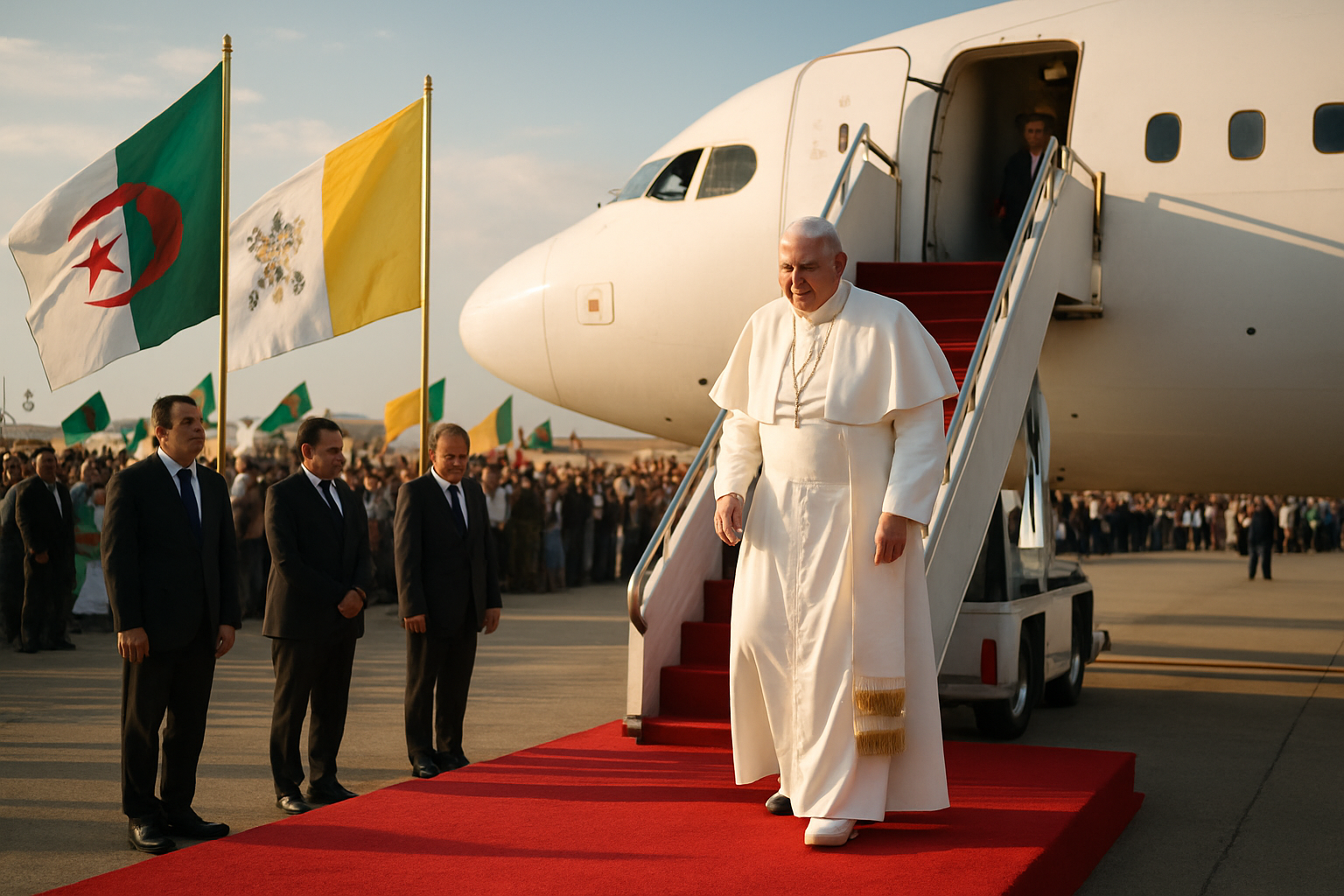
Pope Leo XIV on Monday embarked on his most ambitious papal journey since becoming head of the Catholic Church, beginning a historic 10-day tour across four African countries with an unprecedented focus on peace, interfaith dialogue, and addressing global inequality.
The American-born pontiff's arrival in Algeria marks the first papal visit to the North African nation in Catholic history, carrying profound significance as the birthplace of Saint Augustine—patron saint of Pope Leo XIV's own Augustinian order. The tour represents a watershed moment for Catholic-Muslim relations and Vatican diplomacy in Africa.
Historic Significance of Algeria Visit
According to Le Monde, Pope Leo XIV becomes "the first sovereign pontiff in history to visit the country, birthplace of the great Christian philosopher Saint Augustine." The timing is particularly meaningful, as Saint Augustine wrote his most influential theological works in Hippo—the modern-day city of Annaba—during the 4th century.
French media highlighted the spiritual connection, noting that "it is in Hippo, today's Annaba, that the theologian wrote his greatest texts in the 4th century." This historical link between the Pope's religious order and Algeria's Christian heritage adds profound spiritual dimension to the diplomatic visit.
The visit carries additional diplomatic weight as Algeria President Abdelmadjid Tebboune welcomes the Pope amid preparation for the inaugural African-Mediterranean Forum of Thought, scheduled for April 28-30, celebrating Saint Augustine as a prominent figure in human intellectual history.
Comprehensive Tour Itinerary
Italian media reports confirm the tour will span "four countries—Algeria, Cameroon, Angola, Guinea Equatorial—visiting 11 cities" over what sources describe as either 10 or 11 days, depending on travel schedules. The Vatican has planned "25 speeches, one Regina Coeli, and 8 masses" throughout the journey.
German sources indicate this represents Pope Leo XIV's "first Africa trip" with unprecedented scope, noting he "wants to visit four countries within ten days." The tour includes:
- Algeria (April 13-15): Historic first papal visit focusing on interfaith dialogue
- Cameroon (April 15-18): The longest duration stop, including visits to Yaoundé, Douala, and Bamenda for regional reconciliation efforts
- Angola: Visits to Luanda, Muxima, and Saurimo
- Equatorial Guinea: Stops in Malabo, Mongomo, and Bata
Vatican Diplomatic Evolution Under Pope Leo XIV
This African tour exemplifies Pope Leo XIV's departure from traditional Vatican diplomacy toward what sources describe as "moral authority over diplomatic comfort." The first American pope has consistently chosen direct engagement over ceremonial protocols since his election in May 2025.
Vatican sources confirm this approach represents a "fundamental shift" from previous papal traditions. Earlier this year, Pope Leo XIV made headlines by personally carrying the cross during Good Friday ceremonies at the Colosseum—the first pope to do so since 1994—and delivered increasingly forceful condemnations of global warfare.
The Africa tour follows the Pope's historic March visit to Monaco (the first papal visit in 488 years) and precedes a planned June visit to Spain focusing on migration issues. This global engagement strategy reflects Pope Leo XIV's commitment to reaching all Catholic communities while addressing contemporary challenges.
Africa's Growing Catholic Population
The tour acknowledges Africa as "the fastest-growing Catholic region worldwide," representing over 1.4 billion people. Sources note that "more than a fifth of the world's Catholics live" on the African continent, making Vatican engagement increasingly crucial for the Church's global future.
Mozambique media emphasizes the Pope's mission to "spotlight the continent's needs," urging "global leaders to address needs on the continent" through enhanced international cooperation and development support.
The timing coincides with sophisticated African continental integration developments, including the African Continental Free Trade Area (AfCFTA) implementation, Algeria's Gara Djebilet railway project, and Angola's Lobito Corridor initiative—infrastructure projects that demonstrate Africa's growing economic integration and global significance.
Interfaith Dialogue and Peace Mission
Vatican sources emphasize the tour's focus on "interfaith dialogue," particularly significant given Algeria's Muslim-majority population and the broader regional context. The visit occurs during a period of heightened global tensions, making the Pope's peace advocacy especially relevant.
Pope Leo XIV's recent escalation of peace rhetoric—from expressing "deep concern" to delivering direct moral challenges against warfare—positions this African tour as a template for papal engagement with global challenges. His Palm Sunday declaration that God rejects leaders with "hands full of blood" established his willingness to confront international leaders directly.
The Cameroon portion of the tour holds particular significance for conflict mediation, with planned visits to Bamenda addressing North-West region tensions through the Vatican's established role in regional reconciliation efforts.
Economic and Social Context
The tour occurs amid significant developments in African economic integration and international partnerships. Recent initiatives include China's announcement of zero-tariff access for 53 African countries starting May 1, 2026, and the expansion of critical minerals partnerships involving the US, EU, and Japan.
These economic developments provide context for the Vatican's diplomatic engagement, as the Catholic Church increasingly positions itself as a voice for equitable development and social justice on the African continent.
Global Reception and Expectations
International media coverage spans from Australia to Europe, reflecting global attention to Pope Leo XIV's direct approach to contemporary challenges. Religious communities worldwide view the tour as potentially influential for ongoing international mediation efforts and Catholic-Muslim relations.
The visit represents a crucial test of whether the Vatican's moral leadership can contribute meaningfully to addressing Africa's development needs while strengthening interfaith understanding in an increasingly multipolar world.
As Pope Leo XIV arrives in Algeria, the historic nature of this first papal visit to the country, combined with the broader African tour's unprecedented scope, signals a new era of Vatican engagement with the Global South and a commitment to addressing the most pressing challenges facing the international community through moral leadership and diplomatic innovation.