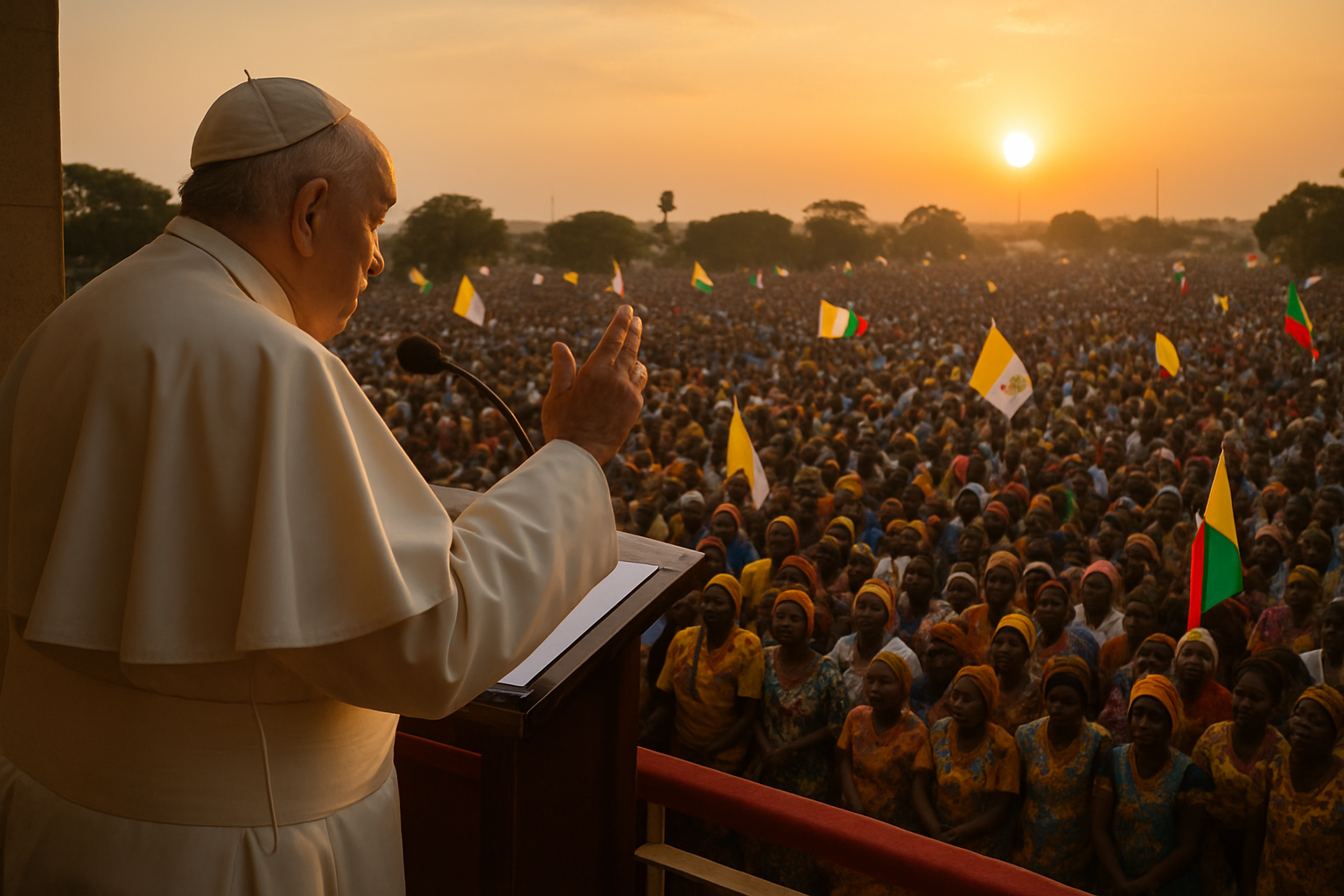
Pope Leo XIV continues his unprecedented 11-day African tour amid diplomatic tensions and significant religious developments, marking historic firsts for Vatican diplomacy while addressing contemporary global challenges through direct moral engagement.
The American-born pontiff's groundbreaking journey across four African nations represents the most ambitious papal tour of his pontificate, acknowledging Africa as the fastest-growing Catholic region worldwide with over 1.4 billion believers. The comprehensive tour, spanning April 13-23, 2026, includes Algeria, Cameroon, Angola, and Equatorial Guinea across 11 cities with 25 speeches and 8 masses.
Historic Algeria Breakthrough Sets New Diplomatic Precedents
Pope Leo XIV successfully concluded the first papal visit to Algeria in Catholic Church history on April 15, marking a watershed moment for Vatican diplomacy and interfaith relations. The visit carried profound spiritual significance as Algeria is the birthplace of Saint Augustine, patron saint of the Pope's Augustinian order.
President Abdelmadjid Tebboune welcomed Pope Leo XIV as the "best advocate for peace in the world" during ongoing Middle East conflicts. The timing during the final days of Ramadan created what Vatican sources described as a "Catholic-Muslim spiritual convergence," demonstrating the Holy See's commitment to bridge-building between faiths.
"This visit represents a profound fulfillment for the American Pope given his Augustinian background, connecting ancient African Christianity roots with contemporary global mission."
— Vatican Diplomatic Sources
The Pope conducted a deeply personal spiritual pilgrimage to ancient Hippo (modern Annaba), where Saint Augustine lived and wrote theological masterworks including "Confessions" and "The City of God" in the 5th century. This connection between the Pope's religious order and African heritage established new precedents for Vatican engagement with Muslim-majority nations.
Trump Administration Crisis Escalates During African Mission
The papal tour proceeded amid the most serious Vatican-White House diplomatic crisis in modern history. President Trump's attacks on Pope Leo XIV, calling him "WEAK on Crime, terrible for Foreign Policy," coupled with Vice President JD Vance's unprecedented criticism telling the Pope to "be careful when he talks about theology," created an extraordinary confrontation between America's first pope and current president.
International support for the Vatican position emerged swiftly. Italian Prime Minister Giorgia Meloni condemned Trump's attacks as "unacceptable," while Iranian President Pezeshkian denounced the use of AI-generated religious imagery as "profanation of Jesus." European leaders increasingly reference papal peace appeals in their own diplomatic initiatives.
Pope Leo XIV maintained his stance during the Angola flight on April 18, clarifying that his condemnation of global "tyrants ravaging the world" was "prepared two weeks ago, well before the president ever commented on myself." Despite seeking to defuse tensions, he maintained that debate with Trump was "not in my interest at all" while continuing his peace advocacy.
Vatican Diplomatic Evolution: Moral Authority Over Comfort
Vatican sources confirm a fundamental shift under Pope Leo XIV from traditional diplomatic protocols to what they describe as "moral authority over diplomatic comfort." This represents a departure from centuries of careful diplomatic language toward direct moral challenges to world leaders.
The Pope's rhetoric has escalated dramatically since his May 2025 election, evolving from early expressions of "deep concern" to Palm Sunday declarations that God rejects leaders with "hands full of blood," culminating in his strongest condemnation of global "tyrants" during his Cameroon visit.
Cameroon: Addressing Conflict and Corruption
The Pope's visit to Cameroon represented the longest duration of his African tour (April 15-18), including stops in Yaoundé, Douala, and critically, Bamenda in the North-West region affected by a decade-long separatist conflict. In Bamenda, Pope Leo XIV delivered his strongest condemnation yet of global leaders, declaring the world is "ravaged by a handful of tyrants" who spend "billions on wars while ignoring humanitarian needs."
During his audience with President Paul Biya at the Palace of Unity, the Pope delivered extraordinary direct remarks: "It is time to examine our conscience and take a bold leap forward. In order for peace and justice to prevail, the chains of corruption – which disfigure authority and strip it of its credibility – must be broken."
The Cameroon phase culminated in a massive gathering of 600,000 people at Japoma Stadium in Douala, representing the largest papal gathering of his pontificate to date.
Angola: Confronting Extractivism and Historical Wounds
Pope Leo XIV's arrival in Angola on April 18 marked the third papal visit to the oil-rich nation, following John Paul II in 1992 and Benedict XVI in 2009. The Pope made a deeply symbolic visit to the Sanctuary of Mama Muxima, addressing "sorrow and great suffering" Angolans endured for centuries at a Catholic shrine built on a former Portuguese slave trade hub.
As the first American pontiff visiting a site connected to the historical slave trade between Angola and the Americas, the visit carried particular significance for reconciliation and healing. The Pope condemned the "logic of extractivism" exploiting Angola's oil and mineral resources while urging authorities not to "have fear of dissidence" in the country dominated by the same party since 1975 independence.
Mass celebrations in Luanda's Kilamba district drew over 100,000 faithful, demonstrating extraordinary popular support for the papal mission across Africa.
Equatorial Guinea: Completing Historic Journey
The tour concludes in Equatorial Guinea (April 21-23), where preparations are underway for the first church leader visit since Pope John Paul II half a century ago. With 80% Catholic population, the nation represents the Vatican's commitment to reaching all communities regardless of size or geopolitical significance.
This final phase of the African tour will include visits to Malabo, Mongomo, and Bata, completing what Vatican experts describe as potentially template-setting 21st-century papal diplomacy.
Global Religious Freedom Challenges
The papal African tour occurs against a backdrop of significant religious freedom challenges worldwide. Recent restrictions at the Church of the Holy Sepulchre in Jerusalem marked the first time in centuries that Catholic leaders were blocked from conducting Palm Sunday services at Christianity's holiest site, drawing international condemnation.
Simultaneously, Al-Aqsa Mosque has been closed for over 35 consecutive days, affecting 2 billion Muslims during Ramadan. These unprecedented restrictions on sacred sites for both Christians and Muslims highlight the complex religious freedom challenges facing global faith communities.
Implications for Vatican Diplomacy and Global Leadership
Pope Leo XIV's African tour establishes new paradigms for Vatican engagement with the Global South, prioritizing direct pastoral work over ceremonial protocols. The success of the Algeria visit provides a framework for future Vatican diplomatic initiatives across Africa and the Muslim world, connecting ancient Church African roots with contemporary global mission.
Vatican experts describe this as a potentially template-setting moment for 21st-century papal diplomacy, testing whether moral authority can effectively challenge political power in international affairs. The success in maintaining papal independence despite unprecedented political pressure from the American administration could strengthen Vatican global influence for decades.
The Pope's approach of combining massive popular support in Africa with moral clarity on global issues positions the Vatican as an increasingly important voice in international affairs, demonstrating how ancient spiritual traditions can provide contemporary moral guidance for a world seeking peace and justice.
American Catholic Community at Crossroads
The unprecedented situation of America's first pope confronting the American president has created a constitutional crisis within the American Catholic community, caught between political loyalty and religious conviction. Traditional Trump supporters have expressed "unprecedented dismay" at attacks on papal authority, with Catholic author George Weigel noting that "American Catholics are understanding the mistake, they voted for a narcissist."
This tension highlights the complex intersection of religion, politics, and international diplomacy in modern American discourse, with implications that may resonate throughout Catholic communities worldwide for years to come.
As Pope Leo XIV's African tour continues toward its conclusion, the journey represents not only a historic moment in Vatican-Africa relations but also a defining test of papal moral authority in an era of global challenges requiring innovative religious leadership and diplomatic solutions.