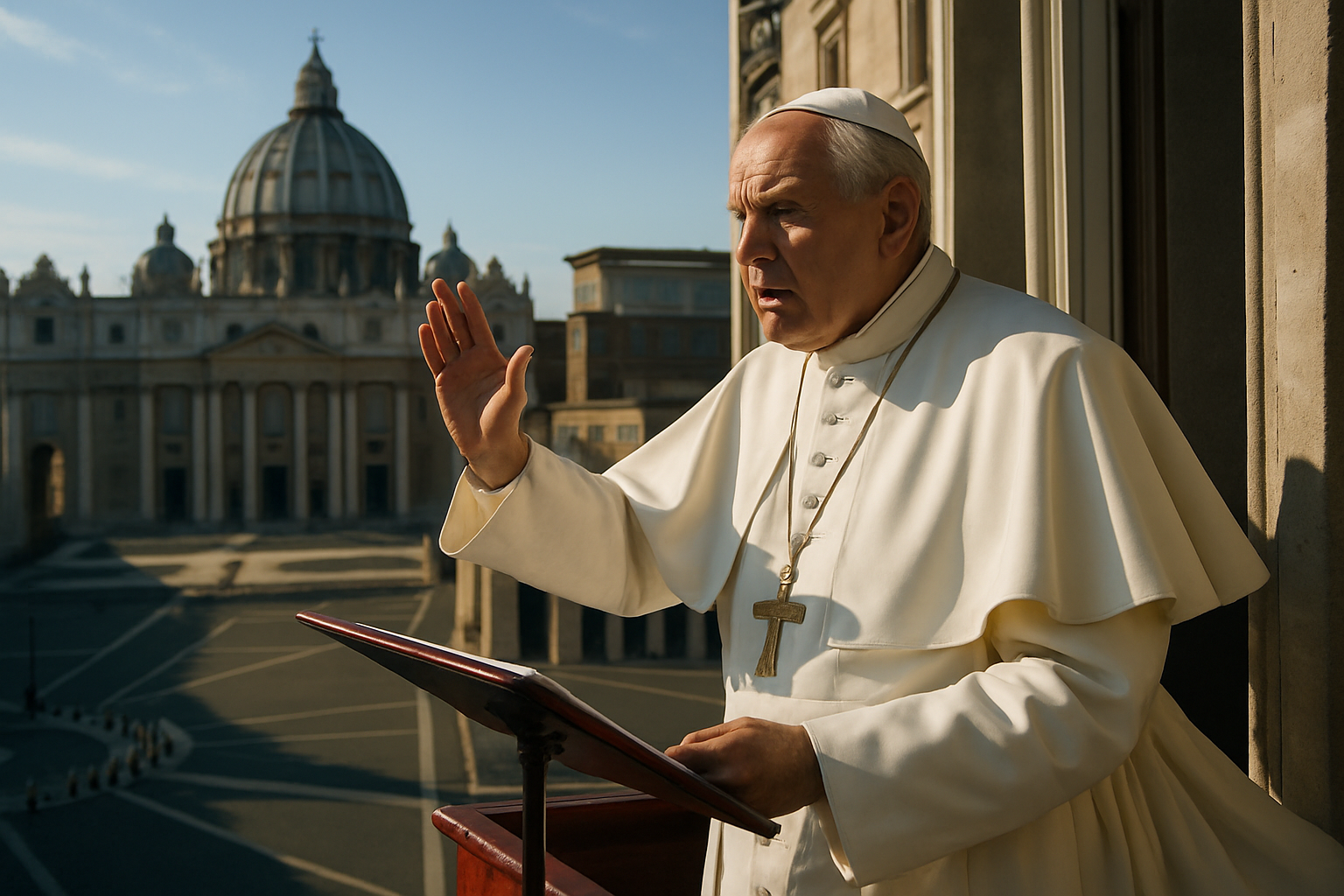
Pope Leo XIV delivered his most forceful appeal for peace yet, calling for an immediate ceasefire in the Middle East while settling into the Apostolic Palace after a ten-month renovation, marking the end of years of papal absence from the traditional Vatican residence.
In a passionate plea delivered during his weekly Angelus prayer at St. Peter's Square on Sunday, the first American Pope condemned what he called the "atrocious violence" that has plagued the region for over two weeks, as the US-Israeli conflict with Iran enters its most dangerous phase since the Cold War ended.
"For two weeks, the peoples of the Middle East have been suffering the atrocious violence of war," Pope Leo stated to the gathered faithful. "In the name of Christians in the Middle East and of all women and men of good will, I appeal to those responsible for this conflict: Cease fire!"
A New Chapter in the Apostolic Palace
The papal appeal comes as Pope Leo XIV officially moved into the Apostolic Palace over the weekend, ending a decade-long vacancy of the papal apartment overlooking St. Peter's Square. The residence underwent ten months of extensive renovations, reportedly including the addition of a modern fitness center alongside the traditional chapel and library facilities.
German sources confirmed that the Pope's move into the renovated quarters represents a significant shift from his predecessor's preference for more modest accommodations. The newly fitted papal residence includes state-of-the-art security features and modern amenities while preserving its historic character.
The Strongest Papal Condemnation Yet
Sunday's address marked Pope Leo's most direct intervention in the escalating Middle Eastern crisis, which has claimed over 1,300 Iranian lives according to international sources, with devastating impacts across the region. The Pope specifically addressed "those responsible for this conflict," though he carefully avoided directly naming the United States or Israel in his remarks.
"Violence can never lead to the justice, stability and peace that the people are waiting for. Thousands of innocent people have been killed, and many more have been forced to leave their homes."
— Pope Leo XIV, Sunday Address
The papal intervention represents a significant escalation of Vatican diplomatic engagement, building on Pope Leo's earlier expressions of "deep concern" over the Middle Eastern escalation. The Vatican's involvement reflects growing international religious community concerns about the humanitarian implications of the expanding conflict.
Regional Devastation Mounts
The Pope's call for peace comes amid unprecedented global disruption from the Middle Eastern conflict. Over 18,000 flights have been cancelled worldwide as eight countries maintain simultaneous airspace closures, representing the most extensive aviation crisis since COVID-19. Dubai International Airport, the world's busiest, remains completely shut down due to missile damage.
Oil prices have surged past $80 per barrel as Iran has effectively closed the Strait of Hormuz, through which 40% of global oil transit passes. The energy crisis has extended to natural gas markets, with prices rising 24% in Europe and 78% in the United States. Qatar has halted LNG production, threatening European energy supplies.
The human toll has been devastating. In Lebanon, over 800 people have been killed and 2,000 wounded according to the Lebanese Health Ministry, with 832,000 displaced from their homes. The November 2024 ceasefire between Israel and Hezbollah has completely collapsed, drawing Lebanon deeper into the regional conflict.
International Calls for Dialogue
Pope Leo's intervention aligns with growing international pressure for diplomatic solutions. French President Emmanuel Macron has offered to host direct Israel-Lebanon talks in Paris, representing the first such negotiations since the ceasefire breakdown. The European Union has activated unprecedented evacuation protocols, including Cyprus's first-ever use of its ESTIA national evacuation plan.
The papal appeal carries particular weight given Pope Leo XIV's planned diplomatic initiatives, including his historic Africa tour in April 2026 featuring the first papal visit to Algeria. His emphasis on interfaith dialogue and bridge-building between communities has made him a respected voice for peace in international circles.
Nuclear Diplomacy in Collapse
The current crisis emerged from the complete breakdown of nuclear negotiations between the US and Iran, despite what had been described as a "broad agreement on guiding principles" achieved in Geneva talks - the most progress since the 2018 JCPOA collapse. Iran had maintained that ballistic missiles and regional proxies were "red lines" excluded from nuclear-only discussions, while the US demanded comprehensive agreements covering missiles, armed groups, and human rights.
The diplomatic collapse has occurred against the backdrop of a broader nuclear governance crisis, with the New START treaty having expired on February 5, 2026 - the first time in over 50 years that the US and Russia have operated without nuclear constraints. UN Secretary-General António Guterres has warned that nuclear risks are now at their "highest in decades."
Humanitarian Crisis Deepens
Vatican sources indicate that Pope Leo's decision to speak out forcefully was influenced by mounting reports of civilian casualties, particularly the targeting of children and medical personnel. In Iran, the International Red Crescent reports over 787 civilian casualties from US-Israeli strikes, including a controversial attack on a school in Minab that killed between 53 and 85 students and staff.
In Lebanon, the systematic targeting of medical personnel has drawn international condemnation, with 26 paramedics killed and 51 wounded since Israeli strikes began on March 2. The deadliest single attack occurred at the Burj Qalaouiyah primary healthcare center, where 12 medical workers were killed, representing serious violations of Geneva Convention protections.
A Historic Papal Residence Returns to Life
Pope Leo's move into the Apostolic Palace represents more than just a change of residence - it signals a return to traditional papal diplomacy conducted from the heart of Vatican power. The palace, which had remained vacant for years, now serves as the backdrop for the Pope's increasingly urgent diplomatic interventions.
The timing of the move, coinciding with the Pope's strongest peace appeal yet, underscores the gravity with which the Vatican views the current crisis. Sources within the Holy See indicate that Pope Leo sees the current moment as requiring the full weight of papal authority and the symbolic power of the papal residence.
Global Stakes and Vatican Diplomacy
The Pope's intervention comes at what UN Secretary-General António Guterres has called "the greatest test of multilateral cooperation and crisis management in the modern era." The rapid transition from diplomatic breakthrough to military confrontation demonstrates what experts describe as the fragility of crisis management mechanisms in the multipolar era.
Vatican diplomatic efforts are now focused on preventing the current regional conflict from expanding into a broader Middle Eastern war with global implications. The Holy See's traditional role as a neutral mediator positions Pope Leo as a potential bridge between conflicting parties, though the current escalation has strained many traditional diplomatic channels.
Looking Forward: A Test of Papal Influence
As Pope Leo XIV settles into his historic residence, his call for an immediate ceasefire will test the continuing influence of papal moral authority in international affairs. The success or failure of his intervention may set important precedents for Vatican diplomacy in the 21st century, particularly regarding conflicts involving nuclear-armed states.
The Pope's emphasis on the suffering of Christians in the Middle East, while appealing to "all women and men of good will," reflects his broader approach to international diplomacy that combines interfaith dialogue with universal humanitarian concerns. His planned Africa tour, featuring historic visits to Algeria and other nations, will provide additional platforms for peace advocacy.
With the Middle Eastern crisis showing no immediate signs of resolution, Pope Leo XIV's newly renovated Apostolic Palace may become a crucial center for ongoing diplomatic efforts to restore peace to one of the world's most volatile regions. The coming weeks will test whether the moral authority of the papacy can help bridge the growing chasm between military confrontation and diplomatic solution in this defining moment for international relations.