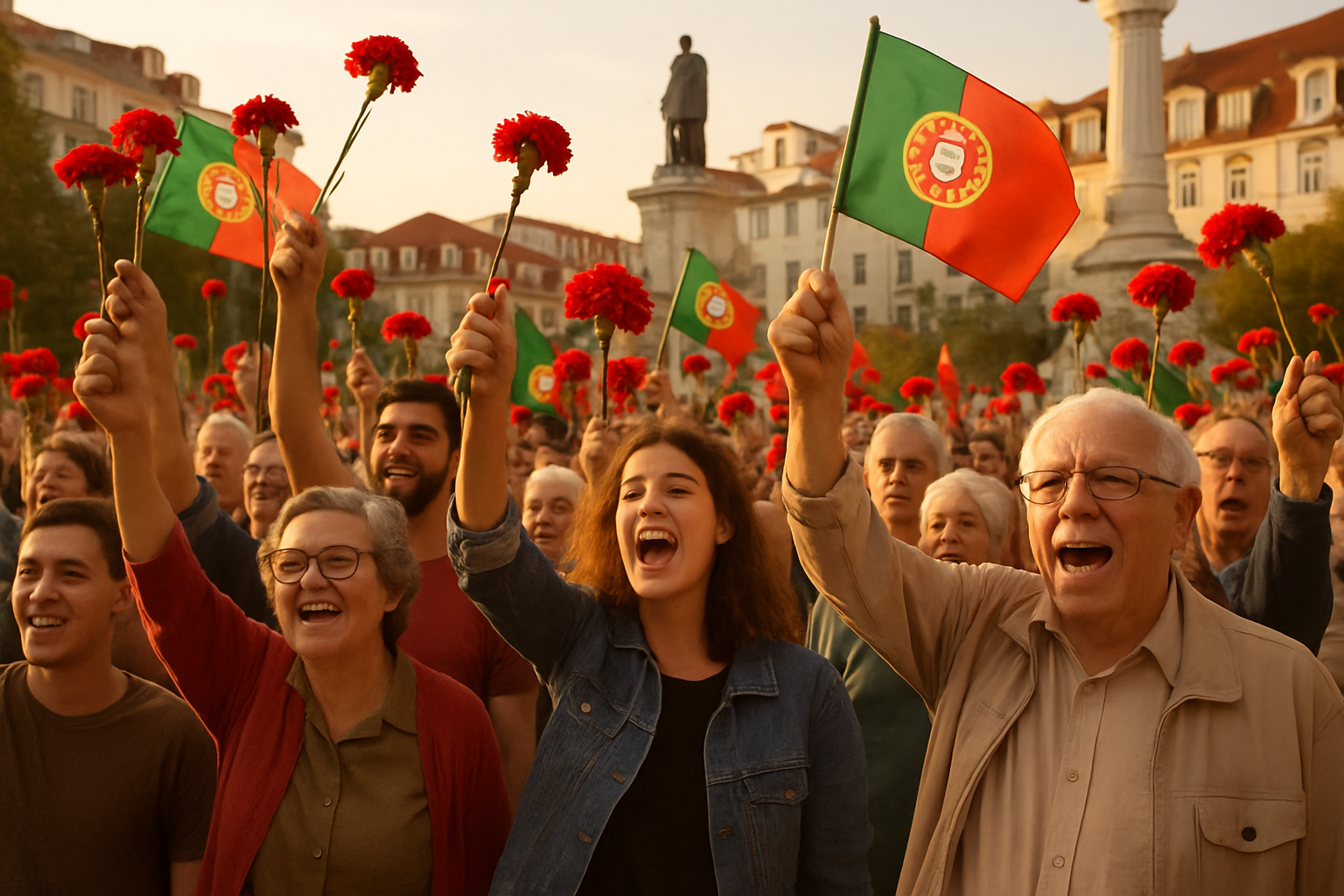
Portugal marked 52 years since the Carnation Revolution that ended decades of dictatorship with massive street demonstrations and solemn official ceremonies, as thousands gathered in Lisbon and Porto to celebrate democracy while reflecting on mounting concerns about its future resilience.
The commemorations on April 25, 2026, witnessed unprecedented participation as citizens from multiple generations united to honor the peaceful revolution that toppled António de Oliveira Salazar's authoritarian regime in 1974. The iconic red carnations, symbols of the bloodless coup, adorned the streets as participants celebrated Portugal's journey from dictatorship to democratic freedom.
Massive Popular Participation in Lisbon and Porto
Thousands of Portuguese citizens filled the Avenida da Liberdade in Lisbon for the traditional April 25th parade, creating what observers described as one of the largest turnouts in recent years. The demonstrations reflected a cross-generational commitment to democratic values, with participants ranging from revolution veterans to young families introducing their children to Portugal's democratic heritage.
In Porto, similar scenes unfolded as citizens gathered to commemorate the historic date that transformed Portugal from Western Europe's longest-standing dictatorship into a thriving democracy. The celebrations highlighted the enduring significance of the Carnation Revolution, which restored fundamental freedoms including freedom of speech, assembly, and political participation.
"Between carnations and memories, generations unite to celebrate liberty"
— PÚBLICO newspaper, reporting on the celebrations
The demonstrations came amid what political observers describe as growing international concerns about democratic backsliding globally, lending particular significance to Portugal's celebration of its democratic achievements.
Presidential Call for Youth Engagement
President António José Seguro used the solemn parliamentary session to deliver a powerful message directly addressing young Portuguese citizens, urging them to become active defenders of democratic freedoms. His speech represented a departure from traditional ceremonial rhetoric, instead offering what observers characterized as a "realistic" assessment of contemporary challenges facing democratic societies.
The President's remarks came during a special session at the Parliament building, where he emphasized that democracy requires active participation rather than passive acceptance. The ceremony included musical performances by renowned Portuguese artists Paulo de Carvalho and Agir in the gardens of the Palácio de Belém, blending cultural celebration with serious political reflection.
Following his formal address, Seguro participated in an innovative dialogue session where young people were invited to share their perspectives on democracy's future challenges. This interactive format marked a significant evolution from traditional commemorative events, reflecting recognition that democratic renewal requires intergenerational engagement.
Historical Context and Democratic Legacy
The April 25, 1974 revolution, known internationally as the Carnation Revolution, marked Portugal's transition from nearly five decades of authoritarian rule under the Estado Novo regime. The peaceful military coup, coordinated by the Armed Forces Movement (MFA), ended without significant bloodshed and paved the way for democratic elections and constitutional reform.
This year's commemorations took place against the backdrop of Portugal's continued democratic development, including recent milestones such as the first free elections for the Assembly of the Republic held 50 years ago. The anniversary provided an opportunity to reflect on Portugal's transformation from a closed, authoritarian society to an integral member of the European Union and NATO.
Political commentator Pedro Adão e Silva noted that the growing popular mobilization around April 25th reflects "a renewed sentiment that something needs to be preserved," highlighting increased awareness of democracy's fragility in the contemporary global context.
Contemporary Democratic Challenges
The 2026 commemorations occurred amid what experts describe as unprecedented global pressure on democratic institutions. Editorial commentary from leading Portuguese publications emphasized that "democracy can only be corrected from within," underscoring the importance of citizen engagement in democratic renewal.
The celebrations demonstrated what observers called a marked contrast between grassroots democratic enthusiasm and official institutional responses. Citizens' active participation in street demonstrations reflected organic commitment to democratic values, while formal ceremonies addressed the need for continued vigilance in protecting democratic freedoms.
The intergenerational character of the demonstrations proved particularly significant, with participants spanning from those who lived through the dictatorship to young people born in the democratic era. This generational continuity suggested sustained commitment to democratic values across Portuguese society.
Cultural and Institutional Commemorations
Beyond the street demonstrations, Portugal's cultural institutions played crucial roles in marking the anniversary. However, several major cultural venues, including Lisbon's MAAT museum, the Monument to Discoveries, and São Jorge Castle, temporarily closed their doors as staff participated in the national commemoration.
The closure of cultural institutions for democratic celebration highlighted the comprehensive nature of Portuguese society's commitment to marking this historic milestone. Rather than treating the anniversary as merely ceremonial, institutions across Portuguese society actively participated in collective remembrance.
Musical performances throughout the celebrations featured both contemporary and traditional Portuguese artists, emphasizing cultural continuity alongside political transformation. The integration of artistic expression with political commemoration reflected Portugal's understanding that democracy encompasses not just political freedoms but also cultural and creative expression.
European and International Significance
Portugal's democratic celebration resonated beyond national borders, occurring during a period when European democracies face various pressures ranging from populist challenges to external interference. The robust participation in April 25th commemorations served as a reminder of democracy's popular appeal when citizens remain actively engaged.
The anniversary provided Portuguese leaders with an opportunity to reaffirm their country's commitment to European democratic values and institutions. President Seguro's emphasis on youth engagement aligned with broader European Union initiatives aimed at strengthening democratic participation among younger generations.
International observers noted the significance of Portugal's peaceful democratic transition as a model for other nations navigating similar transformations. The Carnation Revolution's emphasis on peaceful change and national reconciliation continues to offer lessons for contemporary democratic movements worldwide.
Looking Forward: Democratic Resilience
The 52nd anniversary celebrations demonstrated that Portuguese society remains deeply committed to democratic values while acknowledging contemporary challenges. The combination of mass popular participation and serious institutional reflection suggested a mature democracy capable of both celebrating achievements and addressing future challenges.
President Seguro's decision to engage directly with young people reflected recognition that democratic continuity depends on succeeding generations' commitment to democratic participation. The interactive format of presidential engagement marked an evolution in how democratic institutions connect with citizens, particularly younger demographics.
The success of the 2026 commemorations, measured both by popular participation and institutional innovation, suggested that Portugal's democracy retains the capacity for renewal and adaptation. As citizens filled the streets with red carnations and democratic enthusiasm, they demonstrated that the spirit of April 25th, 1974, continues to inspire contemporary Portuguese society.
The celebration concluded with renewed recognition that democracy requires constant nurturing through citizen engagement, institutional accountability, and intergenerational dialogue—principles that the Carnation Revolution established and that contemporary Portugal continues to honor through active democratic participation.