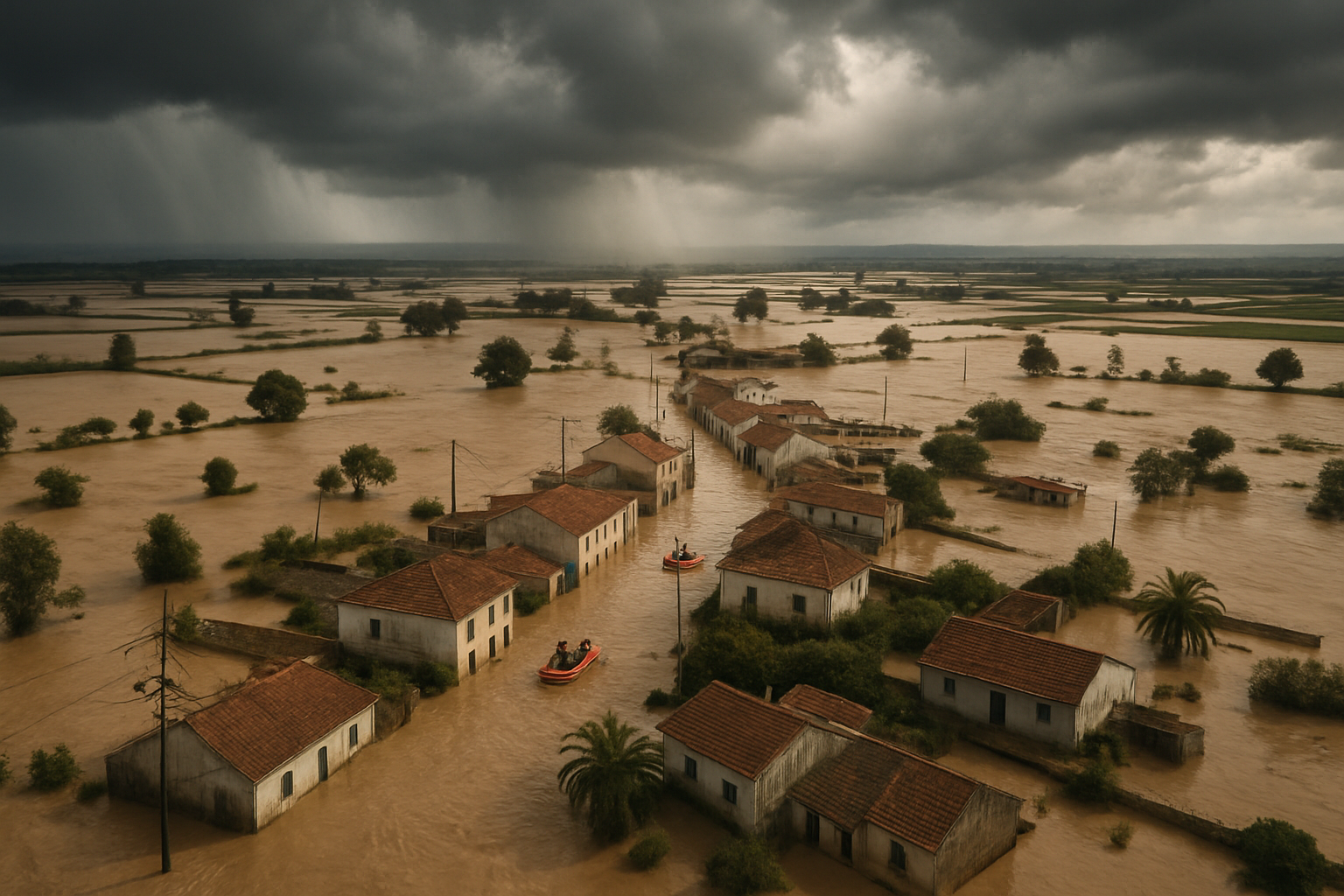
Portugal continues to grapple with catastrophic flooding across the Tejo river basin two weeks after Storm Kristin devastated the country, forcing evacuations in multiple municipalities and leaving thousands of residents without electricity as authorities deploy the largest peacetime rescue operation in the nation's history.
Civil Protection authorities reported over 1,500 weather-related incidents on Tuesday alone, the majority involving flooding, along with several preventive relocations of residents and 15 water rescues. The crisis has intensified as mayors in the Médio Tejo region issued urgent warnings about thousands of residents and hundreds of businesses remaining without electricity 14 days after Storm Kristin struck the country.
Unprecedented Scale of Emergency Response
Portuguese authorities have mobilized 1,975 military personnel and 30 naval vessels in what officials describe as the largest peacetime rescue operation in the country's modern history. The deployment includes specialized water rescue teams, engineering units, and logistical support to address the ongoing crisis affecting multiple regions.
The European Space Agency (ESA) released satellite imagery capturing the intensity of rainfall over the Iberian Peninsula during three consecutive winter storms and the extensive flooding that followed in Portugal's Tejo basin. The images provide stark visual evidence of the unprecedented scale of the disaster, showing vast areas submerged under floodwaters.
Power Grid Crisis Deepens
Local authorities in Ourém, Ferreira do Zêzere, and Tomar - among the worst-affected municipalities - have criticized the slow pace of electricity restoration and demanded more robust action from utility companies. The power outages, affecting thousands of households and hundreds of businesses, have created secondary humanitarian challenges as residents struggle with basic necessities during the cold winter months.
"We cannot accept that after two weeks, entire communities remain in darkness while businesses face devastating losses," said one municipal official, speaking on condition of anonymity.
— Municipal Official, Médio Tejo Region
The extended power outages have particularly impacted vulnerable populations, including elderly residents and those requiring medical equipment, forcing authorities to establish emergency shelters and alternative care arrangements.
Coimbra Mass Evacuation
In one of the most dramatic developments, Coimbra municipal authorities ordered the evacuation of between 2,800 and 3,000 residents from their homes due to severe flood risks along the Mondego River. The evacuations came amid warnings that flood barriers could collapse under the unprecedented water pressure, potentially causing catastrophic flooding in urban areas.
Civil Protection officials have maintained special attention on the Mondego River system, warning of continued high water levels and the potential for additional flooding. The river, which flows through central Portugal, has reached critical levels not seen since historical floods decades ago.
Historical Context and Climate Connection
The current crisis represents the continuation of an extraordinary sequence of Atlantic storms that have battered Portugal since late January. Storm Kristin, which struck in early February, was followed by Storms Leonardo and Marta in rapid succession, creating a compound disaster that has overwhelmed the country's emergency response capabilities.
The crisis occurs against the backdrop of January 2026 being confirmed as one of the hottest months on record globally, with 18 of the past 19 months exceeding 1.5°C above pre-industrial levels. Climate scientists note that this extreme warming, even during La Niña conditions, creates the atmospheric conditions that can fuel intense storm systems and extreme precipitation events.
Infrastructure Damage Assessment
Beyond the immediate humanitarian concerns, the flooding has revealed significant vulnerabilities in Portugal's infrastructure. Railway services remain suspended on the critical Castanheira-Alverca line, affecting thousands of daily commuters to Lisbon. The suspension highlights the broader transportation disruptions that continue to ripple through the economy.
Authorities in Alcácer do Sal report flooding levels exceeding those recorded in 1963, marking this as potentially the worst flooding event in over six decades for some regions. The comparison to historical records underscores the exceptional nature of the current crisis.
International Support and Coordination
The European Union has activated its Civil Protection Mechanism to coordinate assistance for Portugal, with Sweden and Denmark providing a €246 million aid package specifically targeted at emergency response and recovery efforts. The international support reflects recognition that the scale of the disaster exceeds Portugal's capacity to respond independently.
The crisis has also prompted renewed discussions about European climate adaptation strategies, as similar extreme weather events have simultaneously affected multiple EU member states, stretching continental emergency response resources to their limits.
Agricultural and Economic Impact
The prolonged flooding has devastated agricultural regions, with preliminary assessments indicating billions of euros in damage across farming communities. The Tejo basin, traditionally one of Portugal's most productive agricultural areas, has seen entire harvests destroyed and livestock operations severely disrupted.
The economic ripple effects extend beyond agriculture, with tourism infrastructure damaged, transportation networks disrupted, and businesses facing prolonged closures due to power outages. Recovery officials estimate that full restoration could take months, with some areas requiring comprehensive reconstruction.
Looking Forward: Recovery and Resilience
As Portugal begins to assess the full scope of the disaster, government officials emphasize the need for "building back better" with enhanced climate resilience. The crisis has exposed critical vulnerabilities in flood defenses, power infrastructure, and emergency response systems that will require substantial investment to address.
The ongoing situation serves as a stark reminder of the increasing frequency and intensity of extreme weather events across Europe. For Portugal, the challenge now lies not only in immediate recovery but in preparing for a future where such extreme events may become increasingly common.
Civil Protection authorities continue to monitor weather conditions closely, with additional rainfall forecast for the coming days. Residents in affected areas are advised to remain vigilant and follow evacuation orders as the country works to restore normal operations while building greater resilience against future climate challenges.