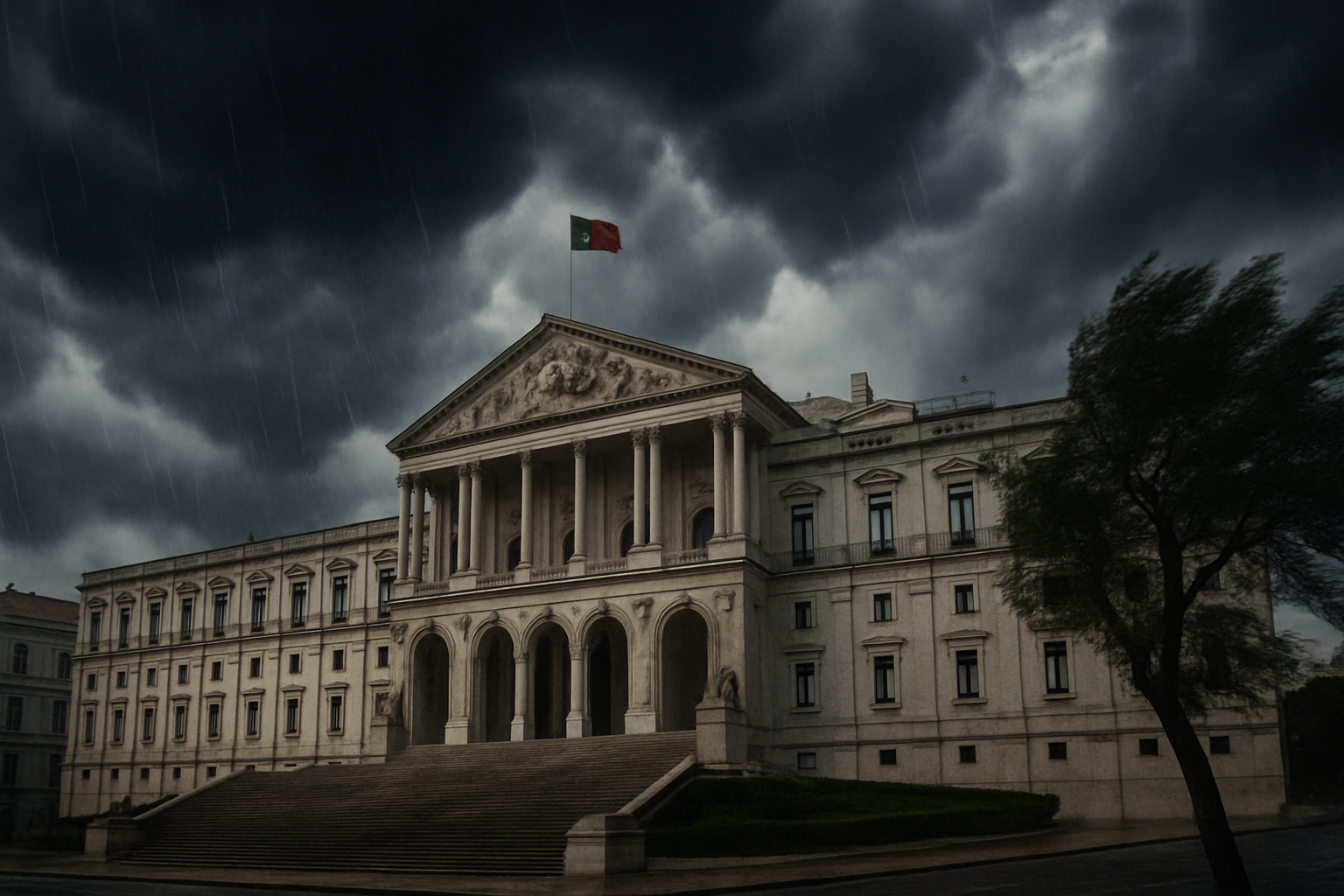
Portuguese Interior Minister Maria Lúcia Amaral resigned on February 10, 2026, succumbing to mounting pressure over her handling of the country's response to devastating winter storms and a series of political controversies that had severely undermined her position within the government.
The resignation comes as Portugal continues to battle the aftermath of three consecutive Atlantic storms - Kristin, Leonardo, and Marta - that claimed 14 lives and left over 167,000 residents without power. The minister's departure marks another significant casualty in what has become known as one of the most challenging periods for Portuguese governance in recent memory.
Storm Response Under Fire
President Marcelo Rebelo de Sousa stated he understood Amaral's decision, noting she felt she lacked the "personal and political conditions" to continue in her role amid the "complex situation" of recent weeks. The Interior Minister had faced intense scrutiny over the government's coordination of emergency responses during the unprecedented weather crisis.
The storm succession required Portugal's largest peacetime rescue operation, deploying 26,500 personnel including 1,975 military staff and 30 naval vessels to respond to over 1,800 weather incidents since February 1. The scale of the crisis exposed significant gaps in emergency preparedness and inter-agency coordination.
"The departure of the Interior Minister is a timely inevitability for the Prime Minister to look at public security with the due importance it deserves."
— Police Union Representative, quoted by RTP
A Pattern of Controversies
Beyond the storm response, Amaral's tenure was marked by a series of missteps and controversies that progressively eroded her standing. Portuguese media reports highlighted her strained relationship with police forces and several public gaffes that damaged her credibility with both law enforcement and the public.
The minister had requested time to study her portfolios upon taking office, but critics argued that natural disasters and security challenges don't wait for bureaucratic learning curves. Her handling of previous incidents, including forest fires and other emergencies, had already drawn criticism from opposition parties and police unions.
The Challenging Portfolio
The Ministry of Internal Administration has long been considered one of Portugal's most difficult government positions. Historical analysis shows few ministers achieving long tenures in the role, with predecessors often departing amid various crises and political pressures.
As one Portuguese political observer noted, the portfolio encompasses multiple challenging areas including national security, emergency response coordination, and police oversight - domains where public expectations are high and political costs of failure are severe.
Political Ramifications
Prime Minister Luís Montenegro has temporarily assumed the Interior portfolio while the government searches for a replacement. The timing of Amaral's resignation, coming just days after the successful presidential election of António José Seguro despite the storm crisis, highlights the political vulnerability of the current administration.
Opposition figures have pointed to the resignation as evidence of broader governmental failures in crisis management. Some have suggested that Admiral Henrique Gouveia e Melo, who played a crucial role in Portugal's COVID-19 vaccine rollout, could be considered for the position, though he has not removed himself from speculation.
Historical Context
The resignation occurs against the backdrop of Portugal's recent democratic resilience test during the February 8 presidential election, which proceeded despite the ongoing storm crisis. That election saw António José Seguro achieve a historic landslide victory with 66.8% of the vote, demonstrating the country's institutional strength even during natural disasters.
However, Amaral's departure underscores the ongoing challenges facing Portuguese institutions in adapting to increasingly frequent extreme weather events and the coordination demands they place on government agencies.
Looking Forward
The government now faces the dual challenge of managing ongoing storm recovery efforts while finding a suitable replacement who can restore confidence in the Interior Ministry's capabilities. The new appointee will inherit not only the immediate crisis management responsibilities but also the longer-term challenge of reforming Portugal's emergency response systems.
With climate scientists predicting more frequent and severe weather events, the next Interior Minister will need to oversee significant improvements in inter-agency coordination, emergency preparedness, and public communication during crises.
The resignation serves as a reminder of the growing political costs of inadequate crisis management in an era of climate change, where natural disasters can quickly become political ones. As Portugal continues its recovery from the devastating winter storms, the government's ability to effectively coordinate emergency responses will remain under intense scrutiny.