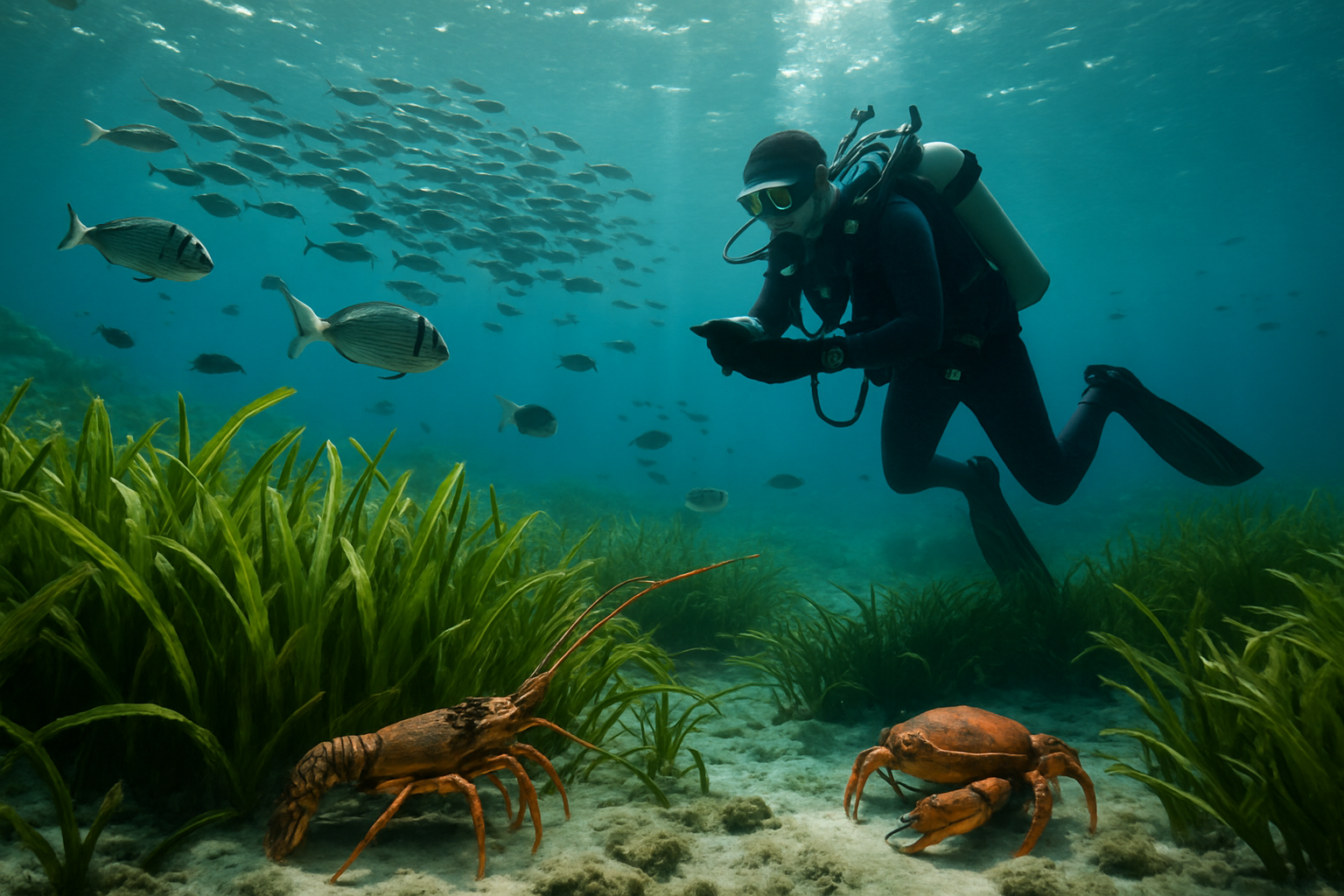
Portugal's ambitious plans to create one of Europe's largest marine protected areas are facing unprecedented scrutiny as environmental groups warn of fundamental structural flaws that could render the conservation effort ineffective.
The environmental association Zero issued a stark warning regarding the proposed D. Carlos marine reserve, highlighting critical implementation gaps that could compromise the protection of the Gorringe and Madeira-Tore underwater mountain ranges. These concerns emerge during a critical period for global marine conservation, as ocean temperatures continue to rise and marine ecosystems face mounting pressures.
Structural Flaws Threaten Conservation Goals
According to Zero's analysis, the current proposal for the Natural Marine Reserve D. Carlos contains significant weaknesses that allow continued extractive activities and delay comprehensive protection measures. The association warns that without immediate revisions, the reserve risks existing "apenas no papel" (only on paper), failing to deliver the substantive conservation outcomes Portugal has promised.
The proposed reserve would encompass the Gorringe and Madeira-Tore seamounts, underwater mountains that represent critical biodiversity hotspots in Portuguese waters. These deep-sea ecosystems serve as nurseries for numerous fish species, support unique coral communities, and provide essential habitat for migratory marine animals including whales and dolphins.
"The challenge for 2026 is not to identify the problem, but to assume responsibility for solving it."
— Environmental Policy Expert, speaking on marine conservation urgency
Global Context of Marine Conservation Crisis
Portugal's marine conservation challenges unfold against a backdrop of accelerating global ocean crisis. Recent scientific research reveals that every 0.1°C of ocean warming per decade reduces fish populations by 7.2%, with comprehensive studies of over 33,000 marine populations showing devastating declines across Northern Hemisphere waters between 1993-2021.
The timing of Portugal's conservation efforts is particularly critical given January 2026's record as the hottest month in recorded history, marking the 19th consecutive month of global temperatures exceeding 1.5°C above pre-industrial levels. This sustained warming is fundamentally altering marine ecosystems and intensifying the urgency for effective protection measures.
International Marine Conservation Momentum
Portugal's challenges contrast sharply with conservation successes elsewhere. Recent developments demonstrate growing international commitment to marine protection, from Saudi Arabia's documentation of rare leatherback turtle sightings in the Red Sea to New Zealand's decisive rejection of seabed mining operations in favor of marine ecosystem protection.
Cyprus has emerged as a priority under the EU's International Action Plan for Audouin's gull conservation, while innovative marine cleanup technologies using IoT and 5G connectivity have shown promise in addressing ocean waste and microplastic pollution. These examples highlight the sophisticated approaches available for comprehensive marine protection when properly implemented.
Technology and Traditional Knowledge Integration
Successful marine conservation increasingly requires sophisticated integration of cutting-edge technology with traditional ecological knowledge and community-based management. Advanced monitoring systems including environmental DNA sampling, satellite tracking, and real-time water quality sensors provide unprecedented capabilities for ecosystem assessment and threat response.
Portugal's marine research institutions have demonstrated expertise in these technologies, making the structural flaws in the D. Carlos reserve proposal particularly concerning. The country possesses the scientific capabilities necessary for world-class marine protection, but implementation frameworks must align with conservation science best practices.

Economic Dimensions of Marine Protection
Marine conservation represents a significant economic development opportunity rather than a regulatory burden. Comprehensive marine protected areas support sustainable fisheries, eco-tourism, and scientific research collaboration, often generating substantial revenue and employment. Countries implementing robust marine protection demonstrate greater economic resilience and attract sustainable investment from environmentally conscious investors.
The economic implications extend beyond direct revenue generation. Marine ecosystems provide essential services including coastal protection, carbon sequestration, and climate regulation. The costs of ecosystem degradation—including fisheries collapse, coastal erosion, and tourism losses—often far exceed the investments required for proactive conservation.
Implementation Challenges and Solutions
The structural flaws identified by Zero reflect broader challenges facing marine conservation worldwide. These include funding sustainability, technical capacity building, and the need for adaptive management responding to rapidly changing environmental conditions. However, diverse approaches provide resilience against single-solution dependencies, offering multiple pathways for addressing complex marine conservation challenges.
Successful marine protection requires sustained international cooperation, innovative financing mechanisms, and coordination across multiple governmental and non-governmental sectors. Portugal's position within the European Union provides access to both funding and expertise that could address the identified implementation gaps.
Urgent Need for Revision
Environmental experts emphasize that 2026 represents a critical juncture for marine conservation globally. The window for effective environmental action is narrowing rapidly as marine ecosystems approach critical thresholds that could trigger irreversible changes. Portugal's D. Carlos reserve, if properly implemented, could serve as a model for large-scale marine protection in European waters.
Zero's call for comprehensive revision reflects growing international recognition that superficial conservation measures are insufficient for the scale and urgency of current marine challenges. The organization advocates for binding, enforceable protection standards that eliminate loopholes allowing continued extractive activities within proposed reserve boundaries.
Path Forward for Portuguese Marine Conservation
The debate surrounding Portugal's marine reserve plans represents a microcosm of global conservation challenges. Success requires balancing immediate economic pressures with long-term environmental sustainability, integrating scientific expertise with community needs, and ensuring that protection measures deliver substantive rather than symbolic outcomes.
Portugal has the opportunity to demonstrate leadership in European marine conservation by addressing the structural flaws identified by environmental groups. Comprehensive revision of the D. Carlos reserve proposal could position Portugal as a pioneer in effective marine protection, providing templates for scaling conservation efforts globally.
As climate change accelerates and marine ecosystems face unprecedented pressures, the effectiveness of Portugal's conservation response may prove decisive not only for national environmental goals but for broader European Union marine protection strategies. The coming months will test whether Portugal can translate ambitious conservation rhetoric into effective environmental action during this critical period for global ocean health.