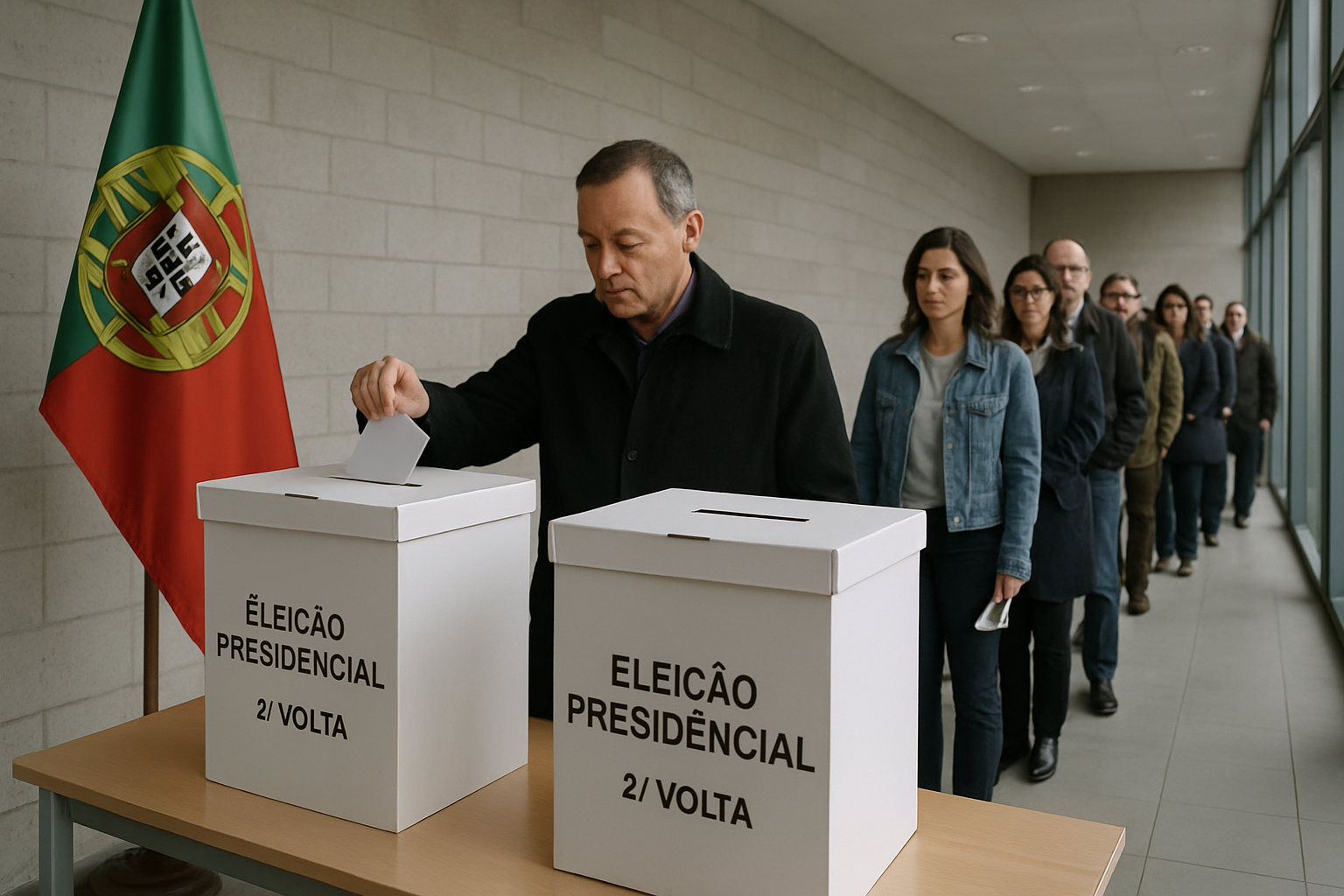
Portugal proceeded with its presidential runoff election on February 8, 2026, as voters chose between socialist candidate António José Seguro and far-right leader André Ventura, despite ongoing infrastructure damage from three devastating Atlantic storms that struck the country over the past two weeks.
The election represents a critical moment for Portuguese democracy, with moderate socialist Seguro expected to achieve a convincing victory after prominent conservatives rallied behind his candidacy to block Ventura's far-right movement. The runoff follows the first round held on January 18, where Seguro, backed by the Socialist Party, emerged as the frontrunner, followed by Ventura from the far-right Chega party.
Weather Crisis Challenges Democratic Process
The election proceeded against the backdrop of unprecedented natural disasters that have tested Portugal's democratic institutions. Three consecutive storms—Kristin, Leonardo, and Marta—struck the country between late January and early February, killing at least 14 people and forcing the deployment of 26,500 rescuers in the largest peacetime emergency operation in Portuguese history.
The weather emergency prompted Ventura to demand a nationwide postponement of the runoff election, citing infrastructure damage and fairness concerns. However, Portuguese electoral law prohibits national postponement of presidential elections, creating what observers have described as an unprecedented intersection between climate emergency and democratic process.
Despite the legal constraints, 14 of the most severely affected electoral districts were forced to delay voting by one week due to damaged infrastructure and impassable roads. This partial postponement highlighted the practical challenges of maintaining democratic processes during extreme weather events that are becoming increasingly frequent due to climate change.
Political Coalition Against Far-Right
The election has been marked by a remarkable political unity among Portugal's traditional parties to prevent a far-right victory. Seguro's candidacy has received endorsements from across the political spectrum, including prominent conservative figures who have prioritized democratic values over partisan politics.
"This election is about more than political preferences—it's about defending Portuguese democratic values against extremism."
— Political analyst quoted in Portuguese media
The broad coalition supporting Seguro reflects European concerns about the rise of far-right movements across the continent. Ventura's Chega party has gained support by promoting hardline immigration policies and nationalist rhetoric, mirroring populist movements in other European Union member states.
Infrastructure Crisis Impacts Voting
The storms have left lasting damage to Portuguese infrastructure that continues to affect the electoral process. Power outages have impacted over 167,000 residents, with some localities in Pombal remaining without electricity for more than 10 days. Transportation networks remain severely disrupted, with the Castanheira-Alverca railway line still suspended, affecting commuter access to polling stations in the Lisbon metropolitan area.
The Douro River reached critical 1997 flood levels in Porto and Vila Nova de Gaia, while the Minho River overflow at Monção flooded thermal baths and surrounding areas. These conditions have complicated voter access in affected regions, though election authorities have implemented contingency measures to ensure democratic participation.
Emergency Response Continues
Portugal has maintained its calamity status through February 15, with 1,975 military personnel and 30 naval vessels still deployed for emergency response operations. The government has recorded over 1,800 weather-related incidents since February 1, demonstrating the scale of the ongoing crisis.
The European Union has activated its Civil Protection Mechanism to support Portugal's recovery efforts, while Sweden and Denmark have provided €246 million in emergency assistance. This international support underscores the severity of the weather emergency that has served as the backdrop to the presidential election.
Democratic Resilience Under Test
Political scientists view the Portuguese election as a test of democratic resilience in the face of multiple challenges. The combination of extreme weather, infrastructure damage, and far-right political pressure has created what experts describe as a "perfect storm" for democratic institutions.
The election's timing coincides with broader concerns about democratic stability across Europe, where climate change is increasingly intersecting with political processes. The Portuguese case provides a template for how established democracies might adapt their electoral systems to function during climate emergencies.
Historical Context
The election will determine who succeeds current President Marcelo Rebelo de Sousa, who has been a stabilizing figure during Portugal's recent challenges. Rebelo de Sousa has maintained high approval ratings throughout the storm crisis, reinforcing vigilance and ensuring government coordination during the emergency response.
Portugal's presidential system grants significant moral authority and crisis management responsibilities to the head of state, making this election particularly consequential for the country's ability to navigate future challenges. The president serves as a constitutional check on government power and plays a crucial role during national emergencies.
International Implications
The Portuguese election results will have implications beyond national borders, particularly as the European Union grapples with the rise of far-right movements across member states. A victory for Seguro would reinforce moderate political forces within the EU, while a Ventura triumph could embolden similar movements in other countries.
The election also occurs as Portugal plays an increasingly important role in European climate adaptation discussions. The country's experience managing democratic processes during extreme weather events is being closely watched by other EU member states facing similar challenges.
Climate and Democracy Intersection
Environmental scientists note that the January 2026 period was the hottest month in global history, with 18 of the past 19 months exceeding 1.5°C above pre-industrial levels. This warming trend is expected to increase the frequency and intensity of extreme weather events like those that have disrupted the Portuguese election.
The Portuguese case demonstrates how climate change is becoming a direct challenge to democratic governance, requiring new frameworks for maintaining electoral processes during environmental emergencies. Legal scholars are already discussing potential constitutional amendments to address such scenarios in the future.
Economic and Social Impact
The storm damage extends far beyond electoral logistics, with significant implications for Portugal's economy and society. The agricultural sector has suffered devastating losses, particularly in olive groves and citrus farms, while the tourism industry faces infrastructure repair costs that could take months to address.
Recovery efforts are expected to continue for weeks or months, with emergency services operating at capacity limits. The new president will inherit the challenge of coordinating long-term reconstruction efforts while maintaining Portugal's commitment to climate adaptation and democratic governance.
Regardless of the election outcome, the next president will face the immediate task of overseeing Portugal's recovery from the storm damage while preparing for future climate challenges. This includes implementing enhanced infrastructure resilience measures and developing new protocols for maintaining democratic processes during extreme weather events.
Looking Forward
The Portuguese presidential runoff represents more than a simple choice between two candidates—it embodies broader questions about democratic resilience in an era of climate change and political polarization. The election's conduct under challenging circumstances demonstrates both the vulnerabilities and the adaptability of democratic institutions.
As voters headed to polls across Portugal on February 8, they were making decisions that will shape not only their country's political future but also contribute to broader European discussions about maintaining democratic governance in the face of mounting environmental and political challenges. The results will determine whether Portugal continues on a moderate path or joins the growing list of European countries experiencing significant far-right political influence.
The election outcome will be closely watched across Europe as an indicator of democratic resilience and the effectiveness of cross-party cooperation in defending democratic values against extremist challenges, particularly during periods of national crisis.