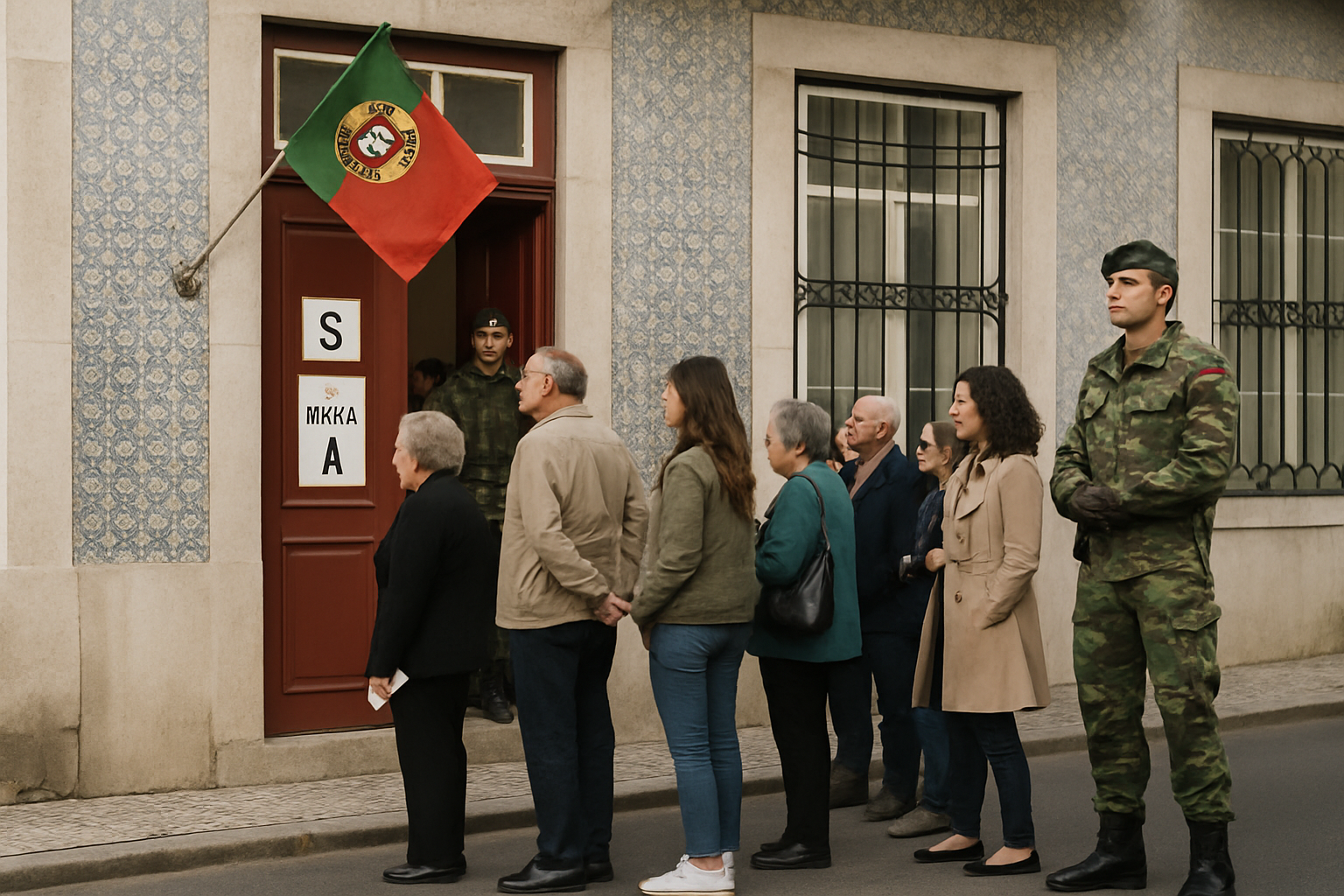
Portugal successfully conducted the second round of presidential elections in 20 constituencies and voting sections on Sunday, with over 3,000 military personnel deployed to assist the population following the unprecedented storm crisis that devastated the country in early February.
The electoral process proceeded as Portuguese Armed Forces mobilized massive resources to support civil authorities and ensure democratic participation despite ongoing recovery efforts from three consecutive Atlantic storms that claimed 14 lives and caused extensive infrastructure damage across the nation.
Military Support for Democratic Process
In a remarkable demonstration of institutional resilience, Portugal's military deployed more than 3,000 personnel to assist civilian authorities during the electoral process. This deployment was part of the larger peacetime rescue operation that has seen 26,500 personnel, including 1,975 military staff and 30 naval vessels, responding to over 1,800 weather incidents since February 1.
The military assistance ensured that voters could access polling stations safely despite ongoing infrastructure challenges from the devastating storms Kristin, Leonardo, and Marta that struck Portugal in succession during early February 2026.
Electoral Context and Previous Round
The second round comes after Socialist candidate António José Seguro's historic victory on February 8, where he defeated far-right André Ventura with an unprecedented 66.82% of the vote. However, certain constituencies required additional voting due to storm-related disruptions that prevented approximately 36,000 voters from participating in the initial election.
These 20 constituencies and voting sections were among the most severely affected by the Atlantic storm succession, which left 167,000 residents without power at the peak of the crisis and caused the Douro River to reach critical 1997 flood levels.
Storm Recovery and Democratic Resilience
Portugal's ability to conduct elections during the worst natural disaster in recent memory demonstrates remarkable democratic resilience. The storms caused unprecedented damage, including the collapse of an A1 highway viaduct near Coimbra, suspension of multiple railway lines, and flooding that exceeded 1963 catastrophic records in Alcácer do Sal.
"Portugal has shown that democratic institutions can function even under the most challenging circumstances. The military's support of the electoral process exemplifies our commitment to democratic governance."
— Electoral Official, speaking on condition of anonymity
The crisis also saw the resignation of Interior Minister Maria Lúcia Amaral on February 10, amid criticism over the government's handling of the emergency response. Prime Minister Luís Montenegro temporarily assumed the Interior role during the critical period.
International Context and Support
The electoral continuation received international attention as a template for maintaining democratic processes during climate emergencies. The European Union activated its Civil Protection Mechanism, with Sweden and Denmark providing €246 million in assistance to support Portugal's recovery efforts.
This represents one of the most significant tests of the intersection between climate change and democratic governance, as extreme weather events increasingly disrupt electoral processes across Europe.
President-Elect Seguro's Hometown Profile
Meanwhile, attention has turned to Penamacor, the birthplace of President-elect António José Seguro, where he is known simply as "Tozé" among locals. The small town in central Portugal has become a symbol of the new president's humble origins and connection to rural communities that were significantly impacted by the recent storms.
Local residents in Penamacor speak fondly of Seguro's deep roots in the community, where he maintains family connections and business interests. The town's residents take pride in their native son's rise to the presidency, particularly given his overwhelming electoral mandate.
Looking Forward: Reconstruction Challenges
President-elect Seguro will inherit massive reconstruction challenges when he takes office on March 9, succeeding Marcelo Rebelo de Sousa. The storms caused billions in damage across agricultural and tourism sectors, with recovery expected to take months or even years.
The new president has indicated he will take a distinct approach to the presidency, promising he "will not speak about everything and nothing" and considering suspending his Socialist Party membership to govern in a more non-partisan manner.
Infrastructure Priorities
Key reconstruction priorities include:
- Rebuilding the collapsed A1 highway viaduct connecting Lisbon and Porto
- Restoring railway services, particularly the Castanheira-Alvarca line serving Lisbon commuters
- Implementing enhanced flood defenses along major rivers
- Modernizing power grid infrastructure to withstand extreme weather
- Supporting agricultural recovery in flood-affected regions
Climate Adaptation Imperative
The February 2026 storm succession occurred during the hottest January on record globally, with 18 of the past 19 months exceeding 1.5°C above pre-industrial levels. This demonstrates how climate change is creating conditions for both extreme heat and severe storms, challenging traditional weather patterns.
Portugal's experience provides crucial lessons for other European nations on maintaining democratic institutions and public services during climate emergencies. The successful completion of elections despite severe infrastructure damage sets a precedent for democratic resilience in an era of increasing extreme weather events.
Institutional Strength Under Pressure
The election process, despite its challenges, reinforces Portugal's reputation for stable democratic governance. The country's ability to maintain constitutional processes while managing its largest peacetime emergency operation demonstrates the strength of Portuguese institutions.
International observers have praised Portugal's approach as a model for other democracies facing similar challenges from extreme weather events, highlighting the importance of military-civilian cooperation in maintaining democratic functions during national emergencies.
As Portugal continues its recovery and prepares for President-elect Seguro's inauguration, the successful completion of the electoral process stands as a testament to the nation's commitment to democratic values even in the face of unprecedented natural disasters.