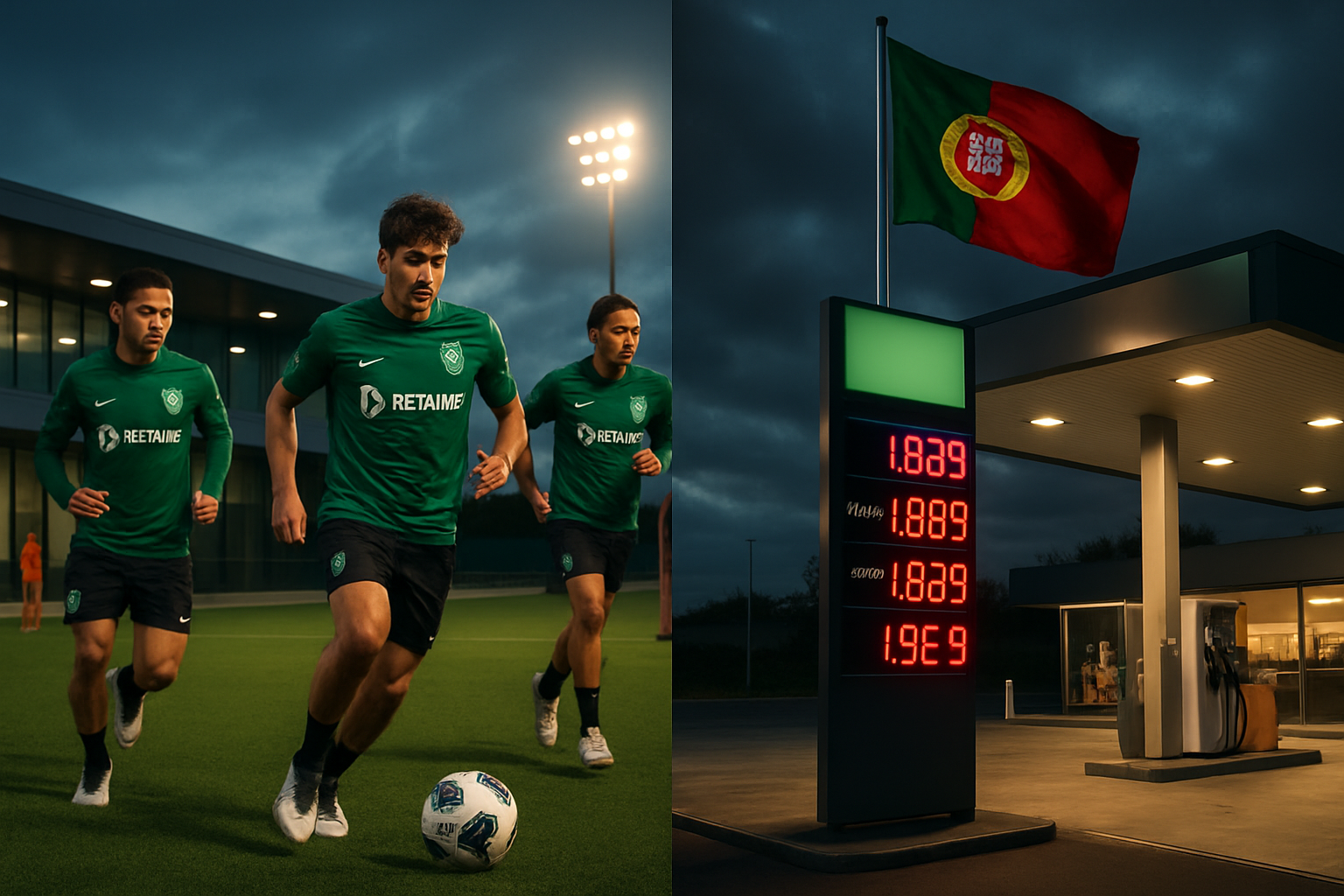
Portugal finds itself navigating critical sports and infrastructure challenges as Sporting Lisbon prepares for a defining Champions League second leg against Norwegian champions Bodø/Glimt, while Portuguese international Pedro Neto faces UEFA sanctions and fuel prices climb dangerously close to the €2 per litre mark.
The convergence of sporting pressure and economic strain highlights the complex realities facing Portuguese society in March 2026, with both elite football performance and basic infrastructure costs creating mounting concerns for citizens and institutions alike.
Sporting's Champions League Redemption Mission
Bodø/Glimt coach Kjetil Knutsen expressed confidence ahead of the Champions League Round of 16 second leg, expecting "another image" from Sporting Lisbon after the Portuguese giants suffered a devastating 3-0 defeat in the Arctic conditions of Norway's Aspmyra Stadium.
The Norwegian tactician, who has earned widespread praise as a "tactical mastermind" throughout Bodø/Glimt's unprecedented European campaign, acknowledged that Sporting would present a different challenge on home soil. However, he emphasized his team's thorough preparation for what promises to be a historic encounter in Lisbon.
Bodø/Glimt's remarkable journey has captured the imagination of European football, with the Arctic club from a town of just 50,000 people becoming the first Norwegian side to reach the Champions League Round of 16. Their commanding first-leg victory puts them within touching distance of an unprecedented quarter-final appearance, which would represent one of the greatest achievements in Norwegian football history.
Pedro Neto's UEFA Disciplinary Issues
Portuguese international Pedro Neto received an official UEFA warning following an incident during Chelsea's 5-2 defeat to Paris Saint-Germain in the Champions League Round of 16 first leg. The winger was sanctioned for pushing a ball boy during the heated encounter at the Parc des Princes.
"The incident reflects the intense pressure and emotions that can boil over during high-stakes European competition."
— UEFA Disciplinary Committee Statement
The warning serves as a reminder of the scrutiny Portuguese players face on the international stage, particularly in Champions League competition where every action is magnified. For Neto, who has been working to establish himself as a key player for both club and country, the incident represents an unwelcome distraction from his football development.
The disciplinary action comes at a time when Portuguese football is under intense examination, with the national team's European representatives facing varying fortunes in continental competition.
Economic Pressure: Fuel Costs Approach Critical Threshold
Portugal's economic challenges have intensified as the Entidade Reguladora dos Serviços Energéticos (ERSE) reported that the efficient price of simple diesel has surpassed €2 per litre, while simple gasoline 95 approaches the same critical threshold.
The milestone represents a significant burden for Portuguese households and businesses already struggling with post-pandemic economic recovery and broader European inflation pressures. Transportation costs, which directly impact everything from daily commuting to logistics for sporting events, continue to escalate at an unsustainable rate.
The fuel price surge affects multiple sectors of Portuguese society, from families planning weekend trips to football matches to businesses managing delivery costs. For sports organizations like Sporting Lisbon, rising operational costs add another layer of financial complexity to their European campaign ambitions.
Historical Context of Portuguese Sports Challenges
Portugal's current sporting and infrastructure challenges occur against the backdrop of Bodø/Glimt's remarkable European journey, which began with their historic elimination of Inter Milan and continued with group stage victories over traditional powerhouses Manchester City and Atlético Madrid.
The Norwegian side's tactical sophistication under Knutsen has redefined expectations for clubs outside Europe's traditional elite, demonstrating that superior preparation and belief can overcome vastly superior financial resources. Their artificial surface at Aspmyra Stadium and passionate home support have repeatedly proved decisive advantages against supposedly superior opponents.
For Sporting, the return leg represents more than just a Champions League tie – it's an opportunity to restore Portuguese football's credibility in European competition and demonstrate that tactical quality can overcome the psychological impact of that devastating first-leg defeat.
Infrastructure and Sports: Interconnected Challenges
The simultaneous pressures facing Portuguese sports and infrastructure reveal the interconnected nature of modern societal challenges. Rising fuel costs don't just affect individual consumers – they impact the operational budgets of sports clubs, the travel arrangements of supporters, and the broader economic environment in which Portuguese football operates.
Teams like Sporting must balance European ambitions with domestic financial realities, while supporters face increasing costs to follow their teams both domestically and internationally. The €2 fuel threshold represents more than a numerical milestone – it's a symbol of the economic pressures constraining Portuguese society's sporting and cultural aspirations.
Looking Forward: Critical Decisions Ahead
As Sporting prepares for their crucial Champions League return leg, the club faces the challenge of overcoming both sporting and economic obstacles. The team must find a way to reverse a three-goal deficit against a tactically sophisticated opponent, while operating within the financial constraints imposed by Portugal's broader economic challenges.
Knutsen's expectation of "another image" from Sporting acknowledges the psychological and tactical adjustments required, but the broader context of Portuguese infrastructure costs adds another dimension to the club's challenges. Success in European competition requires not just sporting excellence but also the financial stability to support sustained continental campaigns.
The convergence of these challenges in March 2026 illustrates the complex realities facing modern Portuguese society, where sporting ambitions and economic pressures intersect in ways that demand both tactical brilliance on the football pitch and strategic wisdom in infrastructure policy.
Whether Sporting can overcome their Champions League deficit while Portuguese society navigates rising fuel costs will serve as a test of resilience across multiple sectors, from elite sport to everyday economic life.