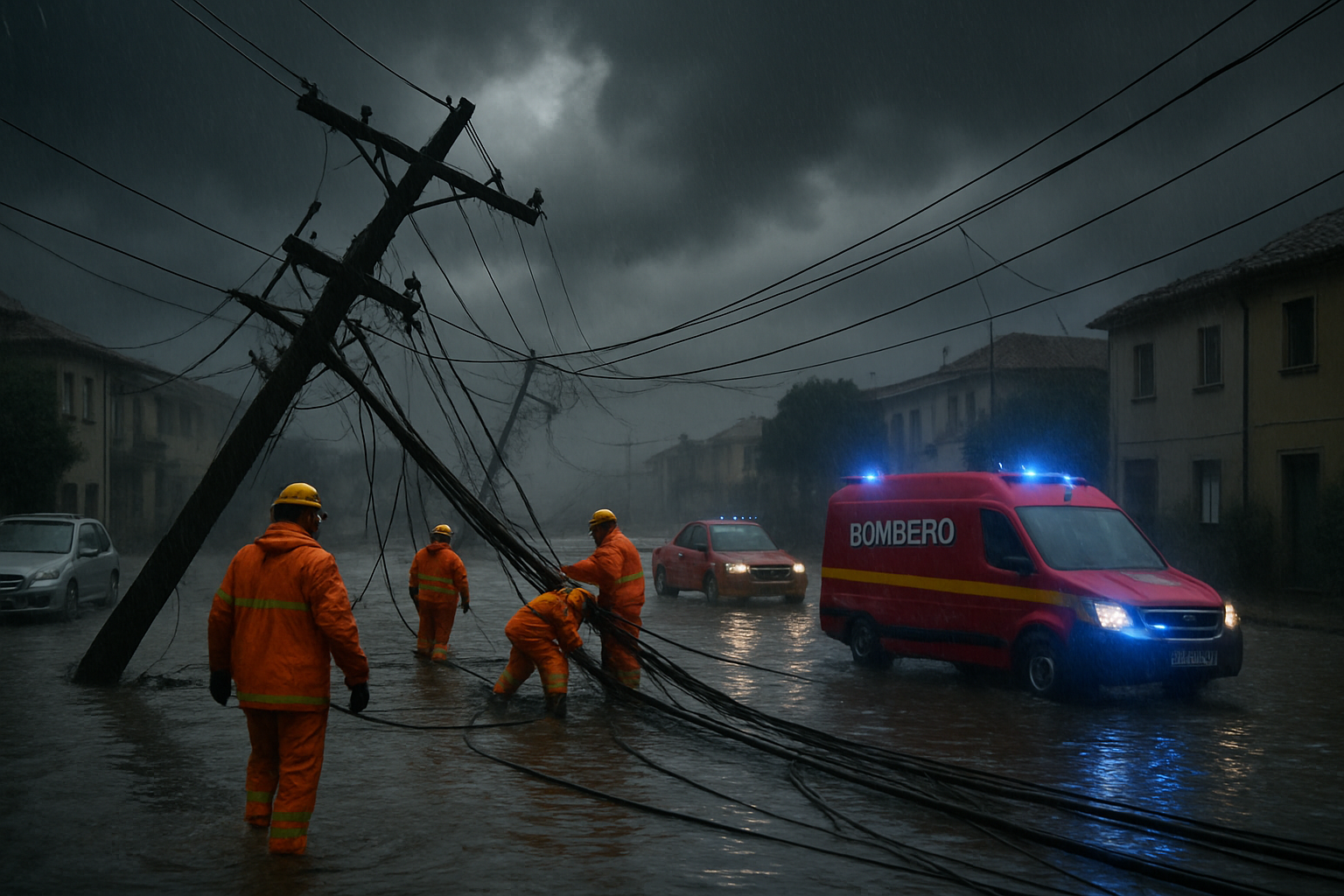
Storm Marta has plunged 69,000 Portuguese citizens into darkness as the Atlantic depression compounds an already catastrophic weather crisis that has overwhelmed the nation's emergency response systems and disrupted the upcoming presidential election.
The latest storm system, arriving just days after the devastating impact of storms Kristin and Leonardo, hit Portugal's continental territory around 6 AM Saturday morning, bringing winds of up to 120 km/h and massive waves reaching 13 meters along the coast. The Portuguese Meteorological Institute (IPMA) warned that Marta would affect the country with significant force until 3 PM, adding to what civil protection authorities describe as an "extremely preoccupying meteorological situation."
Unprecedented Emergency Response
Portugal has deployed its largest peacetime rescue operation in response to the series of storms, with 1,975 military personnel and 30 naval vessels responding to more than 1,800 weather-related incidents recorded since February 1. The scale of the crisis prompted President Marcelo Rebelo de Sousa to reinforce vigilance measures, while Prime Minister Luís Montenegro guaranteed "all resources" would be made available for emergency response.
Civil protection authorities have documented a staggering scope of damage across the country. The Douro River has overflowed its banks in Porto and Vila Nova de Gaia, reaching critical levels not seen since 1997. In Alcácer do Sal, flooding has exceeded the catastrophic levels recorded in 1963, with the Sado River overflow claiming at least one life.
"We are facing an extraordinary sequence of weather events that is testing our infrastructure and emergency systems to their limits."
— Portuguese Civil Protection Authority
Infrastructure Under Siege
The cumulative impact of the storms has crippled Portugal's transportation network. Railway services between Castanheira do Ribatejo and Alverca remain suspended due to flooding, affecting thousands of Lisbon commuters. The Campo Grande tunnels in Lisbon have been closed as a safety precaution, while the Minho River has overflowed more than 100 meters at Monção, flooding the historic thermal baths.
The power grid has suffered extensive damage, with 69,000 customers currently without electricity. In some localities around Pombal, residents have been without power for 10 days, prompting approximately 50 people to demonstrate on Friday night against the delays in electrical grid restoration. The protest proceeded without incident but highlighted growing public frustration with the prolonged outages.
Democratic Process Under Threat
The weather emergency has created an unprecedented challenge for Portugal's democratic institutions, with the presidential election runoff scheduled for February 8 proceeding despite widespread infrastructure disruption. Electoral authorities have insisted the election cannot be postponed under national law, though some local councils have delayed municipal elections due to the crisis.
The storms have created what political observers describe as a "depression that depressed the campaign," with candidates struggling to reach voters and hold rallies amid the ongoing emergency. The situation represents a unique intersection of climate crisis and democratic process, forcing the country to balance electoral obligations with public safety concerns.
Regional Impact and International Response
The crisis extends beyond Portugal's borders, with Spain evacuating over 8,000 people from Andalusia as the storm systems continue to affect the entire Iberian Peninsula. The town of Grazalema in Spain recorded an unprecedented 1,500 liters per square meter of rainfall in 36 hours, exceeding Madrid's entire annual precipitation total.
International support has begun mobilizing, with Sweden and Denmark announcing a €246 million emergency assistance package for the affected regions. The European Union has activated its Civil Protection Mechanism to coordinate cross-border emergency response efforts.
Climate Context and Growing Concerns
The current crisis occurs against the backdrop of January 2026 being recorded as the hottest month in global history, with 18 of the past 19 months exceeding 1.5°C above pre-industrial levels. This paradox of extreme cold and flooding alongside record global temperatures demonstrates the increasing volatility of weather patterns that scientists warn will become more frequent as climate change intensifies.
Portugal is still recovering from Storm Kristin, which killed five people in the country just weeks earlier. The rapid succession of severe weather events has strained emergency services beyond their typical capacity, requiring military deployment and international assistance to manage the crisis effectively.
Looking Ahead: Recovery and Resilience
As Storm Marta passes through the country, Portuguese authorities are already preparing for the next phase of the crisis. The government has extended the national calamity status through February 15, acknowledging that recovery efforts will require weeks or potentially months to complete.
The agricultural sector faces devastating losses, particularly to olive groves and citrus farms across the affected regions. Tourism infrastructure has also suffered significant damage, with coastal areas bearing the brunt of the massive waves and flooding.
The crisis has exposed critical vulnerabilities in Portugal's infrastructure, particularly in rural areas where power restoration has been slowest. In Arruda dos Vinhos, roads were literally lifted and broken by water accumulation, while residential areas near the Ponte do Rol river face ongoing flooding threats.
As Portugal prepares for its presidential election amid this ongoing emergency, the country faces a stark reminder of the new realities imposed by climate change. The ability to maintain democratic processes while responding to extreme weather events represents a challenge that European nations will likely face with increasing frequency in the years ahead.
Emergency services continue working around the clock to restore power to the 69,000 affected customers and provide assistance to displaced residents. The international community watches closely as Portugal navigates this unprecedented intersection of natural disaster and democratic obligation, providing a potential template for how nations might adapt their institutions to an era of increasing climate volatility.