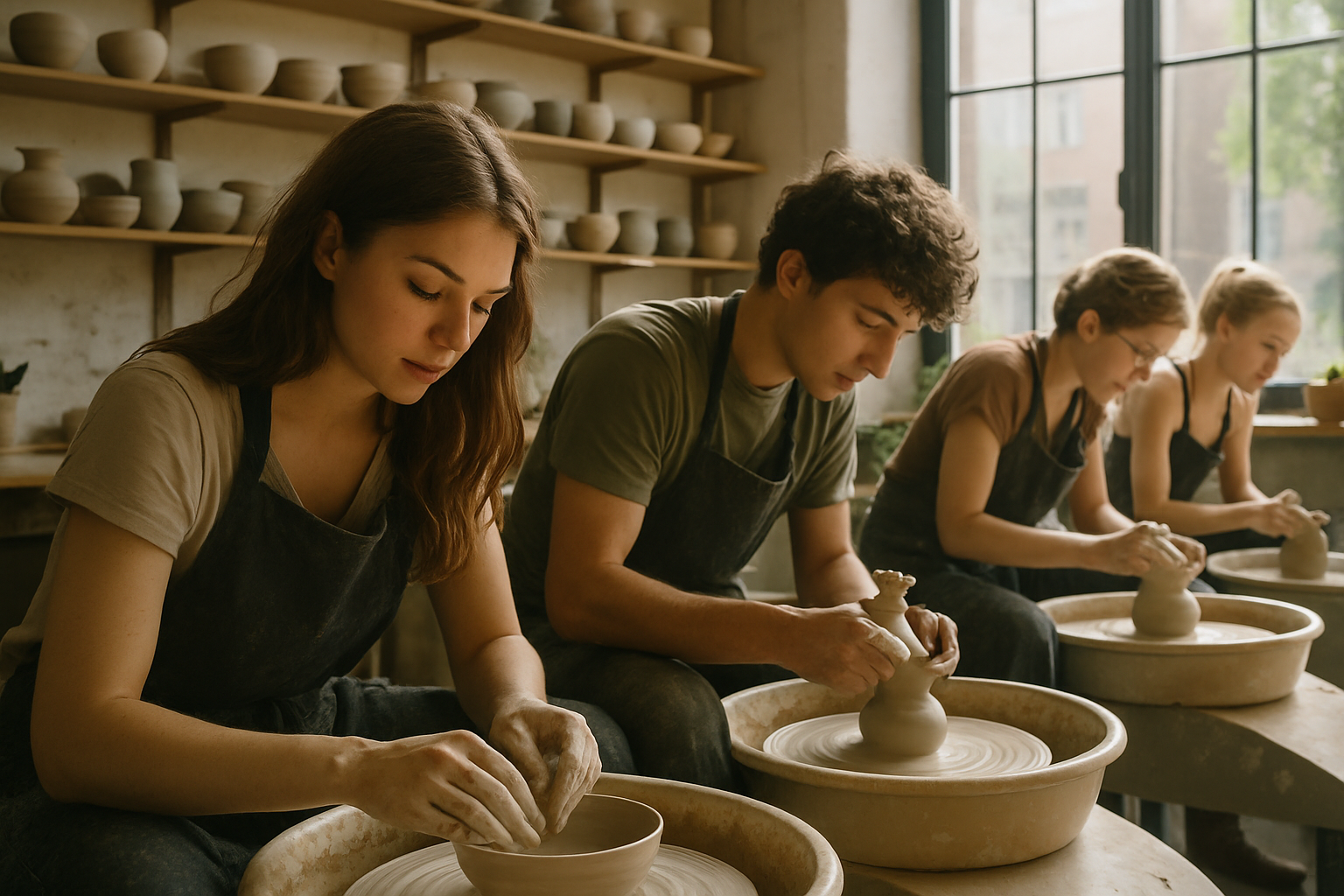
In pottery studios across Sweden and around the world, a remarkable transformation is taking place. Courses that once struggled to fill are now booking out months in advance, with waiting lists stretching into 2027. Young people who have grown up with smartphones are discovering the profound satisfaction of working with their hands, creating something tangible from earth and fire.
Stefan Humbla, course leader at a pottery studio in Sweden, has witnessed this dramatic shift firsthand. "Many courses are fully booked long before they start," he explains. "We see particularly that many younger people are finding their way to our courses." This observation reflects a global phenomenon that's reshaping the landscape of creative arts and therapeutic practices.
The Digital Detox Movement
The pottery renaissance comes at a critical moment in our relationship with technology. As documented in recent cultural analysis, 2026 has been marked by growing concerns about digital overwhelm and the search for authentic experiences. From Austria's existential questioning about AI replacing human activities to widespread discussions about social media's impact on mental health, there's a palpable desire for grounding, tactile experiences.
"There's something profoundly healing about working with clay," explains Dr. Sarah Mitchell, a therapist who has incorporated pottery into her practice. "It's immediate, forgiving, and completely present-moment focused. You can't text while throwing a pot."
Global Cultural Renaissance Context
This ceramics boom is part of a broader "February 2026 Cultural Renaissance" that has seen unprecedented international activity in traditional arts and crafts. From Luxembourg's 30-year-old luthier Jacques Sanavia representing a new generation choosing traditional trades over corporate careers, to widespread cultural preservation efforts across continents, there's a clear pattern emerging: young people are rediscovering the value of making things with their hands.

The movement transcends geographical boundaries. In Japan, traditional crafts are experiencing renewed interest alongside modern cultural exports. European artisan renaissance initiatives support young craftspeople with government backing and tourism markets. Even in challenging economic times, communities are recognizing the economic and social value of traditional skills.
Therapeutic Benefits Drive Demand
Mental health professionals are increasingly recognizing pottery's therapeutic potential. The practice combines several evidence-based wellness approaches: mindfulness through focused attention, bilateral brain stimulation through hand movement, and the psychological benefits of creating something lasting.
"When you're centering clay on the wheel, everything else disappears. It's meditation in motion."
— Maria Santos, Ceramics Instructor
Research indicates that tactile creative activities can reduce cortisol levels and improve mood regulation. For a generation dealing with unprecedented levels of anxiety and digital fatigue, pottery offers a respite that feels both ancient and urgently contemporary.
Economic Impact and Industry Growth
The pottery renaissance is creating significant economic ripple effects. Studios report revenue increases of 200-300% over pre-pandemic levels. Equipment suppliers are struggling to meet demand for pottery wheels, kilns, and clay. The success mirrors broader cultural tourism trends where authentic, hands-on experiences command premium pricing.
Unlike digital entertainment, pottery requires physical space, tools, and instruction—factors that support local economies. Studio owners report that younger participants often become long-term members, building sustainable business models around community and craft.
Technology Integration Without Replacement
Interestingly, successful pottery studios aren't rejecting technology entirely but using it thoughtfully. Social media showcases finished pieces, online booking systems manage the high demand, and digital kiln controllers ensure consistent results. This reflects broader successful patterns in the 2026 cultural renaissance where technology enhances rather than replaces traditional practices.
Virtual reality pottery apps exist but have failed to capture the essential elements: the texture of clay, the physicality of centering, the unpredictability of firing. This failure highlights what remains uniquely human and irreplaceably valuable about traditional crafts.
Intergenerational Knowledge Transfer
The pottery boom is creating unexpected bridges between generations. Master potters in their 70s and 80s are finding enthusiastic students among 20-somethings. Traditional knowledge that seemed at risk of disappearing is being preserved through this renewed interest.
"I've been throwing pots for 50 years," says Henrik Larsson, a veteran Swedish ceramicist. "I never thought I'd see young people this excited about clay again. They bring fresh energy, and I share techniques that took decades to learn."
Community Building Through Craft
Pottery studios are becoming community hubs in ways that digital spaces cannot replicate. The shared challenges of learning to throw, the communal anticipation of kiln openings, and the tangible results create bonds that extend beyond the studio walls.
This community aspect addresses another contemporary challenge: social isolation despite digital connectivity. Working alongside others in focused, creative pursuit provides the kind of meaningful human interaction that research shows is essential for mental health.
Challenges and Sustainability
The pottery renaissance faces practical challenges. Studio space is limited, skilled instructors are in short supply, and equipment costs have risen with demand. Environmental concerns about kiln energy use are being addressed through more efficient firing techniques and renewable energy adoption.
Clay sourcing also raises sustainability questions, though many studios are partnering with local sources and emphasizing recycling and reuse of materials. The durability of ceramic pieces—lasting generations—contrasts favorably with fast fashion and disposable consumer goods.
Future Trajectories
Cultural analysts predict this isn't a temporary trend but a fundamental shift in how people seek meaning and wellness. As artificial intelligence handles increasing numbers of cognitive tasks, the value of physical, creative skills may only grow.
Educational institutions are taking notice. Art therapy programs report increased enrollment, and some medical schools are experimenting with pottery as part of wellness curricula for future doctors facing high-stress careers.
Global Implications
The pottery renaissance exemplifies broader themes in the documented 2026 cultural revival: the search for authenticity in an artificial world, the need for physical engagement in a digital age, and the value of community in an individualistic society.
As Stefan Humbla observes the full classes and waiting lists at his Swedish studio, he's witnessing more than a hobby trend. He's seeing young people reclaim something fundamental about human nature—the need to create, to work with our hands, and to make something lasting in an ephemeral world.
In an age where everything can be simulated, the irreplaceable reality of clay responds only to patient, present attention. For a generation seeking grounding, pottery offers both literal and metaphorical foundation—a return to earth in the most fundamental sense.