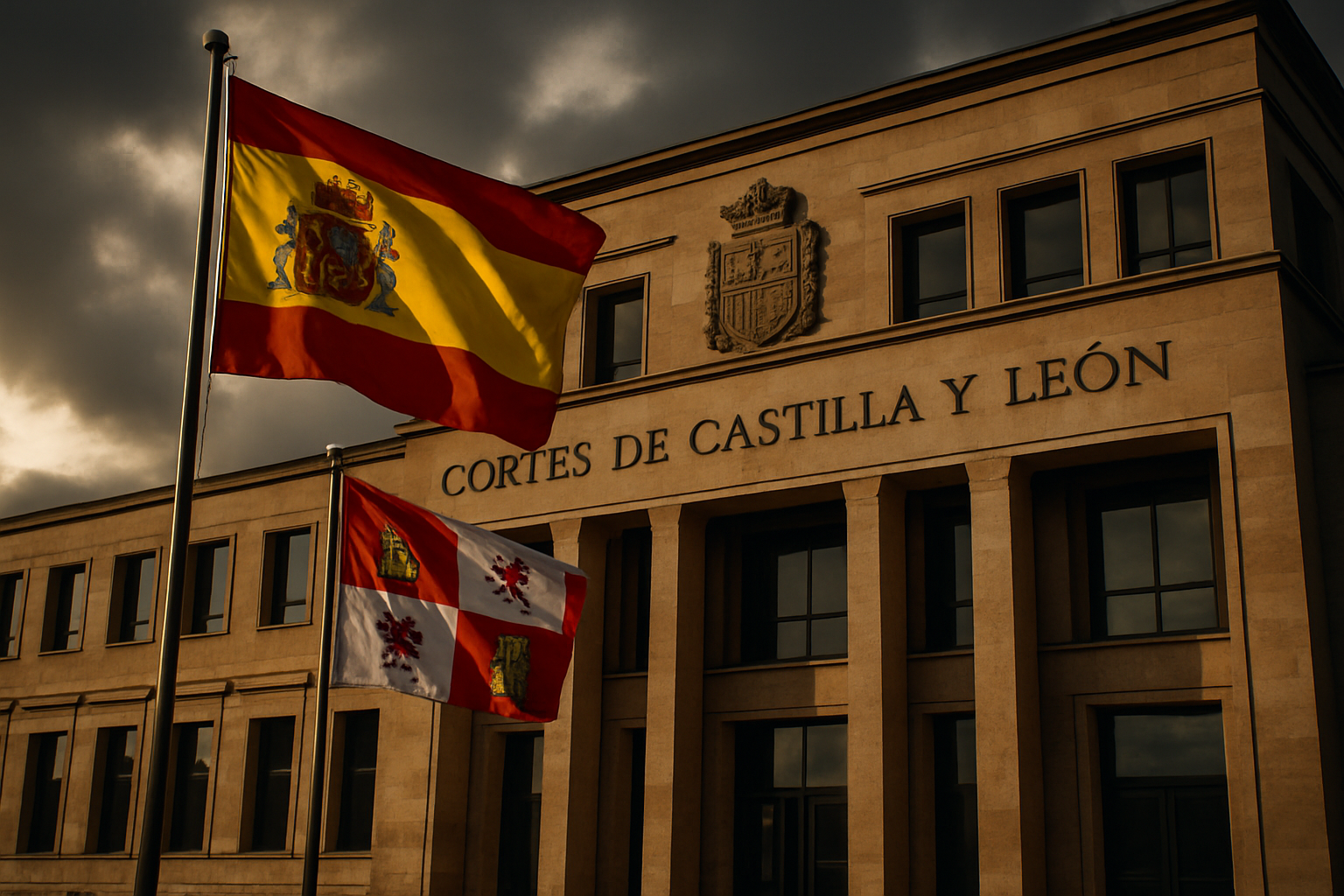
Spain's Popular Party (PP) has strengthened its electoral position in Castilla y León, securing 33 seats and gaining crucial ground that facilitates continued coalition agreements with the far-right Vox party, according to comprehensive election results released Monday.
Alfonso Fernández Mañueco's PP achieved a notable victory in Spain's largest autonomous region by territory, gaining 2 seats from their previous 31 to reach 33 in the 81-member regional parliament. The results demonstrate the party's resilience despite broader national challenges and provide a template for conservative coalition governance across Spain.
Coalition Mathematics Favor Continued Governance
The PP-Vox coalition maintains a comfortable governing majority with 47 seats total, as Vox secured 14 seats (gaining 1 from the previous election). This enhanced position gives both parties greater negotiating power within their coalition arrangement, while reducing the PP's previous concerns about over-dependence on their far-right partners.
Political analysts note that Mañueco's strengthened mandate provides the PP with greater leverage in coalition discussions. "The Popular Party has managed to increase its distance from the PSOE while maintaining a stable partnership with Vox," observed one regional political commentator. "This creates a more balanced dynamic within the governing coalition."
The improved electoral mathematics come as a relief to PP leadership, particularly given the party's mixed results in other recent regional contests across Spain. The Castilla y León outcome demonstrates the PP's ability to consolidate conservative voters while working effectively within coalition frameworks.
Socialist Recovery Falls Short of Breakthrough
The Socialist Party (PSOE) staged a notable recovery, gaining 2 seats to reach 30 total, marking their best regional performance in recent months. This improvement represents a significant uptick from their disappointing results in Extremadura and Aragón, where the party suffered major defeats.
Despite this recovery, the PSOE remains well short of the gains needed to challenge the conservative coalition's dominance. The party's improved performance does signal potential stabilization after a series of regional electoral setbacks that had raised questions about Socialist organizational strength outside of national politics.
The results suggest that while the PSOE can recover ground under favorable circumstances, the broader trend toward conservative governance in Spain's autonomous regions remains intact.
Regional Parties Face Continued Marginalization
Traditional regional parties continued their decline in Castilla y León, with Soria Ya suffering major losses by dropping from 3 seats to just 1. This dramatic reduction reflects the broader nationalization of Spanish politics, where major national parties increasingly dominate regional contests.
Unión del Pueblo Leonés (UPL) maintained its 3 seats, while Por Ávila kept its single seat, suggesting these parties retain localized support but face challenges expanding their influence. The trend toward bipolar competition between major national formations appears to be accelerating across Spanish regional politics.
National Political Implications
The Castilla y León results provide mixed signals for national PP strategy under Alberto Núñez Feijóo. While the party demonstrated its ability to maintain and expand regional control, the continued necessity of Vox partnership highlights ongoing challenges in building purely center-right coalitions.
Santiago Abascal's Vox has used its enhanced position to criticize PP national leadership over governance failures in other regions, particularly the stalled negotiations in Extremadura and Aragón. This dynamic creates both opportunities and tensions within the broader Spanish conservative movement.
For the governing PSOE at the national level, the Socialist recovery in Castilla y León provides some relief after a series of regional defeats. However, the party remains under pressure to demonstrate it can effectively challenge conservative governance models that appear to be consolidating across multiple Spanish regions.
European Context and Democratic Resilience
The Castilla y León election results fit within broader European patterns of conservative-far right coalition governance. International observers have noted Spain's experience as particularly significant given the country's role in managing far-right integration through coalition arrangements rather than exclusion strategies employed elsewhere.
The successful conduct of the elections, with high democratic standards and peaceful transitions, demonstrates the resilience of Spanish democratic institutions despite increasing political polarization. The results reflect voter preferences while maintaining institutional integrity and constitutional frameworks.
The outcome extends the potential for conservative rule in the region to four decades, should the coalition prove durable. This longevity would make Castilla y León a significant case study for European conservative strategy and coalition management in an era of political fragmentation.
Looking Forward: Coalition Governance Tested
The enhanced PP position creates new dynamics within the governing coalition that will be closely watched by political observers across Spain and Europe. Mañueco's strengthened mandate provides opportunities for more assertive policy implementation while managing the relationship with Vox partners.
The results may influence coalition negotiations in other Spanish regions where similar PP-Vox arrangements are being considered or implemented. Success in Castilla y León could provide a template for conservative governance, while any future tensions could highlight the challenges of far-right integration.
As Spain continues to navigate complex multi-party politics and territorial governance, the Castilla y León experience offers insights into how democratic institutions can accommodate diverse political forces while maintaining effective regional administration and policy implementation.