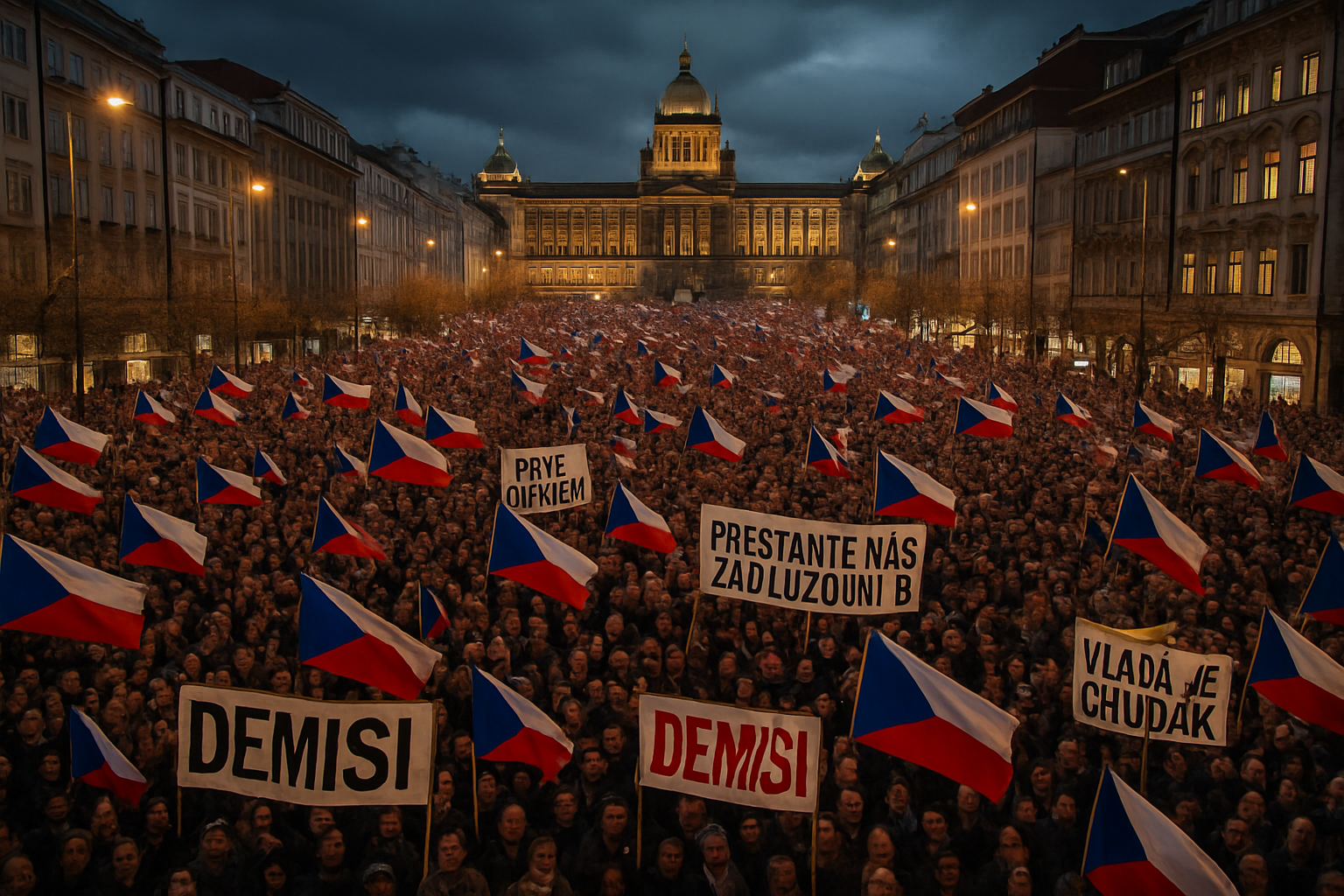
Tens of thousands of protesters flooded Prague's streets on Saturday in one of the largest demonstrations against the Czech government since 2019, as citizens expressed mounting frustration with Prime Minister Andrej Babiš's administration over concerns about democratic regression and pro-Russian sympathies.
The massive rally, organized by an independent citizen movement, drew demonstrators from across the Czech Republic to voice opposition to what they characterize as the billionaire leader's increasingly authoritarian tendencies and alleged abuse of parliamentary immunity to evade criminal prosecution.
Core Grievances Against the Administration
Protesters accused the Babiš government of "minimizing" threats posed by Russia, which invaded Ukraine in 2022, according to French media reports. The demonstration highlighted growing concerns about the administration's foreign policy stance at a time when most European Union nations have strengthened support for Ukraine and sanctions against Moscow.
The independent civic movement organizing the protests specifically criticized Babiš for allegedly exploiting his parliamentary immunity to escape criminal charges. These accusations have dogged the 71-year-old billionaire throughout his political career, with opponents arguing his immunity has shielded him from accountability for various legal challenges.
German media described the protesters as condemning "authoritarian tendencies" within the government, while also criticizing what they termed an inappropriate "rapprochement with Russia." This criticism comes as Czech Republic, along with Slovakia and Hungary, has refused to participate in the EU's historic €90 billion loan package for Ukraine, highlighting divisions within the European bloc.
European Context of Democratic Crisis
The Prague protests occur within a broader pattern of democratic challenges across Central and Eastern Europe. According to recent analysis, March 2026 represents a "critical juncture testing institutional capacity" as traditional coalition politics break down across the region.
The demonstrations echo similar movements across Europe, where 89% of citizens demand greater EU unity according to Eurobarometer polling, yet political reality shows increasing fragmentation and sovereignty assertions. The Czech protests join a documented pattern of citizen mobilization against what observers describe as "authoritarian innovation within democratic systems."
"The EU cannot become Budapest's hostage."
— Kestutis Budrys, Lithuanian Foreign Minister
The Prague rally represents the largest gathering against Babiš's government since major 2019 protests, when over 250,000 demonstrators filled Letná Plain under the slogan "Don't let them steal our future." Those earlier protests reflected mounting concerns about oligarchic influence and democratic regression that continue to animate opposition movements.
Parliamentary Challenges and Political Context
The demonstration comes as Babiš's government faces ongoing parliamentary pressure. In February 2026, the Prime Minister survived a no-confidence vote after an extraordinary 22-hour parliamentary debate session, representing a temporary victory but leaving underlying political tensions unresolved.
The government has weathered previous institutional challenges, including tensions with President Pavel and various parliamentary confrontations. However, the scale of Saturday's protests suggests growing public dissatisfaction with the administration's direction, particularly regarding foreign policy and rule of law concerns.
International Implications
Czech Republic's position on Ukraine aid has created tensions within the European Union, with the country joining Slovakia and Hungary in refusing to participate in financing the €90 billion reconstruction loan for Ukraine. This stance has drawn criticism from EU partners, particularly as Lithuania warns against allowing individual member states to hold the bloc "hostage."
The protests highlight broader questions about Central European countries' alignment with EU foreign policy, particularly regarding Russia and support for Ukraine. As traditional Western democratic institutions face pressure from authoritarian alternatives, the outcome of movements like Prague's demonstrations could influence the trajectory of European integration and democratic governance.
Looking Forward
The massive turnout in Prague demonstrates sustained civic engagement in Czech democracy, with protesters demanding accountability from their elected officials and expressing concerns about the country's international orientation. The independent nature of the organizing movement suggests grassroots dissatisfaction rather than traditional party-political opposition.
As Europe grapples with questions of unity, sovereignty, and democratic governance in the face of external pressure, the Czech protests represent a critical test of citizen mobilization and institutional responsiveness. The government's response to these demonstrations will likely influence both domestic political dynamics and Czech Republic's position within broader European discussions about democracy and foreign policy alignment.
The events in Prague reflect a broader moment of reckoning for Central European democracies, where citizens increasingly demand transparency, accountability, and clear democratic principles from their leaders during a period of unprecedented geopolitical challenge and institutional stress testing across the continent.