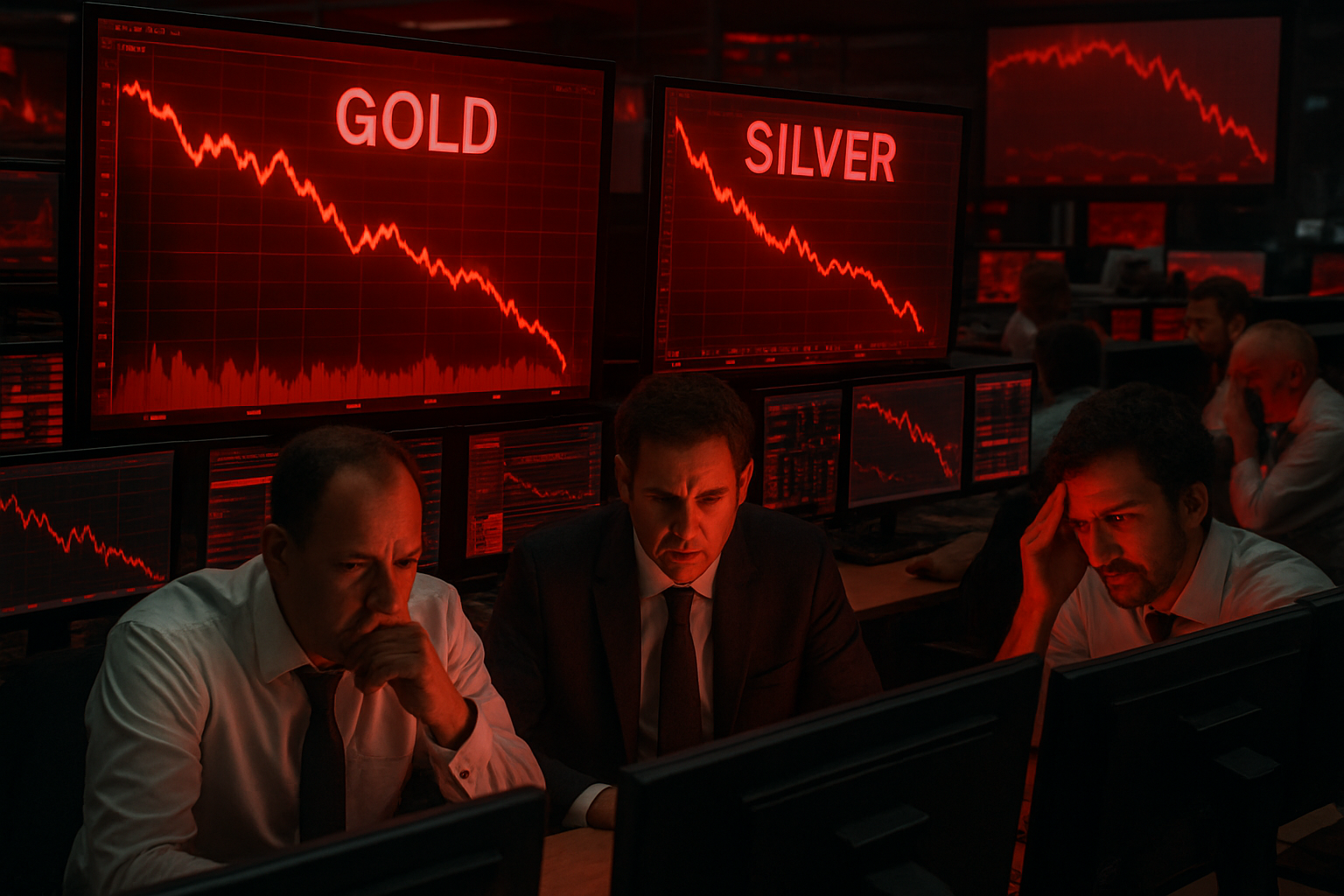
Precious metals markets witnessed their most catastrophic single-day collapse in over four decades on Friday, February 1, 2026, with silver prices crashing 36% and gold tumbling from record highs in an unprecedented global selloff that sent shockwaves through financial markets worldwide.
Silver opened trading at $105.93, marking an extraordinary single-day drop of nearly 30% before accelerating to a devastating 36% decline by market close, according to reports from Azerbaijan's financial markets. This represents the most severe percentage drop in silver prices since March 1980, when the Hunt Brothers' silver manipulation scheme collapsed, triggering a similar market panic.
Gold Suffers Massive Reversal from Record Territory
Gold prices experienced an equally dramatic reversal, plummeting from a record high of $5,600 per ounce to $4,770 – a staggering decline of $830 per ounce in a single session. The precious metal had been riding an unprecedented bull run throughout January, with global prices surging by approximately $577, or 13.4%, during the month before Friday's catastrophic reversal.
The severity of the decline caught even seasoned precious metals traders off guard, with intense selling pressure overwhelming bid support across all major trading centers from London to New York to Hong Kong.
Regional Market Impact Reveals Global Scope
The crash's global nature became evident through regional market data, particularly from Egypt's local gold market, which had experienced robust gains throughout January. According to Saied Embaby, Chief Executive of online gold and jewelry trading platform iSagha, Egyptian gold prices had jumped by approximately EGP 995 during January, with 21-carat gold reaching an all-time high of EGP 7,550 per gram.
"The local market recorded its largest single-day loss in history last Friday, with prices falling by nearly EGP 600 per gram, in tandem with a sharp global decline that saw gold drop by more than $510 per ounce."
— Saied Embaby, Chief Executive, iSagha
By the end of Friday's trading, Egyptian 21-carat gold had settled at EGP 6,825 per gram, while 24-carat gold closed at approximately EGP 7,800 per gram, representing massive losses from the month's earlier peaks.
Historical Context and Market Parallels
The silver crash bears striking similarities to the March 1980 collapse that ended the Hunt Brothers' attempt to corner the silver market. That historic event saw silver prices plummet from over $50 per ounce to under $11 in just four days, devastating investors and reshaping precious metals markets permanently.
Financial historians note that single-day declines of this magnitude in precious metals markets are extremely rare and typically coincide with major geopolitical shifts, monetary policy changes, or significant market disruptions. The last comparable event occurred during the 2008 financial crisis, though even those declines pale in comparison to Friday's dramatic selloff.
Technical Analysis Reveals Overwhelming Selling Pressure
Market technicians reported that the selling pressure was unprecedented, with traditional support levels completely failing to provide any meaningful resistance to the decline. The volume of trading exceeded normal daily averages by several multiples, indicating institutional liquidation rather than retail panic selling.
Gold's retreat from the $5,600 level represents a textbook example of a parabolic bubble bursting, with the metal having advanced too far too fast during January's rally. The subsequent correction, while severe, brings prices back to levels seen earlier in the month.
Broader Market Implications
The precious metals crash occurred amid broader market volatility, with equity markets also experiencing significant stress. The magnitude of the decline raises questions about leverage in commodity markets and the role of algorithmic trading in amplifying price movements.
Currency markets showed mixed reactions to the precious metals collapse, with the U.S. dollar strengthening against most major currencies as investors fled to traditional safe-haven assets. However, the scale of the precious metals selloff suggests that even traditional store-of-value assets are not immune to extreme volatility in current market conditions.
Investor Response and Market Outlook
Investment advisors are counseling clients to assess their precious metals exposure carefully, particularly those who entered positions during January's rally near the highs. The dramatic reversal serves as a stark reminder of the volatility inherent in commodity markets, even in assets traditionally viewed as safe havens.
Looking ahead, market participants will be closely monitoring whether Friday's decline represents a healthy correction in an ongoing bull market or the beginning of a more significant bear phase for precious metals. The answer may depend largely on the underlying factors that drove the initial rally and whether those fundamentals remain intact despite Friday's dramatic price action.
The coming trading sessions will be crucial in determining whether the precious metals markets can find stability or if additional selling pressure emerges, potentially driving prices even lower. For now, traders and investors alike are left to process one of the most dramatic single-day moves in precious metals market history.