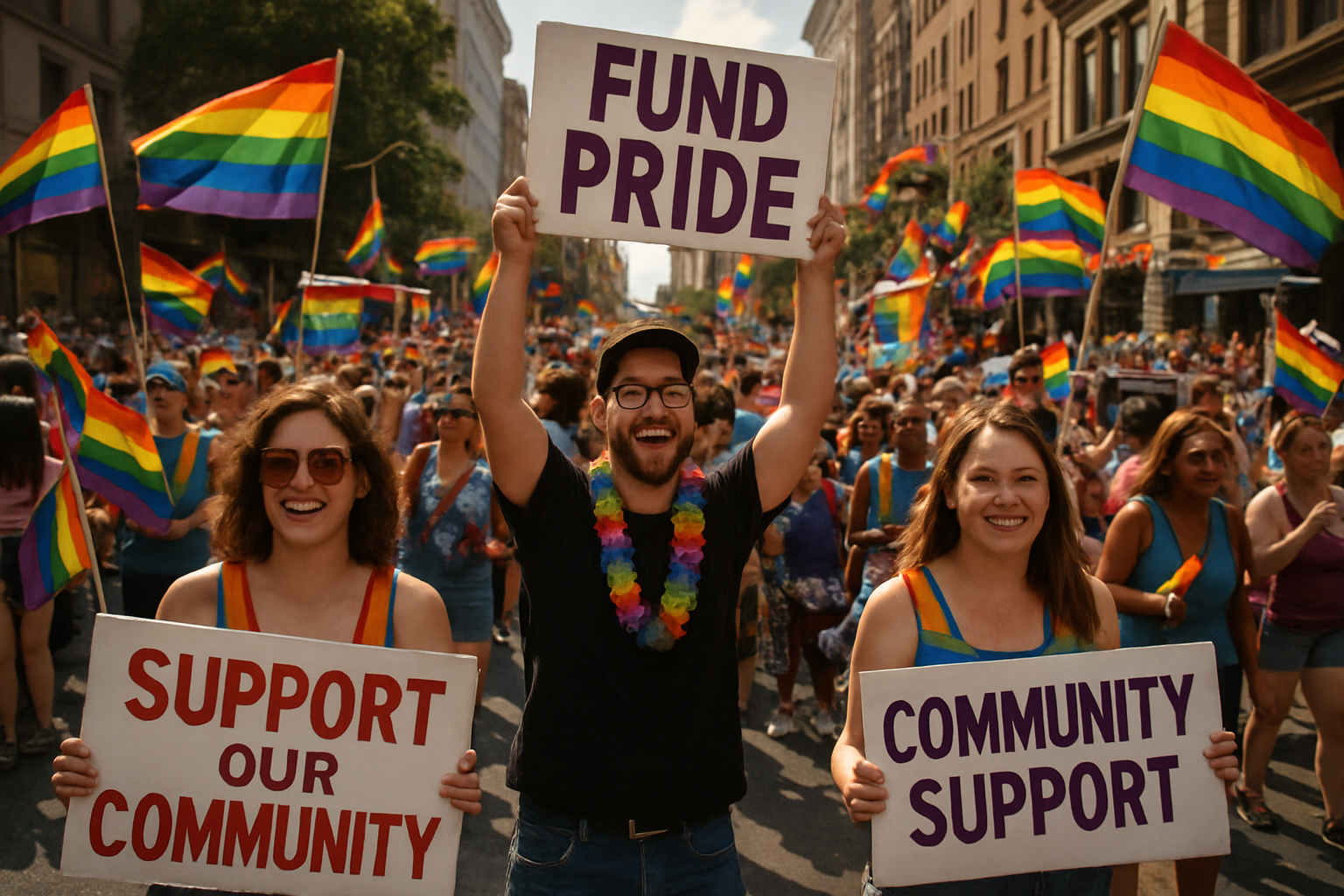
Pride festivals across Canada are facing an unprecedented funding crisis as corporate sponsors withdraw support amid a growing backlash against diversity, equity and inclusion (DEI) programs, prompting organizers to seek $3 million annually in federal government support to ensure these vital community celebrations continue.
The funding shortfall represents one of the most significant challenges to LGBTQ+ community events in recent Canadian history, threatening celebrations that have become cornerstones of inclusion and visibility for millions of Canadians. Festival organizers report dramatic reductions in corporate sponsorship as companies retreat from public diversity commitments, forcing urgent appeals to the federal government for emergency support.
Corporate Withdrawal Creates Critical Gap
The crisis stems from a systematic pullback by corporations that previously provided substantial funding for Pride events across the country. Industry sources indicate that companies are reducing or eliminating DEI-related sponsorships in response to mounting pressure from shareholders and activist groups targeting corporate diversity initiatives.
"We're seeing sponsors who have supported our festival for years suddenly backing away," said one festival organizer, speaking on condition of anonymity. "The messaging is clear—they don't want to be associated with what they perceive as controversial programming, even though these are community celebrations that bring families together."
The withdrawal affects not only the signature parades that draw hundreds of thousands of spectators, but also year-round programming including youth support services, educational initiatives, and mental health resources that Pride organizations provide to LGBTQ+ communities.
Federal Support Request Under Consideration
Pride festival organizers have formally requested $3 million annually from the federal government through Ottawa to address the funding gap. This represents a significant shift toward public funding for events that have traditionally relied heavily on corporate partnerships and community donations.
The request comes at a time when the Liberal government faces competing priorities for limited public funding, including healthcare, housing, and climate initiatives. However, supporters argue that Pride festivals represent essential infrastructure for LGBTQ+ mental health and community cohesion, particularly in smaller communities where these events may be the only visible celebration of diversity.
Government sources suggest the request is under active consideration, with discussions focusing on how federal support could be structured to ensure accountability while maintaining the community-driven character of Pride events. The timing is particularly sensitive as the federal government faces criticism from conservative groups over spending priorities.
Impact on Community Services
Beyond the visible celebrations, many Pride organizations provide crucial year-round services to LGBTQ+ communities. These include crisis intervention, counseling services, educational programming in schools, and safe space initiatives for vulnerable youth. The funding crisis threatens the continuity of these programs at a time when Canadian surveys indicate rising instances of discrimination and mental health challenges among LGBTQ+ individuals.
Mental health professionals emphasize that Pride events and associated programming serve functions beyond celebration, providing validation and community connection that research demonstrates as crucial for LGBTQ+ wellbeing. A 2025 study by the Canadian Mental Health Association found that communities with active Pride programming showed significantly lower rates of LGBTQ+ youth mental health crises.
"These aren't just parties," explained Dr. Sarah Mitchell, a researcher specializing in LGBTQ+ community health. "They're essential community infrastructure that provides support, visibility, and connection that many people can't find elsewhere. When that disappears, we see real consequences for mental health and community resilience."
Regional Variations in Impact
The funding crisis affects different regions unequally, with smaller communities and rural areas facing the most severe challenges. Major urban Pride events in Toronto, Vancouver, and Montreal have greater capacity to weather sponsorship losses through diversified funding sources, while smaller festivals in places like Saskatoon, Halifax, or Thunder Bay rely more heavily on corporate support.
This geographic disparity raises concerns about creating a two-tier system where LGBTQ+ visibility and support becomes concentrated in major urban centers, potentially leaving rural and smaller-city communities without crucial resources and celebrations.
International Context of DEI Backlash
The Canadian situation reflects broader international trends affecting corporate diversity and inclusion initiatives. In the United States, numerous major corporations have scaled back DEI programming following shareholder pressure and political campaigns targeting such initiatives. Similar patterns have emerged across Europe and other Western democracies, creating challenges for organizations that have traditionally relied on corporate partnership models.
However, some advocates argue that the current crisis presents an opportunity to develop more sustainable funding models that reduce dependency on corporate decision-making and create stronger connections with government and community funding sources.
Response from Political Leaders
Federal Minister for Women and Gender Equality Marci Ien acknowledged the challenges facing Pride organizations while stopping short of committing to the specific funding request. "Pride events are important celebrations of Canadian values of inclusion and diversity," Ien stated. "We're examining how we can best support these vital community celebrations during this challenging period."
Conservative Party critics have questioned whether federal funding for Pride events represents appropriate use of taxpayer resources, arguing that community celebrations should remain privately funded. This political dynamic adds complexity to the funding request as the government navigates competing pressures from different constituencies.
New Democratic Party Leader Jagmeet Singh has explicitly endorsed federal support for Pride festivals, calling them "essential infrastructure for LGBTQ+ community health and Canadian values of inclusion."
Looking Toward Solutions
Pride organizers and community advocates are exploring multiple strategies to address the funding shortfall. These include developing subscription-style community funding models, expanding partnerships with labor unions and professional associations, and creating endowment funds to provide long-term sustainability.
Some festivals are experimenting with reduced-scale events that maintain community connections while operating within constrained budgets. Others are pursuing partnerships with municipal governments and local businesses that may be less susceptible to national political pressures affecting larger corporations.
The crisis has also sparked discussions about the fundamental relationship between LGBTQ+ advocacy and corporate sponsorship, with some community leaders arguing that reduced corporate dependence could ultimately strengthen the independence and authenticity of Pride events.
As Pride season 2026 approaches, the resolution of this funding crisis will significantly impact not only the scale and scope of celebrations but also the broader question of how Canadian society supports and celebrates diversity during a period of increased political polarization around identity and inclusion issues.
The outcome will likely establish precedents for how essential community services and celebrations are funded in an era where corporate social responsibility faces mounting challenges, potentially reshaping the landscape for LGBTQ+ advocacy and community support for years to come.