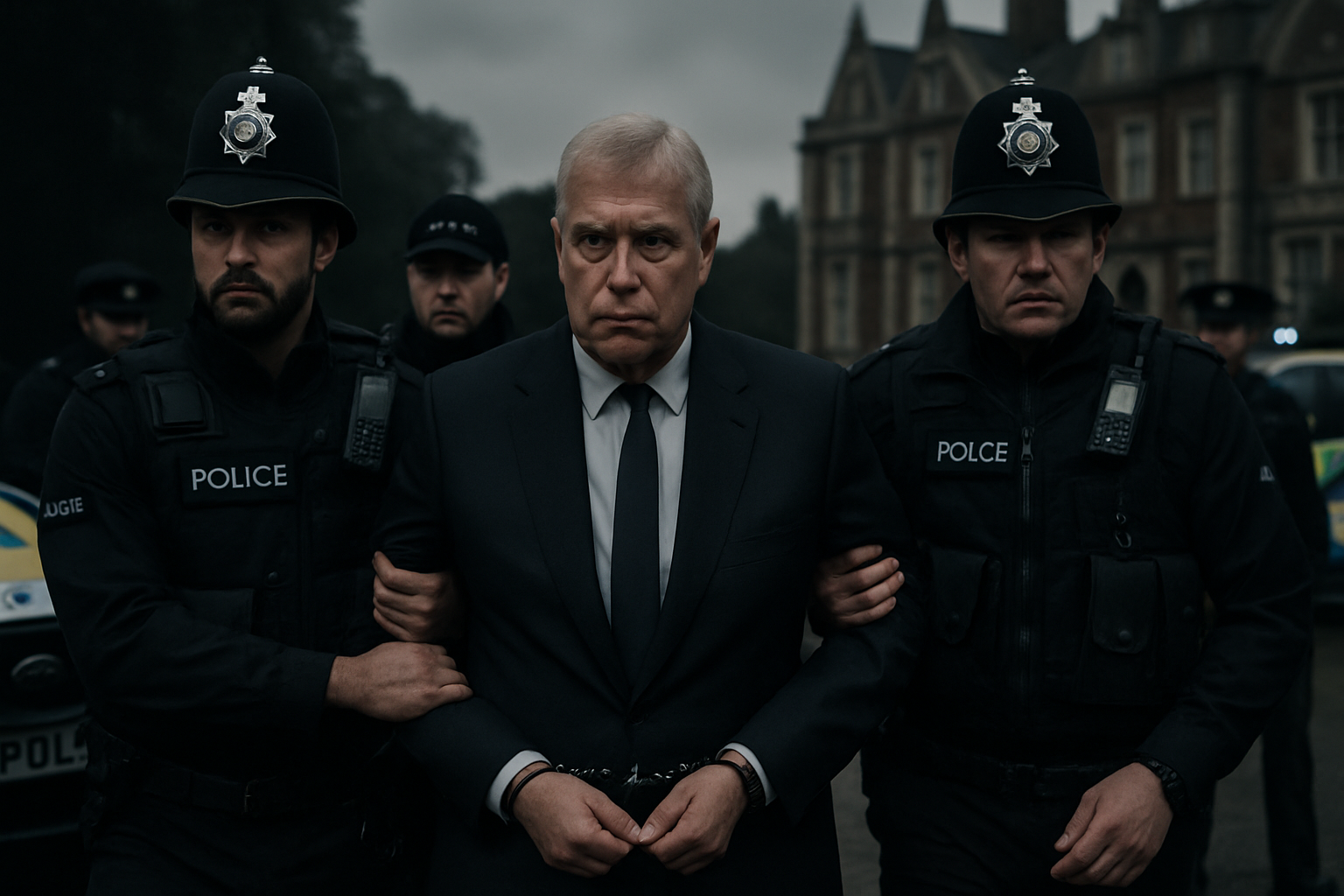
Prince Andrew Mountbatten-Windsor was arrested on his 66th birthday in connection with the Jeffrey Epstein investigation, sparking an unprecedented constitutional crisis that has prompted the UK government to consider legislation removing him from the line of succession to the British throne.
The former Duke of York was detained by Thames Valley Police at Sandringham Estate in the early hours of February 19, 2026, on suspicion of misconduct in public office. After spending 11 hours in custody at Aylsham Police Station in Norfolk, he was released under investigation, marking the first arrest of a senior British royal in modern history since King Charles I in 1647.
Historic Arrest Shakes Monarchy
The arrest represents a watershed moment for the British monarchy, testing the relationship between the Crown and the rule of law in the 21st century. King Charles III issued an unprecedented statement declaring that "the law must take its course" and pledging "full and wholehearted support and cooperation" with authorities—a seismic shift in royal protocol that prioritizes institutional integrity over family loyalty.
Andrew faces allegations of sharing classified government information with Jeffrey Epstein during his tenure as UK Special Representative for International Trade and Investment from 2001 to 2011. The key evidence includes a December 24, 2010 email allegedly transmitting confidential intelligence about Afghanistan's Helmand province, including data on gold, uranium, and oil reserves, in potential violation of the Official Secrets Act.
"This is a historic moment that demonstrates no one is above the law, regardless of their royal status or international standing."
— Dr. Sarah Henderson, Constitutional Law Expert
Government Considers Succession Removal
In an extraordinary development, UK Defence Minister Luke Pollard confirmed on BBC Radio that the government is actively working alongside Buckingham Palace to remove Andrew from the line of succession. Despite recent controversies, Andrew remains eighth in line to the British throne, a position that has become increasingly problematic given the ongoing criminal investigation.
Pollard stated that removing Andrew from "potentially being a heartbeat away from the throne" is the "right thing to do," regardless of the outcome of his arrest. However, any changes to the succession would require consultation and agreement with other Commonwealth countries where King Charles serves as head of state.
The legislative process would be unprecedented in modern British history, requiring an Act of Parliament and potentially setting new constitutional precedents for how democratic institutions address royal accountability in criminal matters.
International Investigation Expands
Andrew's arrest is part of what European law enforcement has described as the "largest international elite criminal network exposure in recent memory." The investigation spans six countries and stems from the release of over 3 million pages of Jeffrey Epstein documents by the US Department of Justice.
Thames Valley Police have been conducting searches at both Sandringham Estate and Andrew's former Royal Lodge residence at Windsor. The investigation has also involved questioning Andrew's former protection officers about what they "saw or heard" during his time as a working royal.
The case has drawn parallels to similar investigations across Europe, including Norway's royal family crisis involving Crown Princess Mette-Marit, who appears over 1,000 times in the Epstein documents, and ongoing investigations in France and the Baltic states into potential trafficking networks.
Constitutional and Political Implications
The arrest has created significant political ramifications across the Commonwealth. In Australia, the news has prompted fresh discussions about the monarchy's role, while Canadian officials have indicated they would support any succession changes proposed by the UK government.
Opposition politicians have called for emergency parliamentary sessions to discuss the constitutional implications, with some demanding a review of the entire succession system. The crisis has also reignited republican sentiment in several Commonwealth nations, with polls showing increased support for moving away from the monarchy.
Scottish National Party leader Humza Yousaf described the situation as "exactly why Scotland needs independence from this archaic system," while Irish politicians have called it "another nail in the coffin of the monarchy's relevance."
Royal Family Response
The Royal Family has maintained a careful balance between supporting the investigation and preserving institutional stability. King Charles's statement backing the police investigation was described by constitutional experts as "unprecedented" in its direct support for law enforcement against a family member.
Andrew has already been effectively exiled from royal duties since January 2022, when he was stripped of his military titles, royal patronages, and HRH style following his civil settlement with Virginia Giuffre. His relocation from Royal Lodge to Sandringham Estate in February 2026 was seen as further distancing by the Palace.
Sources close to the Palace indicate that the King's decision to support the investigation demonstrates the monarchy's commitment to operating within, rather than above, the law—even at considerable personal cost to family relationships.
Public and International Reaction
Public reaction in the UK has been largely supportive of the arrest, with polling showing that 72% of Britons believe it demonstrates that no one is above the law. Social media response has been overwhelmingly positive, viewing the arrest as long-overdue accountability.
International reaction has been mixed, with former US President Donald Trump calling the arrest "very, very sad" and describing it as "so bad for the royal family." However, European leaders have generally supported the investigation as an example of democratic accountability.
Virginia Giuffre's family issued a statement saying Andrew "was never a prince" and praising the police action as overdue justice for Epstein's victims.
Legal Proceedings and Next Steps
The Crown Prosecution Service will now review the evidence to determine whether formal charges should be brought against Andrew. Misconduct in public office is a serious criminal offense that can carry imprisonment if proven in court.
Parliamentary committees have announced reviews of diplomatic appointment vetting procedures to prevent similar situations in the future. The investigation has also prompted calls for reform of the Special Representative system that allowed Andrew to access sensitive government information.
Thames Valley Police have indicated that searches will continue through Monday, and international cooperation with law enforcement agencies in multiple countries is ongoing as part of the broader Epstein investigation.
Constitutional Precedent
Legal experts note that while the arrest is unprecedented, the British constitutional system allows for criminal prosecution of royals, unlike some European monarchies that provide constitutional immunity. This distinction has been crucial in allowing the investigation to proceed.
The potential legislative removal from succession would establish important precedents for how constitutional monarchies handle criminal accountability in the modern era. The outcome is being closely watched by other European royal families facing their own scandals.
Professor Vernon Bogdanor of King's College London described the situation as "the most significant constitutional crisis involving the monarchy since the abdication of Edward VIII in 1936," noting that it tests fundamental principles about the relationship between tradition and modern democratic accountability.
As the investigation continues, the case represents a defining moment for the British monarchy and its relationship with democratic institutions. The resolution will likely establish crucial precedents for how constitutional democracies address elite criminal networks while maintaining institutional stability and the rule of law.