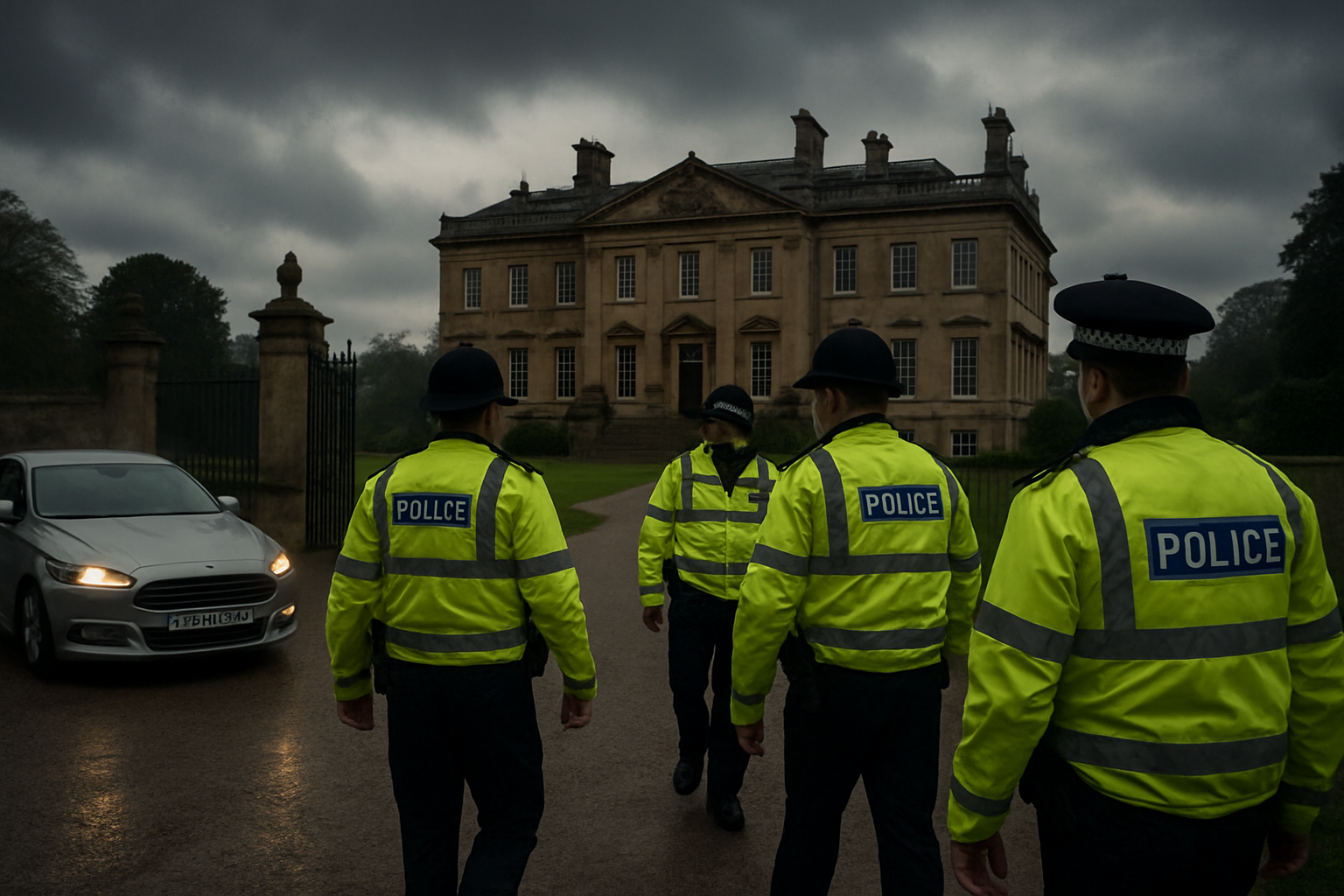
In an unprecedented development that has sent shockwaves through the British establishment, Andrew Mountbatten-Windsor, the former Duke of York, was arrested by police on suspicion of misconduct in public office related to his connections with convicted sex offender Jeffrey Epstein, making him the first member of the British royal family to be arrested since 1647.
The 66-year-old former prince was detained at his Sandringham Estate residence in Norfolk in the early hours of February 19, 2026, on his birthday, following a carefully coordinated operation by Thames Valley Police. After 11 hours in custody at Aylsham Police Station, he was released under investigation pending further inquiries.
Historic Arrest Breaks Centuries-Old Precedent
The arrest marks a watershed moment for the British constitutional monarchy, representing the first time in 377 years that a senior member of the royal family has been taken into police custody. The last recorded arrest of a British royal was King Charles I in 1647, who was subsequently executed for treason.
Sources close to the investigation confirmed that Andrew was arrested on suspicion of misconduct in public office, specifically relating to allegations that he shared classified government information with Jeffrey Epstein during his tenure as UK Special Representative for International Trade and Investment between 2001 and 2011.
"This represents an extraordinary moment in British constitutional history," said Professor Sarah Williams, a constitutional law expert at Cambridge University. "The arrest of a senior royal demonstrates that in the 21st century, no one is above the law, regardless of their status or position within the monarchy."
— Professor Sarah Williams, Constitutional Law Expert, Cambridge University
King Charles Issues Unprecedented Statement
In a remarkable break from traditional royal protocol, King Charles III issued an unprecedented public statement following news of his brother's arrest, declaring that "the law must take its course" and pledging "full and wholehearted support and cooperation" with the authorities investigating the matter.
The King's statement, released through Buckingham Palace, represents a seismic shift in royal protocol, demonstrating a willingness to publicly back police investigations against his own brother to preserve institutional integrity over family loyalty.
"What now follows is the full, fair and proper process by which this issue is investigated in the appropriate manner and by the appropriate authorities," the statement read. "The Crown will provide complete cooperation to ensure that justice takes its course without fear or favour."
Classified Information Allegations
According to multiple international sources, the investigation centers on allegations that Andrew transmitted sensitive government intelligence to Epstein, including a December 24, 2010 email allegedly showing the transmission of a "confidential report" on Afghanistan's Helmand province containing data on gold, uranium, and oil reserves.
The allegations suggest that Andrew exploited his official position as trade envoy to strengthen his personal relationship with Epstein, potentially compromising national security protocols and breaching his oath of office.
Legal experts note that misconduct in public office is a serious criminal offense that can carry significant penalties, including imprisonment. The charge requires prosecutors to prove that a public official willfully neglected their duty or willfully misconducted themselves to such a degree as to amount to an abuse of the public's trust.
International Context of Epstein Investigation
Andrew's arrest comes as part of what European law enforcement officials describe as the "largest international elite criminal network exposure in recent memory," following the release of over 3 million pages of Jeffrey Epstein documents by the U.S. Department of Justice.
The document releases have triggered investigations across six countries, affecting government officials, business leaders, and cultural figures from Norway's Crown Princess Mette-Marit to French politicians and Baltic state officials.
Despite the massive scope of evidence, U.S. Deputy Attorney General Todd Blanche has confirmed that no new federal prosecutions are planned, citing "technical and human errors" in the investigation process.
Public and Political Reaction
The arrest has been met with a generally positive response from the British public, with many viewing it as evidence that the royal family is not above the law. However, international reactions have varied significantly.
Former U.S. President Donald Trump, speaking during an Air Force One briefing, called the arrest "very, very sad" and a "shame," describing it as "so bad for the royal family." This contrasts sharply with the British public's largely supportive response to the police action.
Virginia Giuffre's family, representing one of Epstein's most prominent accusers, issued a statement saying Andrew "was never a prince" and praising the police action as long overdue.
Constitutional and Legal Implications
The case represents a crucial test of the monarchy's relationship with the rule of law in the modern era. Unlike some European monarchies where constitutional immunity protects royal family members from prosecution, British royals can face criminal prosecution under the same laws as ordinary citizens.
The Crown Prosecution Service will now review the evidence gathered by Thames Valley Police to determine whether formal charges should be brought. Parliamentary committees have also announced reviews of diplomatic appointment vetting procedures in light of the allegations.
Royal Family Strategy
King Charles's calculated decision to publicly support the investigation demonstrates a broader strategy to show that the monarchy operates within, rather than above, the law. This approach comes at the cost of family relationships but aims to preserve the institution's long-term credibility.
Andrew has been effectively exiled from royal duties since January 2022, when he was stripped of his military affiliations, royal patronages, and HRH title. He has since relocated from Windsor Royal Lodge to the more secluded Sandringham Estate.
Ongoing Investigation
Thames Valley Police confirmed that searches of properties in Norfolk have concluded, with the investigation continuing as officers analyze seized materials. The force emphasized that Andrew's release under investigation does not indicate the conclusion of their inquiries.
The investigation is being conducted with unprecedented international cooperation, as authorities across multiple jurisdictions share intelligence and evidence related to the broader Epstein network.
Historical Precedent and Future Implications
The resolution of this case will establish crucial precedents for constitutional monarchies facing similar accountability challenges in the 21st century. It represents a defining test of whether democratic institutions can effectively hold powerful figures accountable, regardless of their status or connections.
The case also highlights the challenges facing traditional institutions in an era of enhanced transparency and international cooperation in criminal investigations. The outcome will likely influence how other constitutional monarchies handle similar situations in the future.
"This is ultimately a test of whether our democratic institutions can deliver justice without regard to privilege or position," said former Home Secretary David Blunkett. "The world is watching to see if Britain can demonstrate that the rule of law applies equally to all."
— David Blunkett, Former Home Secretary
As the investigation continues, the case represents more than just the legal troubles of one individual. It stands as a fundamental examination of how democratic societies balance respect for traditional institutions with the imperative of equal justice under the law. The precedent set by this unprecedented royal arrest will resonate far beyond Britain's borders, influencing the future relationship between monarchy, democracy, and the rule of law in the modern world.