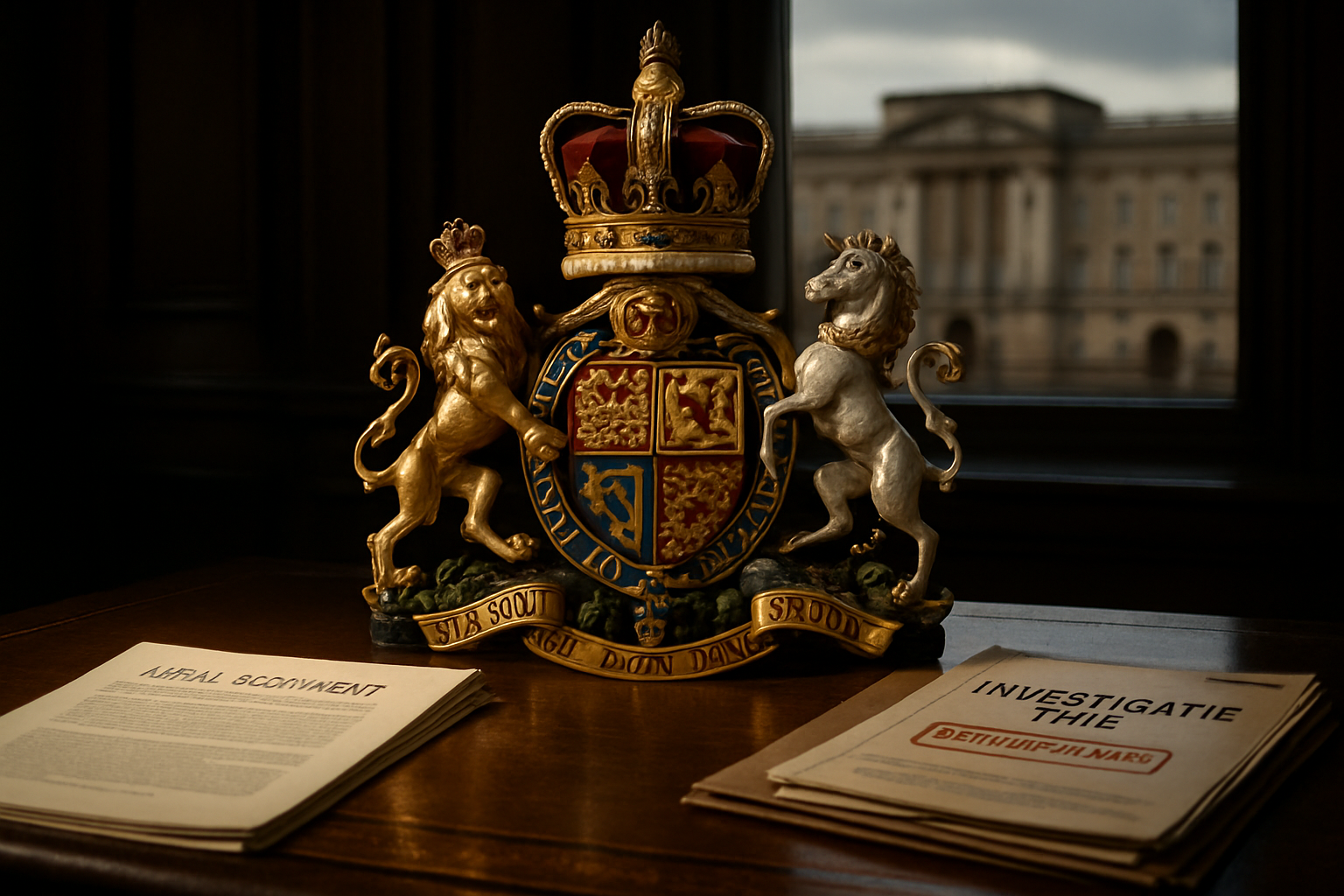
The British government is considering unprecedented legislation to remove Andrew Mountbatten-Windsor from the line of royal succession, marking a constitutional watershed moment following the former Duke of York's historic arrest in connection with the Jeffrey Epstein investigation.
Government representatives confirmed to Reuters on Friday that ministers will consider new legislation to strip Andrew of his inheritance rights once the ongoing police investigation concludes. The move would require consultations and agreement with other Commonwealth nations where King Charles III serves as head of state.
Andrew remains eighth in line to the throne despite losing all royal titles and patronages in January 2022, meaning he technically remains eligible to become king. Several politicians have called for his complete removal from the succession following his arrest Thursday on suspicion of misconduct in public office.
Historic Royal Detention
Thursday's arrest marked the first time in nearly 400 years that a senior member of the British royal family has been taken into custody, with the last occurrence being King Charles I in 1647. Andrew spent 11 hours at Aylsham Police Station in Norfolk before being released under investigation.
The arrest occurred at Sandringham Estate on Andrew's 66th birthday, adding symbolic weight to what royal experts are calling the gravest crisis for the monarchy since Princess Diana's death. Thames Valley Police conducted the operation following carefully coordinated planning, arriving in unmarked vehicles without prior royal knowledge.
Police have been questioning Andrew's former protection officers about what they "saw or heard" during his time as a working royal, according to Australian media reports tracking the ongoing investigation.
Constitutional Implications
The potential succession legislation represents a constitutional milestone for Britain, where unlike some European monarchies, royals do not enjoy constitutional immunity from criminal prosecution. The move would formally codify what has already occurred in practice - Andrew's effective exile from royal duties.
"For the first time in nearly four centuries, a senior member of the royal family has been placed in custody, in a case that threatens to shake the foundations of the institution and define the reign of Charles III."
— Constitutional Expert Analysis, Cyprus Media
The investigation centers on allegations that Andrew shared classified government information with Jeffrey Epstein during his tenure as UK Special Representative for International Trade and Investment from 2001-2011. Specific allegations include a December 24, 2010 email allegedly transmitting confidential Afghanistan intelligence regarding Helmand province's natural resources, including data on gold, uranium, and oil reserves.
International Context
Andrew's case forms part of what European law enforcement describes as the "largest international elite criminal network exposure in recent memory." The investigation spans six countries following the DOJ's release of over 3 million pages of Epstein-related documents, affecting political figures across multiple continents.
Norwegian Crown Princess Mette-Marit faces potential criminal proceedings after being mentioned over 1,000 times in the documents, while French investigations target former Culture Minister Jack Lang over alleged financial crimes involving Epstein connections. Baltic states are coordinating investigations into potential trafficking networks spanning Lithuania, Latvia, and Estonia.
Royal Family Response
King Charles III has issued an unprecedented public statement declaring that "the law must take its course" while offering "full and wholehearted support and cooperation" for authorities. This represents a seismic shift in royal protocol, with the monarch publicly backing a police investigation against his own brother to preserve institutional integrity.
The King's calculated decision demonstrates that the monarchy operates within rather than above the law, even at considerable personal cost to family relationships. Andrew has been effectively exiled from royal duties since January 2022, when he was stripped of military affiliations, royal patronages, and his HRH style.
Public and Political Reaction
The British public has largely welcomed the arrest as proof that royals are not above the law, contrasting sharply with former President Trump's description of the situation as "very, very sad" and a "shame." Virginia Giuffre's family, who reached a civil settlement with Andrew in 2022, praised the police action as overdue.
Parliamentary committees have announced comprehensive reviews of diplomatic appointment vetting procedures, while opposition parties monitor the situation for potential no-confidence implications. The Crown Prosecution Service will ultimately review evidence to determine whether formal charges should be brought.
Ongoing Investigation
Thames Valley Police continue their investigation with searches at both Sandringham Estate and Andrew's former Royal Lodge residence at Windsor completed. The misconduct in public office charge is a serious criminal offense that requires proving a public official willfully neglected their duty or misconducted themselves to abuse public trust.
International cooperation on the case is unprecedented, with authorities across multiple jurisdictions sharing intelligence and evidence. The investigation represents a critical test of whether democratic institutions can hold powerful figures accountable regardless of their status, connections, or resources.
Historical Precedent
The last royal arrest was indeed King Charles I in 1647, who was subsequently executed for treason. The current case represents a fundamental test of whether 21st-century democratic institutions can demonstrate equal justice under law while maintaining constitutional monarchy principles.
Legal experts note that Andrew's situation differs significantly from historical precedents, as modern constitutional monarchies operate within democratic frameworks that emphasize accountability and rule of law. The outcome will establish crucial precedents for other constitutional monarchies facing similar challenges.
Future Implications
The resolution of Andrew's case will influence the relationship between monarchy, democracy, and rule of law globally. World leaders and constitutional experts are watching Britain's handling of the situation as a demonstration of how democratic institutions respond to elite criminal networks in the modern era.
Any legislation removing Andrew from succession would require careful constitutional consideration and international consultation, as changes to the royal line of succession affect multiple Commonwealth realms. The process would set important precedents for how constitutional monarchies balance traditional hereditary principles with contemporary accountability standards.
As the investigation continues, the monarchy faces its most significant test of institutional integrity in generations, with the ultimate outcome likely to define both King Charles's reign and the future relationship between royal privilege and democratic accountability in the 21st century.