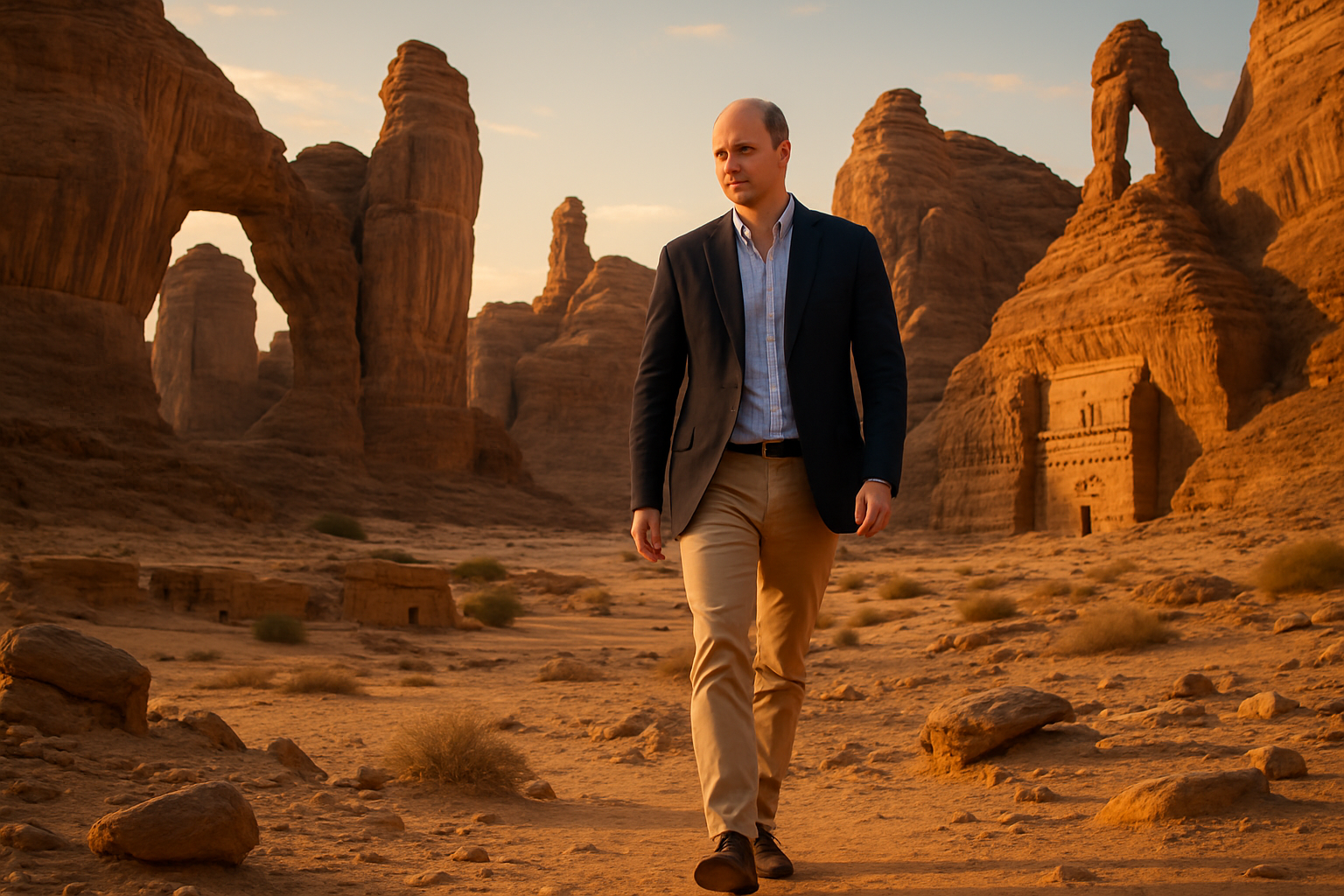
Prince William, Prince of Wales, concluded his three-day official visit to Saudi Arabia on Wednesday with an extensive tour of AlUla's historical and natural landmarks, marking a significant milestone in UK-Saudi diplomatic relations and cultural exchange initiatives.
The Prince's final day in the Kingdom focused on the UNESCO World Heritage candidate site of AlUla, where he was accompanied by Minister of Culture and Governor of the Royal Commission for AlUla, Prince Badr bin Abdullah. The visit highlighted the Kingdom's ambitious cultural preservation efforts under Vision 2030, Saudi Arabia's comprehensive reform and diversification program.
Environmental Conservation Leadership
During his tour of the Sharaan Nature Reserve, Prince William received detailed briefings on groundbreaking environmental initiatives spanning 1,500 square kilometers of protected wilderness north of AlUla. The conservation program represents one of the Middle East's most ambitious ecological restoration projects, encompassing comprehensive habitat rehabilitation and biodiversity protection efforts.
The Royal Commission for AlUla's conservation work includes the reintroduction of Arabian oryx and mountain goats, alongside efforts to restore natural predator populations. Most significantly, the program aims to reintroduce the Arabian leopard to its historical habitat, a species that has become critically endangered in the region.
"The ecological restoration work here demonstrates how modern conservation science can revive ancient ecosystems while supporting sustainable development."
— Prince William, during his AlUla visit
The Sharaan Nature Reserve serves as a treasure trove of natural wonders, featuring dramatic sandstone formations, ancient archaeological sites, and diverse desert ecosystems. The conservation initiative aligns with global environmental protection priorities while preserving Saudi Arabia's unique natural heritage for future generations.
Cultural Heritage Preservation
Prince William's exploration of AlUla's historical sites underscored the region's significance as a crossroads of ancient civilizations. The area contains numerous archaeological treasures, including Nabataean tombs, ancient trade route remnants, and rock art spanning thousands of years of human history.
The Royal Commission for AlUla has invested heavily in archaeological research and heritage preservation, working with international experts to unlock the secrets of this historically significant region. The Prince's visit emphasized the importance of cultural diplomacy in strengthening bilateral relationships between the UK and Saudi Arabia.
Women's Football Development Initiative
Earlier in his visit, Prince William attended a training session for players from the Saudi Arabian Football Federation's regional girls' training centers at the Mohammed bin Salman Nonprofit City (Misk) in Riyadh. The session, held in the presence of Saudi Minister of Sport Prince Abdulaziz bin Turki Al-Faisal, showcased the Kingdom's commitment to women's sports development.
During the visit, Prince William met with players, coaching staff, and administrators involved in the expanding women's football program. Saudi Football Federation Vice President Lamia bint Bahian provided comprehensive briefings on the development initiatives supporting female athletes across the Kingdom.
The briefing outlined the steps being taken to support and empower female players, including infrastructure development, coaching education programs, and competitive opportunities at national and international levels. This represents a significant social transformation within the Kingdom's sports landscape.
Diplomatic Significance
Prince William's visit occurs against the backdrop of expanding UK-Saudi cooperation across multiple sectors. The official visit reinforces diplomatic ties that have evolved significantly in recent years, with both nations seeking to strengthen partnerships in areas including renewable energy, cultural preservation, and educational exchange.
The timing of the visit coincides with broader Middle Eastern diplomatic developments, including ongoing regional discussions about economic cooperation and cultural exchange initiatives. The Prince's focus on environmental conservation and women's empowerment aligns with contemporary international priorities for sustainable development and social progress.
Vision 2030 Alignment
The initiatives highlighted during Prince William's visit directly support Saudi Arabia's Vision 2030 objectives, which emphasize economic diversification, cultural development, and social reform. The AlUla development project represents a cornerstone of these efforts, combining heritage preservation with sustainable tourism development.
The women's football program similarly reflects Vision 2030's commitment to expanding opportunities for female participation in sports and public life. These developments represent significant social changes within Saudi society, supported by government policy reforms and international partnerships.
Regional Context
The visit takes place during a period of active Middle Eastern diplomacy, with several nations pursuing enhanced cultural and economic cooperation. Saudi Arabia's investments in heritage preservation and sports development reflect broader regional trends toward modernization while maintaining cultural authenticity.
The environmental conservation efforts in AlUla also contribute to regional sustainability initiatives, addressing climate challenges through innovative conservation approaches. These programs serve as potential models for other Middle Eastern nations facing similar environmental pressures.
Future Cooperation Prospects
Prince William's successful visit is expected to facilitate future UK-Saudi collaboration in areas including environmental science, archaeological research, and sports development. The personal diplomatic connections established during the visit provide foundations for expanded institutional partnerships.
The focus on environmental conservation and women's empowerment creates opportunities for ongoing collaboration between British and Saudi institutions, potentially including research partnerships, educational exchanges, and joint conservation projects.
As Prince William concluded his historic visit to Saudi Arabia, the emphasis on shared values including heritage preservation, environmental protection, and social development suggests a foundation for sustained diplomatic cooperation. The visit demonstrates how cultural diplomacy can strengthen international relationships while supporting mutual objectives for sustainable development and social progress.