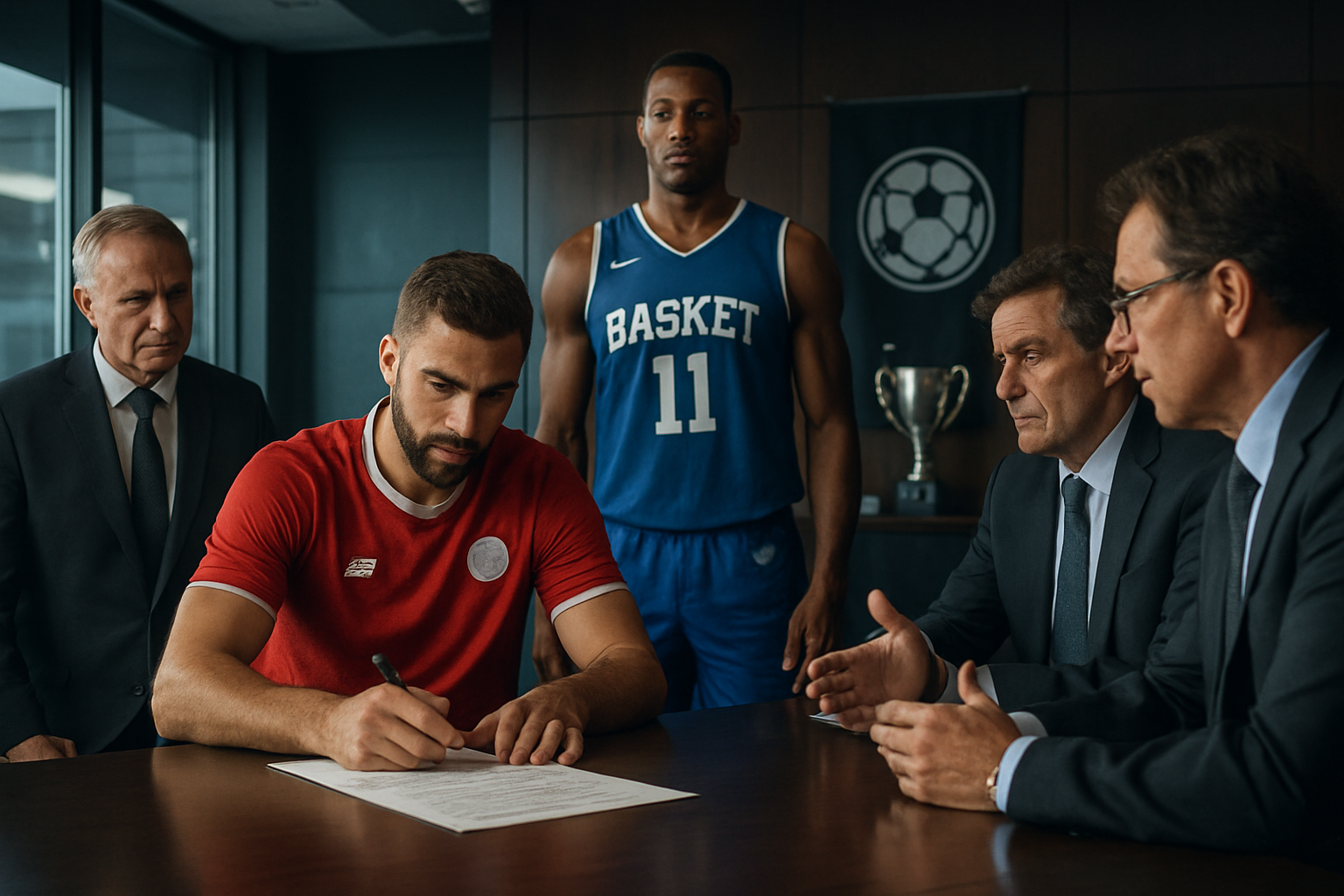
Professional sports witnessed a surge of significant transfers and contract negotiations this week, spanning from football debuts to high-profile brand endorsements, as the global sports economy continues its dynamic evolution through February 2026.
Rising Stars Make Continental Debuts
The most compelling transfer story emerged from Argentina, where Paraguayan striker Adam Bareiro marked his Boca Juniors debut with a decisive two-goal performance in the Copa Argentina. The forward, making his first appearance in the iconic blue and gold jersey, delivered when it mattered most against Gimnasia y Esgrima de Chivilcoy in Salta.
Bareiro's breakthrough came in the 41st minute when he converted a cross from Lucas Janson, demonstrating the clinical finishing that attracted Boca's attention. His second goal sealed a 2-0 victory that advanced the Xeneize to the round of sixteen, providing much-needed relief for a club navigating through a challenging period.
"Adam showed exactly what we brought him here for - goals at crucial moments,"
— Boca Juniors coaching staff
The performance caps a remarkable journey for Bareiro, who joins a select group of Paraguayan players to make immediate impact in Argentine football. His debut goal places him alongside other South American talents who have successfully transitioned between regional leagues, continuing a trend that has seen increased mobility among players across the continent.
European Football's Strategic Acquisitions
Meanwhile, European football markets are experiencing their own transfer activity, with APOEL Cyprus reportedly close to securing Andrew Goodlock, described as a player with "heavy credentials and experience from the top level." The Greek Cypriot club's pursuit of the experienced player reflects the ongoing strategy of smaller European leagues to attract talent with proven track records.
This acquisition strategy mirrors broader patterns observed across European football, where clubs are increasingly targeting players who can provide immediate impact rather than long-term development projects. The move aligns with APOEL's ambitions to strengthen their squad for upcoming domestic and potentially continental competitions.
Brand Partnerships Transform Sports Marketing
Beyond player transfers, the sports industry is witnessing a revolution in brand partnerships, exemplified by Gorenje's appointment of football legend Luka Modrić as brand ambassador. The partnership between the leading European appliance manufacturer and the Croatian midfielder represents a sophisticated approach to sports marketing that extends beyond traditional sponsorship models.
Modrić's appointment signals a shift in how brands are leveraging sports personalities, moving from simple endorsements to comprehensive brand representation. The Real Madrid star's global recognition and reputation for excellence align perfectly with Gorenje's positioning in the premium appliance market.

Market Dynamics and Financial Implications
The current transfer activity occurs within a rapidly evolving sports economy where player valuations continue to reach new heights. Recent months have seen record-breaking transfers across multiple leagues, with clubs increasingly willing to invest substantial sums for players who can provide immediate competitive advantage.
The financial mechanics of modern transfers involve complex arrangements including performance bonuses, image rights, and buy-back clauses that protect clubs' long-term interests. These sophisticated contract structures reflect the maturation of sports business practices and the increasing involvement of financial experts in transfer negotiations.
Transfer market analysts note that the current period represents a consolidation phase following several years of explosive growth. Clubs are now more selective in their acquisitions, focusing on players who can contribute immediately rather than speculative purchases.
Regional Patterns and Strategic Trends
South American football continues to serve as a crucial talent pipeline for European clubs, with players like Bareiro representing the ongoing exchange between these markets. The success of South American players in different continental contexts has encouraged clubs to maintain extensive scouting networks across the region.
European clubs, meanwhile, are adapting to new financial regulations that encourage more sustainable spending practices. This has led to increased focus on loan agreements, player exchanges, and creative financing structures that comply with regulatory frameworks while maintaining competitive squads.
Technology's Role in Modern Transfers
The transfer process itself has been revolutionized by technology, with clubs employing advanced analytics to evaluate player performance and potential fit within existing systems. Data-driven decision-making has become standard practice, supplementing traditional scouting methods with comprehensive statistical analysis.
Digital platforms now facilitate rapid communication between clubs, agents, and players, accelerating negotiation timelines that previously required weeks or months. This technological efficiency has contributed to the current pace of transfer activity observed across multiple leagues.
Looking Ahead: Future Market Developments
Industry experts anticipate continued evolution in transfer practices, with sustainability and long-term planning becoming increasingly important factors in club decision-making. The integration of performance analytics, financial planning, and strategic vision represents the new standard for successful transfer operations.
The current transfer window activity suggests that clubs are positioning themselves not just for immediate success but for sustained competitiveness over multiple seasons. This strategic approach reflects the maturation of sports management practices and the increasing sophistication of club operations worldwide.
As the sports industry continues its global expansion, transfer markets will likely see further integration across continents, creating new opportunities for players to showcase their talents on international stages while providing clubs with access to diverse talent pools that enhance competitive quality across all major leagues.