A new wave of coordinated public health initiatives is delivering life-saving support to pregnant women and children in conflict zones while simultaneously strengthening disease prevention systems across multiple continents, marking a significant evolution in international health cooperation during what experts term the "Therapeutic Revolution of 2026."
Recent developments in the Democratic Republic of Congo and Costa Rica exemplify this transformative approach, where humanitarian organizations are implementing comprehensive maternal health programs alongside sophisticated disease surveillance systems, creating a blueprint for prevention-first healthcare strategies that are proving superior in both cost-effectiveness and population health outcomes.
Maternal Health Breakthrough in Conflict Zones
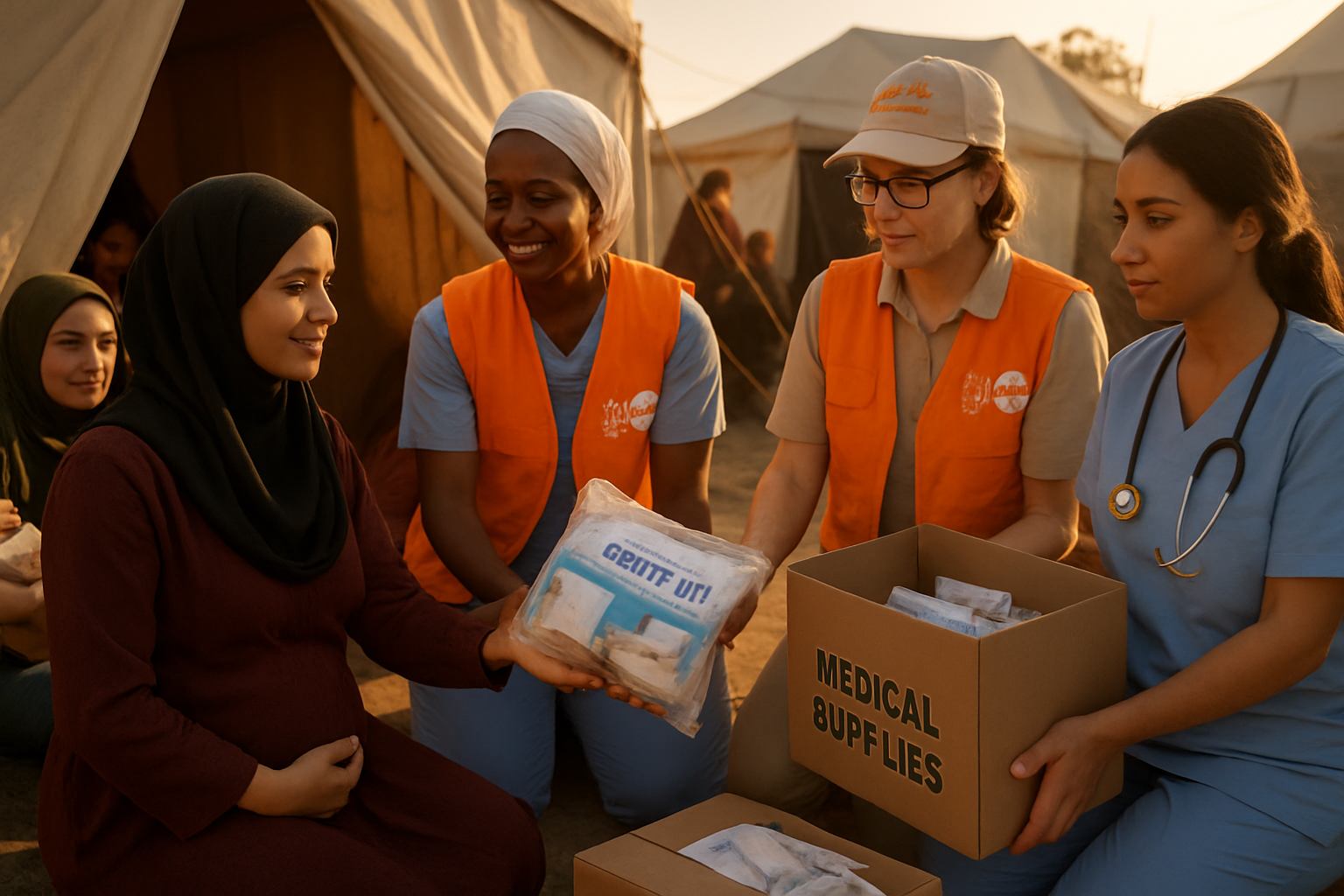
In the Democratic Republic of Congo's Tanganyika province, over 100 pregnant women and displaced young girls received essential hygiene kits through a groundbreaking initiative at the Kikongo-Katanika 2 site in Kalemie. The program, executed by the NGO Agir pour la Protection de l'Enfant et le Développement Communautaire (APEDC) with funding from the United Nations Population Fund (UNFPA), represents a fundamental shift from reactive emergency aid to proactive health system strengthening.
The distribution at the Kifungo health area site addresses critical gaps in maternal care for conflict-displaced populations who face compounded vulnerabilities during pregnancy and childbirth. This initiative aligns with documented evidence from recent global health analyses showing that prevention-focused strategies achieve up to 40% cost reductions through decreased crisis interventions while delivering superior population health outcomes.
"This represents more than emergency relief – it's about building sustainable health systems that can serve communities through both crisis and recovery,"
— UNFPA Representative, Democratic Republic of Congo
The Congo program builds on successful international cooperation models, including Afghanistan's massive maternal care networks that served over 5 million women and girls across all 34 provinces between 2023-2026, demonstrating how sustained international partnerships can maintain essential health services even under the most challenging circumstances.
Disease Prevention and Vector Control Advances
Simultaneously in Costa Rica, public health authorities have issued preventive alerts following the confirmation of the country's third chikungunya case in 2026, marking the return of a disease that had been absent for nearly a decade. The case involves a 45-year-old foreign national residing in Guanacaste province, prompting immediate implementation of comprehensive vector control measures.
Costa Rica's Ministry of Health has demonstrated sophisticated public health planning by transitioning from reactive treatment to prevention-first approaches. The response includes enhanced surveillance protocols, community education campaigns, and targeted vector elimination efforts designed to prevent the establishment of sustained local transmission cycles.
This chikungunya response exemplifies the evolution of international health cooperation, where bilateral partnerships and peer-to-peer knowledge sharing networks are driving innovation despite traditional multilateral funding challenges. The Costa Rican approach integrates advanced epidemiological surveillance with community-based interventions, ensuring accessibility regardless of geographic or economic constraints.
Climate Change and Disease Patterns
The re-emergence of chikungunya in Costa Rica occurs during unprecedented environmental challenges, with January 2026 marking the 18th consecutive month of global temperatures exceeding 1.5°C above pre-industrial levels. Climate change is fundamentally altering disease transmission patterns, creating optimal conditions for Aedes aegypti mosquito expansion into previously unaffected regions.
Health authorities emphasize that prevention-first approaches are particularly valuable for managing climate-related health challenges through proactive intervention rather than reactive crisis management. This represents a crucial adaptation as traditional seasonal disease patterns become increasingly unpredictable due to environmental changes.
International Cooperation Evolution
Both the Congo maternal health initiative and Costa Rica's disease prevention response demonstrate the evolution of international health cooperation beyond traditional frameworks. Despite World Health Organization funding constraints from major contributor withdrawals, innovative bilateral partnerships and regional collaboration networks continue driving medical innovation through direct cooperation models.
This distributed cooperation approach allows for flexible, culturally responsive strategies while maintaining evidence-based medical standards. The Congo-UNFPA partnership and Costa Rica's regional surveillance integration exemplify how countries are transitioning from healthcare recipients to healthcare innovators through sustained international collaboration.
Technology and Human-Centered Care Integration
Successful 2026 healthcare initiatives demonstrate sophisticated integration of advanced technology with human-centered care approaches. The Congo maternal health program incorporates digital tracking systems with authentic community engagement, while Costa Rica's disease surveillance combines real-time epidemiological data with grassroots community interventions.
This balanced approach avoids the "wellness paradox" where technological solutions create healthcare inequality rather than improving access and outcomes for diverse populations. The goal remains ensuring that medical advances benefit all communities regardless of geographic or economic constraints while maintaining the essential human connections that make healthcare effective.
Economic Implications and Prevention Benefits
The economic implications of these prevention-focused strategies extend far beyond immediate healthcare costs. Countries implementing comprehensive prevention programs report measurable benefits through enhanced community resilience, reduced emergency care demands, and improved population health metrics that justify substantial healthcare infrastructure investments.
Economic analyses consistently show that initial prevention investments yield superior returns compared to traditional treatment-focused healthcare spending. The Congo maternal care program prevents costly obstetric emergencies while building long-term health system capacity, while Costa Rica's vector control efforts protect tourism stability and educational continuity by preventing disease outbreaks that could disrupt communities and commerce.
Long-term Health System Strengthening
Both initiatives contribute to broader health system resilience by building local capacity rather than creating dependency on external emergency responses. The Congo program trains local health workers in maternal care protocols, while Costa Rica strengthens its epidemiological surveillance capabilities through enhanced community health networks.
This approach aligns with documented success factors for healthcare transformation: sustained political commitment to healthcare investment, comprehensive professional training programs, authentic community engagement strategies, and continued international cooperation for knowledge sharing and resource optimization.
Global Health Security Implications
The convergence of maternal health support in conflict zones and sophisticated disease prevention systems represents a critical evolution in global health security. These initiatives demonstrate how prevention-first approaches can simultaneously address immediate humanitarian needs while building long-term resilience against emerging health threats.
The integration of maternal care, vector control, climate adaptation, and international cooperation provides a comprehensive model for addressing 21st-century health challenges through coordinated action. This approach prioritizes scientific excellence while maintaining human-centered care delivery, ensuring that medical advances serve all populations effectively.
"We're witnessing a fundamental transformation in how the global health community responds to complex challenges – moving beyond crisis management toward sustainable systems that protect and promote health for all populations."
— International Health Policy Expert
Future Preparedness and Sustainability
The success of these initiatives depends on sustained commitment beyond immediate program cycles. Both the Congo maternal health program and Costa Rica's disease prevention efforts require continued political support, adequate resource allocation, and ongoing international cooperation to achieve their full potential.
Success factors include maintaining comprehensive professional training programs, building authentic community partnerships, and developing sustainable financing mechanisms that ensure program continuity. The diversity of approaches across different contexts provides complementary models that strengthen the global healthcare ecosystem through shared learning and adaptation.
As April 2026 represents a critical juncture in global healthcare evolution, these initiatives demonstrate that evidence-based innovations can successfully translate into accessible, effective treatments and prevention strategies. The convergence of precision medicine advances, international cooperation models, and prevention-focused strategies provides the foundation for resilient healthcare systems capable of addressing complex global health challenges through coordinated international action.
The transformation occurring in maternal health support and disease prevention during 2026 offers hope that coordinated action, adequate resources, and sustained commitment to human dignity can achieve transformative healthcare improvements even under the most challenging circumstances, setting new standards for global health cooperation and community-centered care delivery.