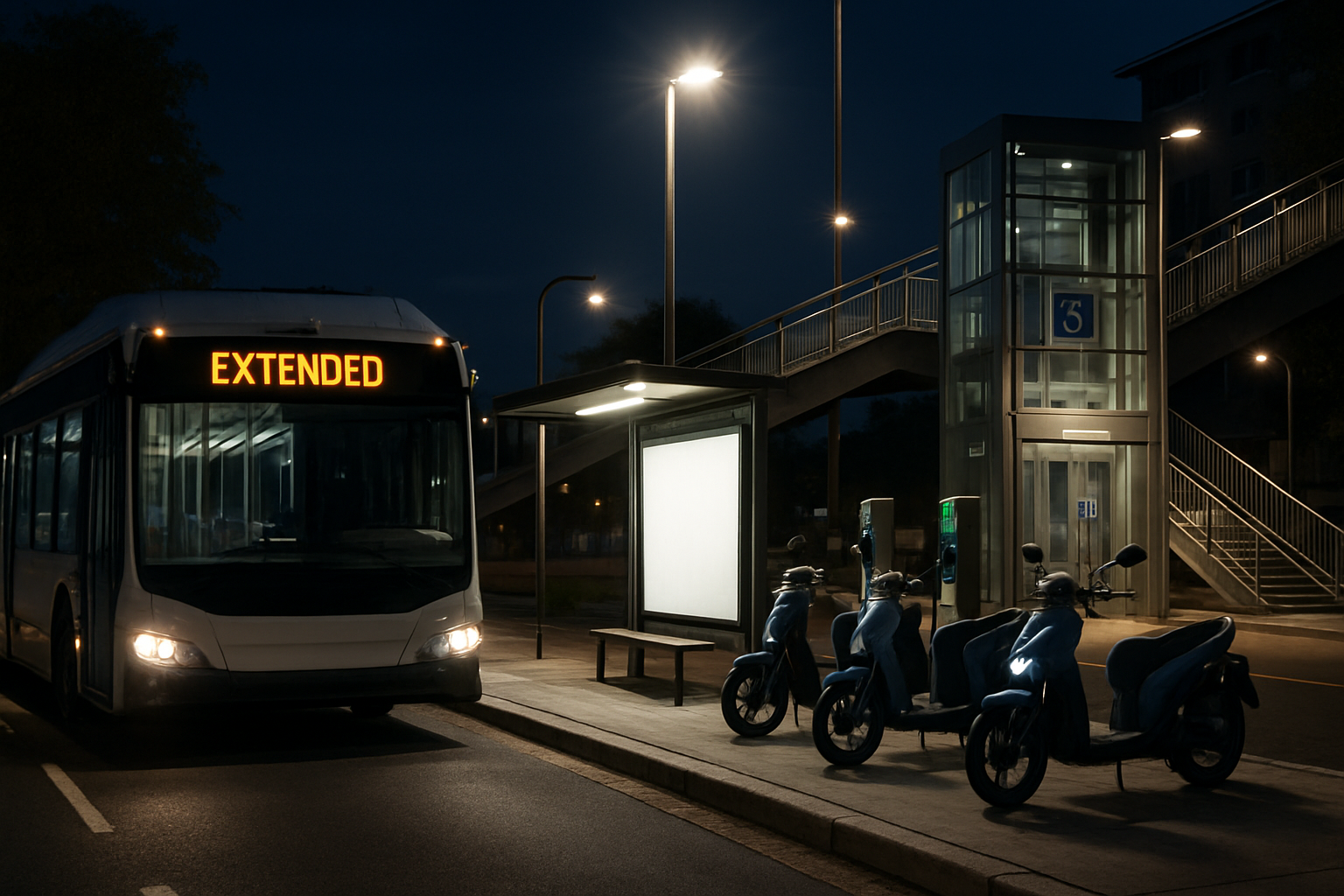
Cities across three continents are revolutionizing public transportation through extended operating hours, innovative mobility solutions, and accessibility improvements, marking a significant shift toward 24-hour urban connectivity and inclusive transport networks.
The transformation spans from Mexico City's ambitious late-night bus extensions to Nicaragua's electric mobility investments and the Philippines' infrastructure accessibility upgrades, demonstrating a coordinated global response to evolving urban transportation needs.
Mexico City Leads with Extended Service Hours
Mexico City's Metrobús system has announced groundbreaking service extensions, with Lines 1, 2, and 7 now operating until 1:00 AM on Friday and Saturday nights. The extension covers critical routes including Line 1 (El Caminero - Indios Verdes), Line 2 (Tacubaya - Tepalcates), and Line 7 (Campo Marte - Indios Verdes), serving thousands of late-night commuters and night-shift workers.
"This extension responds to the real needs of our citizens who work non-traditional hours or need reliable transportation during nighttime hours," according to transportation officials. The initiative represents part of Mexico City's broader strategy to become a truly 24-hour metropolis, addressing the mobility needs of service workers, healthcare personnel, and night-economy participants.
The extended hours particularly benefit residents of Mexico City's outer districts who previously faced limited transportation options after traditional service ended. Night-shift workers in healthcare, hospitality, and security sectors now have reliable public transport alternatives to expensive taxi services or unsafe walking conditions.
Nicaragua Embraces Electric Mobility Revolution
In Nicaragua, Hero Nicaragua has unveiled three new motorcycle models designed specifically for urban mobility needs, representing a significant investment in electric and efficient transportation solutions. The initiative positions Nicaragua at the forefront of Central America's transition to sustainable transportation.
The new models focus on addressing the unique transportation challenges faced by Nicaragua's urban areas, where motorcycles serve as primary transportation for many residents. The company's strategic approach emphasizes affordability, efficiency, and environmental sustainability, making modern mobility accessible to broader population segments.
This development aligns with broader regional trends toward electrification and sustainable transport solutions, particularly important for Central American nations seeking to reduce transportation costs while improving air quality in urban centers.
Philippines Prioritizes Accessibility Infrastructure
The Philippines has achieved a major milestone with the replacement of the notorious "Mount Kamuning" footbridge along EDSA in Quezon City. The new infrastructure includes both an improved footbridge and upgraded EDSA-Kamuning busway station, with particular attention to accessibility for persons with disabilities (PWD).
The project addresses long-standing complaints about the original footbridge's steep inclines and lack of accessibility features. The new design incorporates elevators, ramps, and tactile guidance systems, representing a significant advancement in inclusive infrastructure design for Metro Manila's transit network.
Rappler reporter Patrick Cruz's investigation into the new facilities reveals mixed results regarding true PWD accessibility, highlighting the ongoing challenge of implementing genuinely inclusive design rather than merely meeting minimal compliance standards. This critical analysis underscores the importance of community feedback in infrastructure development.
Global Context and Historical Precedents
These improvements occur within an unprecedented $570+ billion global infrastructure investment surge that has transformed transportation networks worldwide since early 2026. Historical context from Planet News coverage reveals this represents the culmination of coordinated international efforts to modernize urban mobility.
Previous developments across Europe, Africa, and Asia have established successful templates for extended service hours, electric mobility adoption, and accessibility improvements. Estonia's leadership with 88% renewable electricity supporting transport systems, Algeria's bus fleet modernization, and Uganda's electric motorcycle initiatives have provided proven models for implementation.
The integration of smart technology, climate adaptation measures, and community-centered design has evolved from experimental approaches to standard requirements for modern transportation infrastructure. Real-time monitoring, predictive maintenance, and integrated payment systems now represent baseline expectations rather than premium features.
Economic and Social Impact
The economic implications of these transportation improvements extend far beyond construction costs. Extended service hours in Mexico City create employment opportunities in night-economy sectors while reducing transportation costs for low-income workers who previously relied on expensive alternative transport during off-peak hours.
Nicaragua's motorcycle industry development supports local manufacturing and provides affordable mobility solutions for residents who cannot access traditional public transportation due to limited route coverage or service frequency. The focus on urban-appropriate vehicles addresses the specific mobility needs of Central American cities.
In the Philippines, accessibility improvements represent both immediate quality-of-life enhancements for persons with disabilities and long-term economic benefits through increased workforce participation and reduced social service dependencies.
Technology Integration and Innovation
Modern transportation improvements increasingly incorporate sophisticated technology integration from the design phase. Mexico City's extended services utilize GPS tracking, real-time passenger information, and mobile payment systems to optimize operations during lower-ridership nighttime hours.
Nicaragua's new motorcycle models feature digital connectivity, energy-efficient engines, and smart monitoring systems that provide real-time performance data to users and maintenance providers. This technology integration enables more efficient urban mobility while supporting maintenance and safety protocols.
The Philippines' infrastructure upgrades include digital accessibility features such as audio announcements, mobile app integration for route planning, and emergency communication systems specifically designed for accessibility needs.
Climate Adaptation and Sustainability
All three initiatives incorporate climate adaptation measures essential for long-term sustainability. Extended service hours reduce private vehicle dependency during typically high-emission nighttime periods when traffic congestion forces less efficient driving patterns.
Electric and efficient vehicle adoption in Nicaragua directly addresses air quality concerns in urban areas while positioning the country for eventual transition to fully electric public transportation systems. The focus on appropriate-scale vehicles avoids the inefficiencies of large buses on routes with lower ridership.
Accessibility infrastructure in the Philippines includes climate-resilient design features such as enhanced drainage, weather-resistant materials, and backup power systems ensuring continued operation during extreme weather events that increasingly affect Metro Manila.
Implementation Challenges and Solutions
Despite successful launches, each initiative faces implementation challenges requiring adaptive management. Mexico City's extended hours demand careful coordination with security services, maintenance scheduling, and driver workforce management to ensure safe, reliable service during traditionally lower-staffed periods.
Nicaragua's motorcycle industry development requires establishing service networks, parts availability, and technical training programs to support the new vehicle models throughout their operational lifecycle. Building consumer confidence in new mobility solutions demands demonstrated reliability and comprehensive support systems.
The Philippines' accessibility improvements reveal the ongoing challenge of balancing construction costs with genuine usability. Community feedback mechanisms and iterative design improvements remain essential for achieving truly inclusive infrastructure rather than symbolic compliance measures.
International Cooperation and Knowledge Sharing
These developments benefit from extensive international cooperation and knowledge sharing that has characterized the global transportation renaissance of 2026. Mexico City's extended service models draw from European precedents in 24-hour public transportation, while incorporating locally appropriate safety and security measures.
Nicaragua's electric mobility initiatives connect with broader Central American regional integration efforts and benefit from technology transfer partnerships with international manufacturers experienced in sustainable urban transportation solutions.
The Philippines' accessibility improvements incorporate international best practices in universal design while adapting to local climatic conditions, population density, and existing infrastructure constraints specific to Southeast Asian urban environments.
Future Implications and Expansion Plans
Success in these initial implementations could catalyze broader regional transformation. Mexico City officials indicate potential expansion of extended hours to additional lines based on ridership data and operational experience from the pilot routes.
Nicaragua's motorcycle industry development represents the foundation for broader sustainable transportation ecosystem development, potentially including electric bus systems and integrated mobility hubs connecting different transportation modes.
The Philippines' accessibility infrastructure improvements establish precedents for nationwide implementation, with potential application to provincial cities and rural transportation networks requiring inclusive design approaches.
Measuring Success and Long-term Sustainability
Evaluation criteria for these initiatives extend beyond traditional ridership metrics to include social equity indicators, environmental impact measurements, and economic development outcomes. Extended service hours success includes safety statistics, crime reduction, and economic activity generation during previously underserved time periods.
Electric mobility adoption requires monitoring air quality improvements, energy consumption patterns, and local economic development through manufacturing, service, and maintenance job creation. Long-term sustainability depends on achieving cost-effectiveness while maintaining service quality and environmental benefits.
Accessibility infrastructure success measurement includes actual usage by persons with disabilities, community satisfaction surveys, and integration with broader transportation network accessibility improvements. Genuine inclusion requires ongoing community engagement rather than one-time construction completion.
These transportation improvements represent convergence of immediate community needs with long-term sustainability objectives, demonstrating that effective urban mobility solutions must address social equity, environmental responsibility, and economic viability simultaneously. The March 2026 developments establish important precedents for cities worldwide facing similar challenges in balancing rapid urbanization with inclusive, sustainable transportation development.