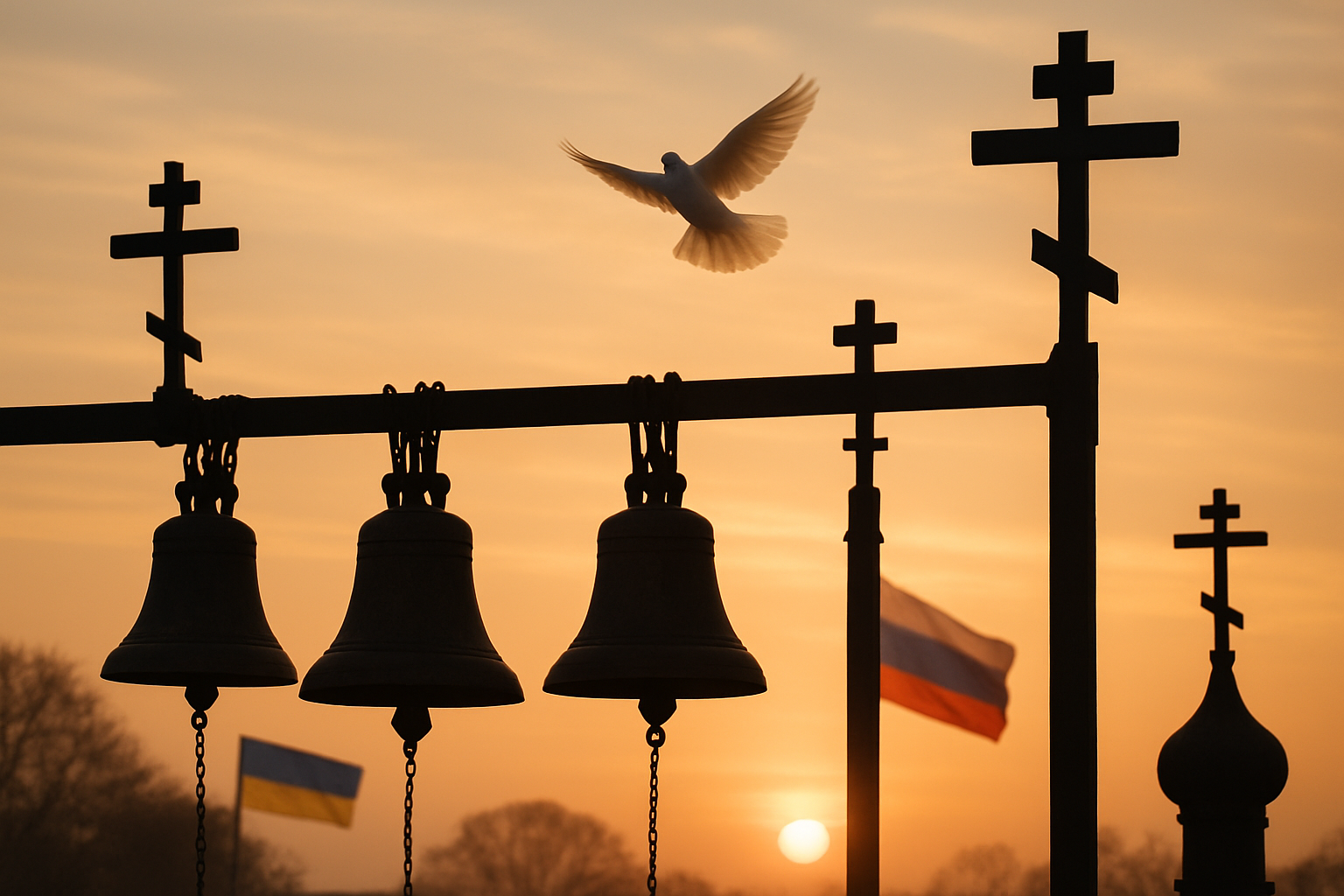
Russian President Vladimir Putin announced a ceasefire for Orthodox Easter weekend, declaring a halt to military operations from 1600 hours on April 11 to the end of April 12, 2026, with Ukrainian President Volodymyr Zelensky confirming Ukraine will respect the temporary truce.
The announcement, delivered through the Kremlin on Thursday, marked the first coordinated ceasefire declaration between the warring nations since peace talks were indefinitely suspended in March 2026 due to the Iran crisis. The 36-hour pause in hostilities corresponds with the Orthodox Easter celebration observed by both nations.
Ceasefire Terms and Implementation
According to the Kremlin statement, Defence Minister Andrei Belousov issued orders to Russia's top commander, Chief of the General Staff Valery Gerasimov, "to stop for this period military action in all directions." The directive specified that troops must remain "ready to eliminate all possible provocations by the enemy as well as any aggressive actions."
Ukrainian sources confirmed that President Zelensky accepted the ceasefire proposal, with Norwegian media reporting that Zelensky stated "people need Easter without threats." The Ukrainian leader had previously proposed an Easter ceasefire for more than a week before Putin's formal announcement.
"We proceed on the basis that the Ukrainian side will follow the example of the Russian Federation."
— Kremlin Statement
Diplomatic Context and Peace Talks
The Easter ceasefire announcement comes against the backdrop of suspended trilateral peace negotiations between Ukraine, Russia, and the United States. These talks, which achieved historic breakthroughs in February 2026, including a 314-prisoner exchange and the restoration of US-Russia military communications after a four-year suspension, have been indefinitely postponed due to the Iran crisis consuming American foreign policy attention.
The February negotiations in Abu Dhabi and Geneva represented the most significant diplomatic progress since the conflict began, with US Special Envoy Steve Witkoff describing "significant progress" on ceasefire monitoring mechanisms. European "Big 5" observers from Germany, France, Italy, the UK, and Poland participated for the first time in the Geneva talks.
Military Situation and Humanitarian Impact
The ceasefire declaration comes amid continued military escalation, with Russian forces having captured 481 square kilometers in January 2026 compared to 260 square kilometers in December 2025, representing an 85% increase in territorial gains. Over 10,000 Russian drones and bombs were launched in January 2026 alone.
The humanitarian toll continues to mount, with President Zelensky having disclosed that 55,000 Ukrainian soldiers have been officially killed since the full-scale invasion began, with a "large number" still missing in action. International estimates suggest actual military casualties could be 2-3 times higher.
Energy Infrastructure and Winter Warfare
The announcement follows systematic attacks on Ukrainian energy infrastructure that left over 1,170 buildings in Kyiv without adequate heating during minus-30°C temperatures. Ukrainian nuclear plants were forced to halt electricity production for the first time in the conflict, creating unprecedented risks.
These attacks, described by Ukrainian officials as "energy terrorism," have violated Geneva Conventions protections for civilian infrastructure during extreme winter conditions. Over 17.8 million Ukrainians have accessed winter support programs to cope with the infrastructure damage.
International Response and Support
The ceasefire announcement has been met with cautious optimism from international observers. The EU has maintained historic support for Ukraine with a €90 billion loan package, the largest single-nation assistance program ever, though Slovakia, Czech Republic, and Hungary refused participation, showing internal EU divisions.
Sweden and Denmark have provided €246 million in air defense systems, while Germany has supplied 35 Patriot missiles. The UK revealed four operational MRO facilities in Ukraine servicing Western-supplied equipment, with a fifth facility planned.
Nuclear Governance Crisis
The Orthodox Easter ceasefire occurs against the backdrop of an unprecedented nuclear governance crisis, with the New START treaty having expired on February 5, 2026. This marks the first time in over 50 years without US-Russia nuclear constraints, as both nations control 80% of global nuclear weapons.
UN Secretary-General António Guterres has described the situation as a "grave turning point," warning that nuclear risks are "higher than in decades." The restored military communications between Washington and Moscow serve as the only remaining formal superpower diplomatic channel.
Ukraine's Strategic Evolution
While peace talks remain suspended, Ukraine has evolved from an aid recipient to a security provider, deploying military experts to the UAE, Qatar, Jordan, Bahrain, and Kuwait to combat Iranian Shahed drones—the same weapons being used against Ukrainian infrastructure. This strategic pivot has created new regional partnerships and potential diplomatic leverage.
Territorial Disputes Remain Unresolved
Despite the humanitarian gesture of the Easter ceasefire, fundamental territorial disputes remain unchanged. Russia continues to demand recognition of occupied eastern Ukrainian territories and insists that any Putin-Zelensky talks must occur in Moscow. Ukraine maintains its territorial integrity position while seeking long-term security guarantees.
President Zelensky has categorically rejected territorial concessions, stating that the Ukrainian people would reject "handing over territories" as a "failure story." The territorial sticking point represents the core challenge for any comprehensive peace agreement.
Future Prospects
The Orthodox Easter ceasefire provides a brief respite from nearly four years of conflict, but its impact on broader peace efforts remains uncertain. The framework for trilateral negotiations remains preserved and could be reactivated when the Iran crisis permits, though the timeline for resumed talks depends on Middle East stability.
The Trump administration's June 2026 Washington venue deadline for comprehensive peace talks remains uncertain due to competing Middle East priorities. The success or failure of eventual resumed negotiations carries global implications for 21st-century territorial dispute resolution and the enforcement of international sovereignty principles.
As both nations observe the Orthodox Easter ceasefire, the temporary pause in hostilities offers a glimpse of what peace might look like while underscoring the complex challenges that remain in achieving a lasting resolution to Europe's deadliest conflict since World War II.