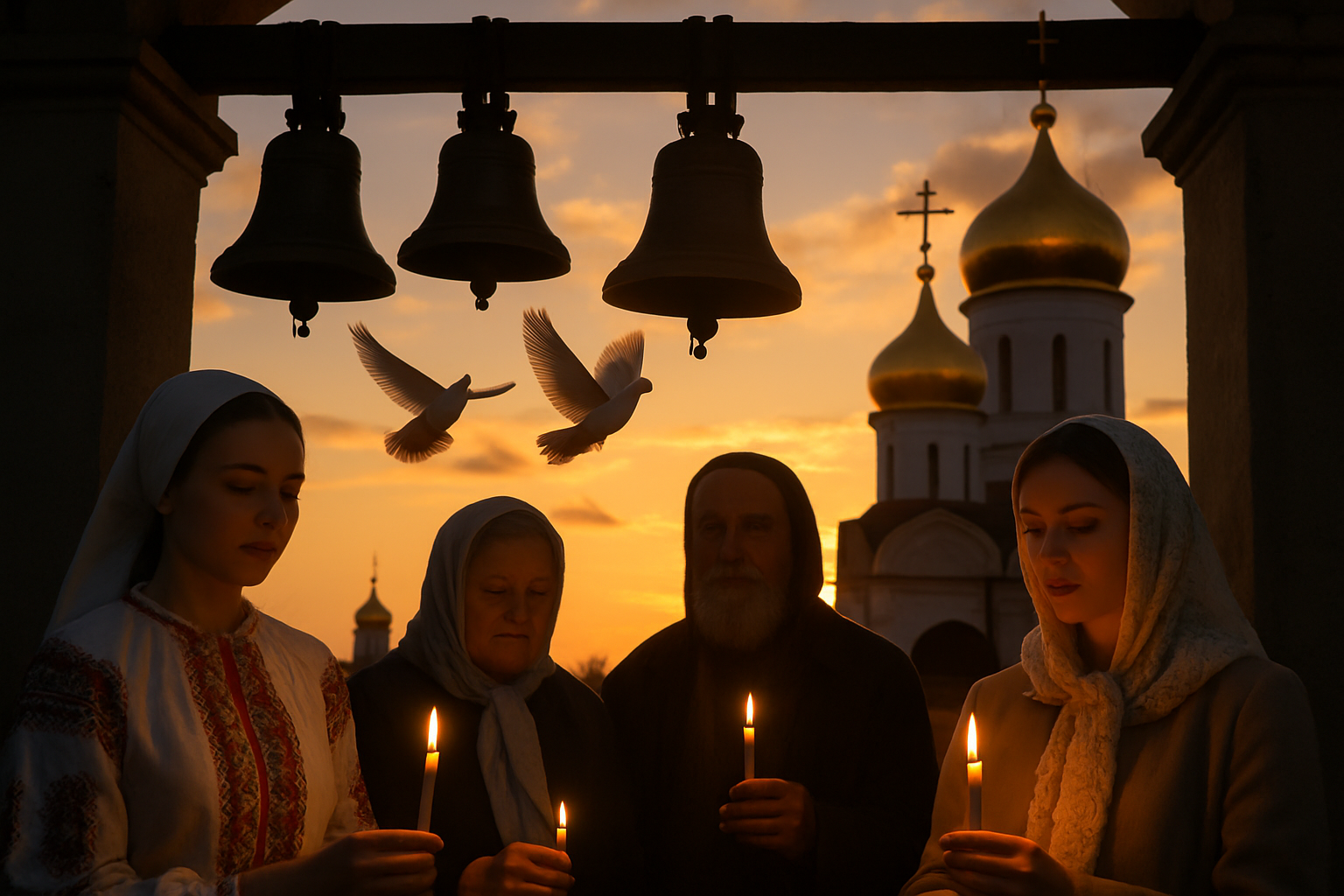
Russian President Vladimir Putin has declared a 32-hour ceasefire with Ukraine for the Orthodox Easter weekend, with Ukrainian President Volodymyr Zelensky confirming that Kyiv will honor the temporary pause in hostilities beginning Saturday at 4 PM Moscow time.
The ceasefire, running from April 11 at 1600 Moscow time until midnight on April 12, marks the first coordinated humanitarian pause since trilateral peace talks between Ukraine, Russia, and the United States were indefinitely suspended in March 2026 due to the Iran crisis consuming American foreign policy attention.
Zelensky Advocates for Extended Truce
President Zelensky, who had been advocating for an Easter ceasefire for over a week before Putin's formal announcement, confirmed Ukraine's participation while challenging Russia to extend the pause beyond the holiday period. "People need Easter without threats and a real move towards peace," Zelensky stated, emphasizing the moral significance of respending religious observances during the four-year conflict.
The Ukrainian leader had previously forwarded the offer of an Easter ceasefire to Russia via US negotiators, demonstrating continued diplomatic engagement despite the suspension of formal talks. Kremlin spokesman Dmitry Peskov commented that peace between Russia and Ukraine "could be established today" if Zelensky "made a decision to take the responsibility it requires."
Suspended Peace Talks Context
The Easter ceasefire comes as the most significant diplomatic opportunity since the invasion began remains stalled. February 2026 had witnessed unprecedented breakthroughs in trilateral negotiations, including a historic 314-prisoner exchange (the largest in five months), the restoration of US-Russia military communications after a four-year suspension, and Geneva talks that achieved "significant progress" on ceasefire monitoring mechanisms with European "Big 5" observers participating for the first time.
"We proceed from the assumption that the Ukrainian side will follow the example of the Russian Federation in this humanitarian gesture."
— Kremlin Statement
However, these diplomatic gains were derailed when the Iran crisis shifted American foreign policy priorities, leaving the Trump administration's June 2026 Washington venue deadline uncertain. The framework for negotiations remains preserved, with both sides maintaining that talks could be reactivated when conditions permit.
Military Orders and Implementation
Russian Defense Minister Belousov ordered Chief of General Staff Gerasimov to halt military operations in all directions while keeping troops ready to "eliminate provocations." The Kremlin statement specified that Russian forces were instructed "to cease hostilities on all fronts but to be ready to repel enemy aggression" during the 32-hour period.
The ceasefire represents a rare respite in a conflict that has dragged on for more than four years, with both sides also having exchanged prisoners of war over Orthodox Easter holidays in previous years, suggesting an established precedent for humanitarian gestures during the religious period.
Ongoing Military Escalation
The Easter truce comes against a backdrop of intensifying military operations. Russian territorial gains accelerated to 481 square kilometers in January 2026 compared to 260 square kilometers in December 2025, representing an 85% increase and the fastest monthly expansion in recent periods.
Energy infrastructure attacks have continued systematically, with over 1,170 buildings in Kyiv lacking adequate heating following previous strikes, and Ukrainian nuclear plants being forced to halt electricity production for the first time in the conflict. These attacks, occurring during extreme winter conditions, have been documented as violations of Geneva Conventions regarding civilian protections.
Nuclear Crisis Backdrop
The temporary ceasefire unfolds amid an unprecedented nuclear governance crisis. The New START treaty between the United States and Russia expired on February 5, 2026, marking the first time in over 50 years without bilateral nuclear constraints between the superpowers, who control 80% of the world's nuclear weapons.
UN Secretary-General António Guterres has described this as a "grave turning point," warning that nuclear risks are at their "highest in decades." The restored US-Russia military communications, achieved during the February diplomatic breakthrough, now represent the only remaining formal diplomatic channel between the nuclear superpowers.
Humanitarian Impact
The conflict's toll has been staggering. President Zelensky disclosed that 55,000 Ukrainian soldiers have been officially confirmed killed, with a "large number" still classified as missing in action. International estimates suggest actual military casualties could be 2-3 times higher when including undocumented personnel.
Over 17.8 million Ukrainians are currently accessing winter support programs, highlighting the massive humanitarian crisis exacerbated by systematic attacks on civilian infrastructure. The energy terrorism strategy has particularly impacted vulnerable populations during life-threatening winter conditions.
International Response and Support
Despite the suspension of formal peace negotiations, international support for Ukraine has remained unprecedented. The European Union approved a historic €90 billion loan package—the largest EU assistance ever provided to a single nation—though Slovakia, Czech Republic, and Hungary refused participation, exposing deepening divisions within the bloc.
Additional support has continued from various allies, including Sweden and Denmark's €246 million air defense package featuring Tridon Mk2 systems, Germany's provision of 35 Patriot missiles, and the UK's revelation of four operational MRO facilities in Ukraine servicing Western-supplied equipment, with a fifth facility planned.
Territorial Disputes Remain Unresolved
The fundamental sticking point in any future negotiations remains unchanged: the eastern Ukrainian territories currently under Russian control. Russia continues to demand recognition of these territorial gains and insists that any Putin-Zelensky talks must occur in Moscow, while Ukraine maintains its territorial integrity position and seeks long-term security guarantees.
President Zelensky has categorically rejected territorial concessions, stating that the Ukrainian people would reject any referendum involving "handing over territories" as a "failure story." This position reflects the core challenge facing any resumption of comprehensive peace negotiations.
Ukraine's Strategic Evolution
Amid the diplomatic uncertainty, Ukraine has undergone a strategic transformation from aid recipient to security provider. Ukrainian military experts have been deployed to the UAE, Qatar, Jordan, Bahrain, and Kuwait to combat Iranian Shahed drones—ironically, the same weapons being used to attack Ukrainian infrastructure.
This evolution demonstrates Ukraine's growing role in regional security partnerships and could potentially provide new diplomatic leverage when formal negotiations resume. The battlefield experience gained over four years of conflict has become a valuable asset in addressing global security challenges.
Framework Preservation and Future Prospects
Despite the indefinite suspension of trilateral talks, diplomatic achievements from the February breakthrough remain intact. The prisoner exchange mechanisms, Pentagon-Moscow deconfliction protocols covering operations in Syria, the Arctic, and Africa, and the structured negotiation format developed through UAE methodology have all been preserved and can be reactivated when favorable conditions return.
"The framework success provides methodology for complex multilateral negotiations despite fundamental disagreements."
— Senior Diplomatic Source
The stakes for eventual resumed talks extend far beyond Ukraine and Russia, affecting European security architecture redefinition, international law enforcement credibility, and territorial sovereignty principles that will shape power competition for decades to come.
Religious and Cultural Significance
The Orthodox Easter ceasefire represents the shared religious and cultural traditions that transcend political boundaries in the region. Over half a million Orthodox Christians worldwide participate in Easter celebrations, demonstrating the global significance of this holy period.
The temporary respite provides a moment for religious observance without the immediate threat of violence, carrying moral weight that extends beyond the military and political dimensions of the conflict. Previous Easter periods have seen similar humanitarian gestures, including prisoner exchanges, suggesting the enduring power of religious traditions even amid intense geopolitical tensions.
Coming Phase Uncertainty
The timeline for resumed negotiations depends entirely on resolution of the Iran crisis and broader Middle East stability concerns. Military escalation continues with systematic civilian targeting while Ukraine expands its international partnerships and maintains operational capabilities.
The success or failure of eventual resumed talks carries global implications for 21st-century territorial dispute resolution. Whether diplomatic innovation can overcome military escalation will determine not only the trajectory of European security but also serve as a template for conflict prevention mechanisms worldwide.
As Orthodox believers across the region observe Easter weekend in the temporary quiet, the ceasefire serves as both a reminder of shared humanity and a test of whether brief humanitarian pauses can create momentum toward more sustainable peace efforts. The international community watches closely, hoping that this moment of religious observance might contribute to ending Europe's deadliest conflict since World War II.