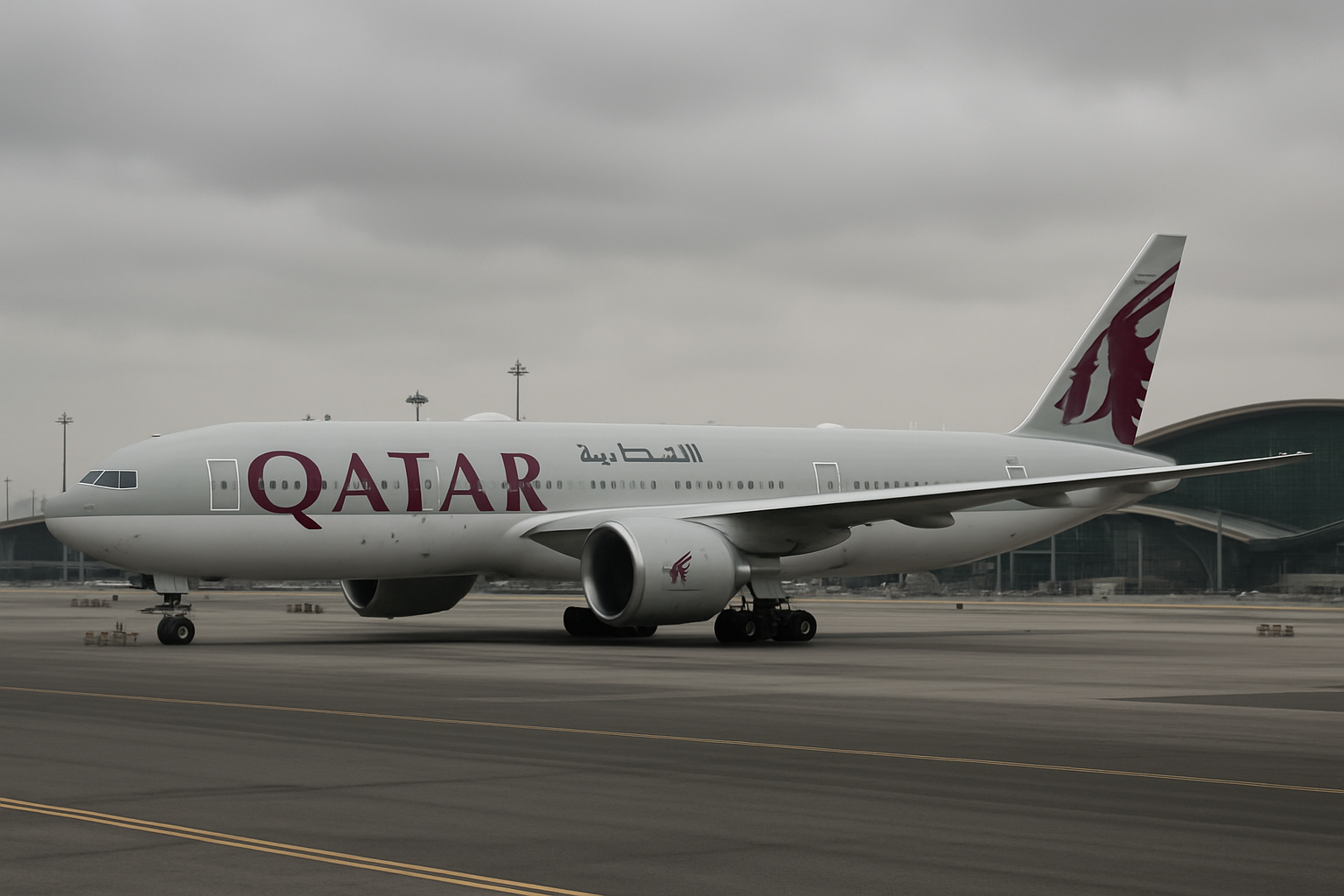
Qatar Airways has announced severely limited flight operations to dozens of destinations as the ongoing Middle East conflict continues to disrupt global aviation, with Qatar's government joining international calls for Iran to cease targeting civilian infrastructure across the region.
The Doha-based carrier confirmed that only a restricted number of flights will operate as of March 18 between the Qatari capital and select international destinations, marking another escalation in what has become the most comprehensive aviation crisis since the COVID-19 pandemic. The announcement comes as Qatar's leadership has taken an increasingly vocal stance against Iranian military operations targeting civilian sites across Gulf states.
Qatar Condemns Iranian Civilian Targeting
Qatar has urged Iran to halt its systematic attacks on regional countries, explicitly rejecting a proposal by Iranian Foreign Minister Abbas Araghchi to investigate whether targeted sites were linked to military operations. The Qatari government's position represents a significant diplomatic stance as the country balances its role as a regional mediator while protecting its own citizens and infrastructure.
The diplomatic pressure comes as Iran's Revolutionary Guard continues "Operation True Promise 4," declaring that "no red lines remain" in their systematic targeting of what they claim are Israeli and American assets across the Gulf region. Qatar itself has been directly impacted, with Patriot missile systems successfully intercepting 65 Iranian missiles and 12 drones, resulting in eight injuries from falling debris.
Regional Aviation Crisis Deepens
The limited flight schedule represents Qatar Airways' response to the most extensive aviation disruption in modern history, with over 18,000 flights cancelled worldwide since the crisis began on March 1. Eight Middle Eastern countries—Iran, Iraq, Israel, UAE, Qatar, Syria, Kuwait, and Bahrain—have simultaneously closed their airspace, creating unprecedented challenges for global air travel.
Dubai International Airport, the world's busiest with over 86 million passengers annually, remains completely shut down after sustaining missile damage during Iranian retaliation strikes. This closure has severed critical Europe-Asia flight connections, forcing airlines to implement complex rerouting strategies that have dramatically increased operational costs and flight times.
Energy and Economic Implications
The aviation crisis runs parallel to a severe global energy emergency, with oil prices surging past $100 per barrel for the first time since 2022. Iran's effective closure of the Strait of Hormuz, which handles 40% of global seaborne oil transit, has created supply chain disruptions extending far beyond the aviation sector.
Natural gas prices have exploded 24% in Europe and 78% in the United States, while Qatar's own LNG production at Ras Laffan and Mesaid facilities—representing approximately 20% of global exports—has been halted due to Iranian attacks. This has placed additional strain on global energy markets already reeling from the transportation disruptions.
Diplomatic Breakdown Context
The current crisis stems from the complete collapse of U.S.-Iran nuclear negotiations despite what diplomats described as a "broad agreement on guiding principles"—the most significant progress since the Joint Comprehensive Plan of Action (JCPOA) collapsed in 2018. The fundamental disagreement centered on Iran's insistence that ballistic missiles and proxy forces remain "red lines" excluded from nuclear-only talks, while the United States demanded comprehensive agreements including missiles, armed groups, and human rights.
This diplomatic breakdown led to "Operation Epic Fury," the largest coordinated U.S.-Israeli military operation since the 2003 Iraq invasion, which resulted in the confirmed death of Iran's Supreme Leader Ali Khamenei on March 1. The subsequent Iranian retaliation has created what UN Secretary-General António Guterres described as the "greatest test of multilateral cooperation in crisis management in the modern era."
International Evacuation Efforts
The aviation crisis has triggered the largest coordinated international evacuation since the Arab Spring in 2011, with multiple nations working to extract hundreds of thousands of citizens from the region. Australia has 115,000 nationals trapped in the affected areas, while Germany is coordinating the evacuation of 30,000 tourists through specialized charter flights.
The European Union activated its Emergency Transit and Information System (ESTIA) for Cyprus for the first time in the bloc's history, coordinating the evacuation of over 2,000 EU and third-country nationals from the UAE. This marks a watershed moment in European crisis management capabilities, demonstrating unprecedented coordination in civilian protection during regional conflicts.
Nuclear Governance Crisis
The Middle East crisis unfolds against the backdrop of a broader nuclear governance breakdown, with the New Strategic Arms Reduction Treaty (New START) having expired on February 5—the first time in over 50 years without nuclear constraints between the United States and Russia. Iran continues uranium enrichment at 60% purity, with over 400 kilograms of material approaching weapons-grade levels, sufficient for multiple weapons if weaponized.
This nuclear context adds additional urgency to international efforts to contain the conflict, as experts warn that the current crisis represents a template-setting moment for 21st-century diplomacy versus military confrontation in an increasingly multipolar world.
Recovery Timeline Uncertain
Unlike weather-related disruptions that typically have predictable timelines, the recovery of global aviation networks depends entirely on the resolution of military operations and diplomatic tensions. Airlines are conducting daily operational reviews but cannot make long-term scheduling commitments while multiple airspaces remain closed and security conditions remain volatile.
The crisis has exposed fundamental vulnerabilities in global transportation networks, particularly the over-dependence on Middle Eastern hubs for Europe-Asia connectivity. Industry experts are calling for enhanced contingency planning, route diversification, and reduced reliance on single regional hubs to prevent similar disruptions in the future.
Template-Setting Historical Significance
March 2026 represents a watershed moment in international crisis management, demonstrating how rapidly regional conflicts can become global disruptions in an interconnected world. The success or failure of international cooperation in containing this crisis will likely influence diplomatic approaches to conflict resolution for decades to come.
The stakes include regional war prevention, global energy security, nuclear governance credibility, and international law enforcement—all being tested simultaneously in what analysts describe as the most dangerous international crisis since the end of the Cold War. The decisions made in the coming days and weeks will reverberate through international relations for decades, potentially reshaping the framework for diplomatic versus military solutions to territorial and nuclear disputes worldwide.