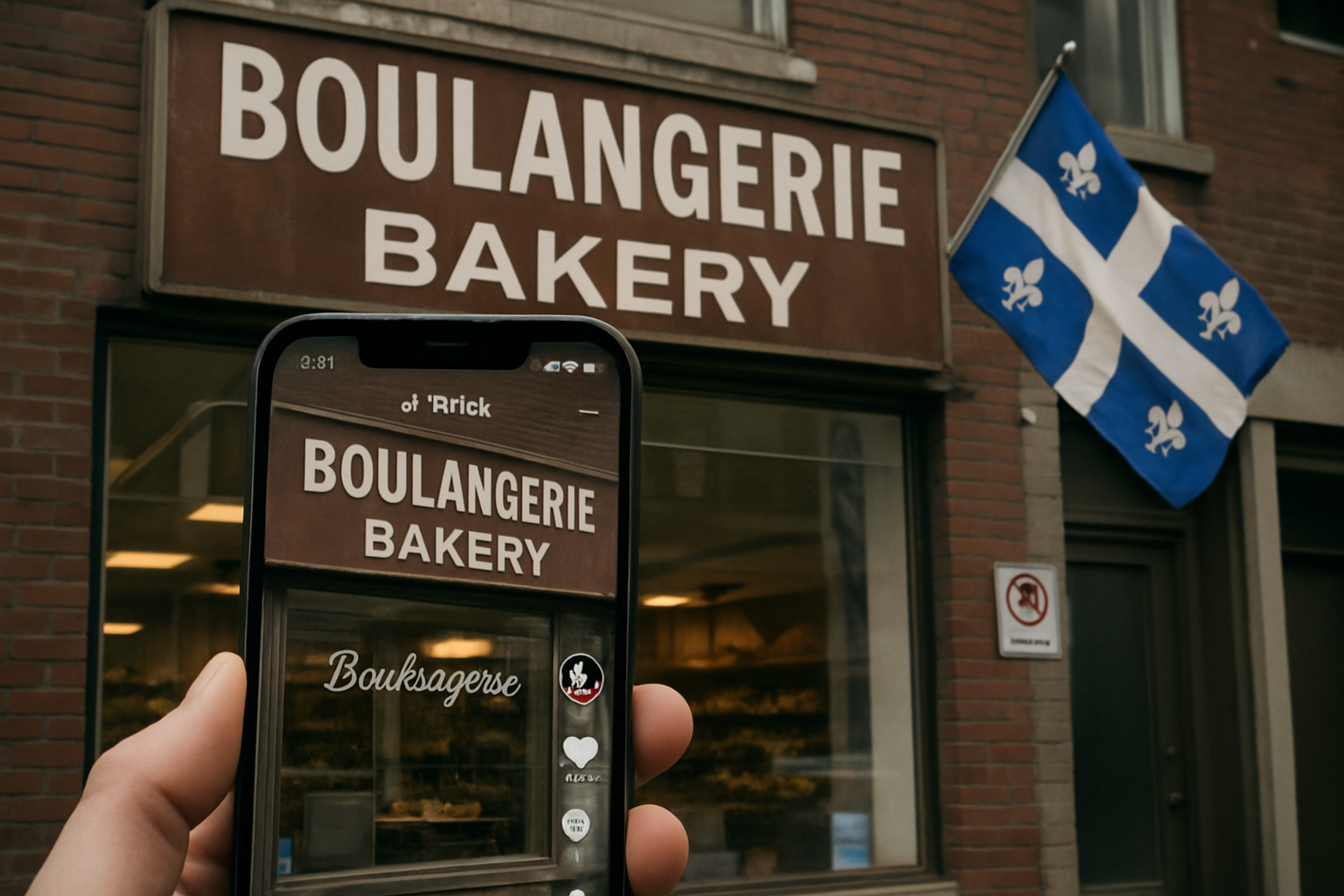
Quebec's Office québécois de la langue française (OQLF) has formally contacted a Montreal family bakery, citing concerns that most of its social media publications are not available in French on TikTok, marking another chapter in the province's ongoing language policy enforcement efforts.
Lahmajoune Villeray, a family-owned bakery located in Montreal's Villeray neighborhood, received a letter this week from Quebec's language watchdog stating that the majority of its social media content on TikTok fails to comply with the province's French-language requirements. The incident underscores the expanding reach of Quebec's language regulations into digital spaces and social media platforms.
Digital Age Language Enforcement
The targeting of social media content represents a significant evolution in Quebec's language policy enforcement. While the OQLF has traditionally focused on physical signage, workplace communications, and commercial materials, the agency has increasingly turned its attention to digital platforms where businesses engage with customers.
The Hannan family, who operate Lahmajoune Villeray, now find themselves at the center of a debate that reflects broader tensions between Quebec's commitment to preserving French as the province's primary language and the practical realities of modern business communication in a multicultural city like Montreal.
The Broader Context of Language Policy
Quebec's Charter of the French Language, commonly known as Bill 101, has been the cornerstone of the province's language policy since 1977. The legislation established French as the sole official language of Quebec and created mechanisms to ensure its predominance in public life, commerce, and education.
In recent years, the Quebec government has strengthened these provisions through Bill 96, which expanded the powers of the OQLF and introduced new requirements for businesses operating in the province. The law has particularly focused on ensuring that French maintains its primacy in all forms of public communication, including digital platforms.
Social Media as New Frontier
The case of Lahmajoune Villeray illustrates how language policy enforcement has adapted to the digital age. Social media platforms like TikTok, Instagram, and Facebook have become crucial marketing tools for small businesses, allowing them to reach customers and build brand loyalty through engaging content.
However, the informal nature of social media communication often leads businesses to use whichever language feels most natural or reaches the widest audience. In Montreal's multilingual environment, this frequently means English content, particularly when targeting younger demographics who are active on platforms like TikTok.
Challenges for Small Businesses
Family-owned businesses like Lahmajoune Villeray face particular challenges in navigating Quebec's language requirements. Unlike large corporations with dedicated compliance departments, small businesses must balance language policy adherence with limited resources and the practical demands of customer engagement.
Creating content in multiple languages requires additional time, effort, and potentially hiring bilingual staff or translation services. For a neighborhood bakery, these requirements can represent significant operational challenges while trying to maintain an active social media presence.
Community Response and Debate
The OQLF's action against the Montreal bakery has reignited debate about the appropriate scope and application of Quebec's language laws. Supporters of strict enforcement argue that consistent application across all platforms and businesses is necessary to protect French language vitality in Quebec.
Critics, however, contend that targeting small, family-owned businesses over social media content represents regulatory overreach that could harm entrepreneurship and community businesses. They argue that the focus should remain on major commercial activities rather than extending to every aspect of digital communication.
Legal and Regulatory Framework
Under Quebec's current language legislation, businesses are required to ensure that French is given clear predominance in their commercial communications. This includes advertising, signage, and increasingly, social media content that serves commercial purposes.
The OQLF has the authority to investigate complaints and can require businesses to modify their practices to comply with French-language requirements. While enforcement typically begins with warnings and requests for voluntary compliance, the agency has the power to impose fines for persistent non-compliance.
Implications for Digital Commerce
The case highlights broader questions about how traditional language policies apply in the digital economy. As businesses increasingly rely on social media for marketing and customer engagement, the intersection between language requirements and digital communication becomes more complex.
The global nature of social media platforms also raises questions about jurisdiction and practical enforcement. Content posted on TikTok or other international platforms may reach audiences far beyond Quebec, complicating the application of provincial language requirements.
Moving Forward
As Quebec continues to navigate the challenges of language preservation in an increasingly digital world, cases like that of Lahmajoune Villeray will likely shape how language policy evolves. The province must balance its commitment to French language protection with the practical realities of modern business communication and community engagement.
For small businesses operating in Quebec, the incident serves as a reminder of the importance of understanding and complying with language requirements across all forms of communication, including emerging digital platforms. It also highlights the ongoing need for clear guidance and support to help businesses navigate these requirements effectively.
The resolution of this case and similar future incidents will likely influence how Quebec's language policies are interpreted and applied in the digital age, setting precedents for the balance between language protection and business flexibility in Canada's only French-majority province.