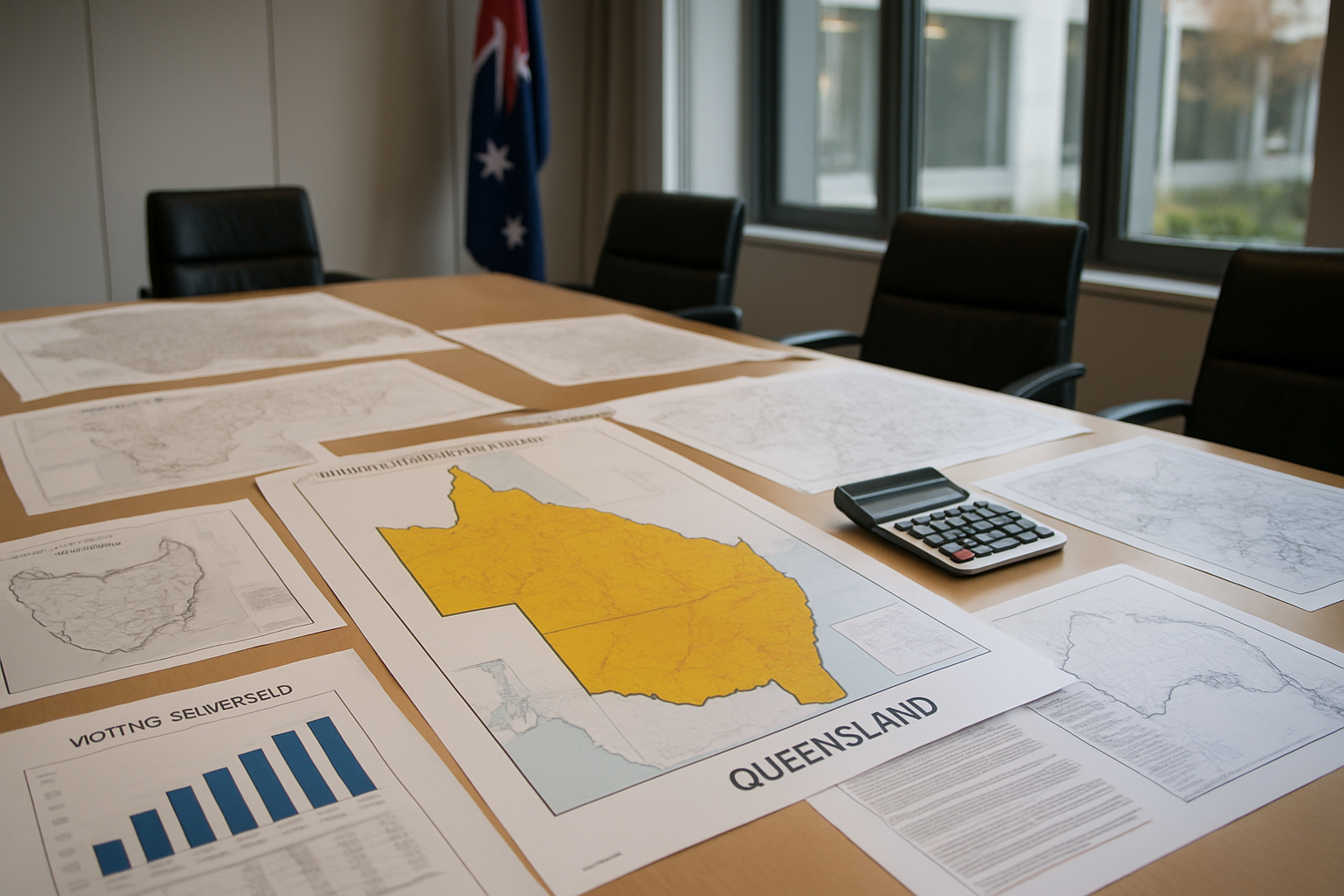
Queensland's electoral boundary redistribution appears positioned to deliver significant gains to the Liberal National Party, with analysis suggesting up to three seats could flip from Labor to the LNP in upcoming elections, coinciding with Matt Canavan's elevation to National Party leadership following David Littleproud's surprise resignation.
The boundary shifts, currently under review by the Queensland Electoral Commission, are likely to transform the electoral landscape in several key constituencies. Labor's Meaghan Scanlon faces particular vulnerability, with boundary changes appearing set to turn her traditionally safe seat blue according to early analysis.
Strategic Implications of Boundary Changes
The redistribution comes at a critical juncture for Australian politics, following significant leadership transitions across the Coalition. Federal Liberal leader Angus Taylor's February victory over Sussan Ley established conservative factional dominance, while the National Party's selection of Matt Canavan represents a further shift toward hardline conservative positioning.
Electoral boundary redistributions occur regularly to account for population changes and ensure equal representation, but their timing and impact can prove decisive in determining political control. The Queensland changes reflect demographic shifts that appear to favor conservative-leaning electorates, particularly in regional areas where the LNP traditionally performs strongly.
"These boundary shifts could fundamentally alter the balance of power in Queensland politics."
— Electoral Analysis Expert
Canavan's Leadership Ascension
Matt Canavan's rise to National Party leadership following David Littleproud's unexpected resignation on Tuesday has sent ripples through federal politics. The 45-minute leadership meeting that elevated Canavan signals the party's embrace of more assertive conservative policies, including his controversial call for a "hyper Australia" with "more babies."
Canavan, a prominent Queensland senator and former Resources Minister, brings a combative style that contrasts sharply with Littleproud's more conciliatory approach. His leadership occurs during a period of heightened international tensions, including the ongoing Middle East crisis that has dominated parliamentary question time sessions.
Historical Context of Australian Political Realignment
These developments unfold against the backdrop of significant political transitions across Australian governance. The Liberal Party's February leadership upheaval saw Angus Taylor defeat Sussan Ley in a decisive 34-17 vote, marking the end of Australia's first female Liberal leader and signaling conservative factional triumph.
The pattern extends beyond federal politics, with NSW Premier Chris Minns announcing his intention to retire before 2032, providing his party with unprecedented succession planning time. These coordinated transitions suggest Australian politics is entering a period of generational change with potentially lasting implications for policy direction.
Electoral Mathematics and Strategic Positioning
The potential three-seat gain for the LNP through boundary changes would significantly strengthen the party's position ahead of the next state election. Queensland's electoral dynamics have historically proven crucial to federal Coalition success, with the state serving as a bellwether for national political trends.
Labor faces the challenge of defending traditionally safe seats while managing internal succession planning and policy repositioning. The boundary changes compound these difficulties by potentially requiring resource reallocation to defend previously secure constituencies.
National Party Direction Under Canavan
Canavan's leadership philosophy centers on economic nationalism and demographic growth, reflected in his "hyper Australia" vision emphasizing population expansion and resource development. This approach aligns with broader conservative movement trends but may create tensions with moderate Coalition partners and urban voters concerned about sustainability.
His elevation comes amid questions about Coalition unity following previous splits over hate speech legislation and foreign policy approaches. The National Party's rural base provides Canavan with a distinct constituency, but his influence on broader Coalition positioning remains to be tested.
International Dimensions
The political realignment occurs during Australia's largest Middle East evacuation since the Arab Spring, with over 115,000 nationals requiring assistance. Canavan's leadership during this crisis period will test his capacity to balance domestic political positioning with international responsibilities.
The Iranian women's football team asylum crisis, resolved through humanitarian visas issued by Home Affairs Minister Tony Burke, demonstrates Australia's commitment to international humanitarian principles despite domestic political pressures. These decisions require Coalition opposition figures to balance criticism with support for humanitarian values.
Democratic Resilience and Institutional Adaptation
Australia's political system demonstrates remarkable adaptability through these transitions, maintaining democratic norms while accommodating significant leadership changes. The parliamentary censure of One Nation leader Pauline Hanson over anti-Muslim comments reflects cross-party commitment to respectful discourse standards.
The electoral boundary redistribution process, conducted independently of political influence, exemplifies institutional integrity even when outcomes favor particular parties. This separation of electoral administration from political control remains a cornerstone of Australian democratic governance.
Future Implications
The convergence of electoral boundary changes favoring the LNP and Canavan's ascension to National Party leadership suggests Australian politics is entering a more assertively conservative phase. This shift occurs amid global democratic challenges and rising great power competition requiring careful navigation.
Success for conservative forces depends on maintaining Coalition unity while appealing to moderate voters concerned about economic management and social cohesion. The boundary changes provide tactical advantages, but long-term success requires policy effectiveness addressing contemporary Australian challenges including housing affordability, climate adaptation, and economic diversification.
As Australia approaches critical electoral contests, the combination of favorable boundary changes and assertive conservative leadership positions the Coalition for potential gains. However, political success ultimately depends on voter assessment of policy effectiveness and leadership competence rather than electoral mathematics alone.