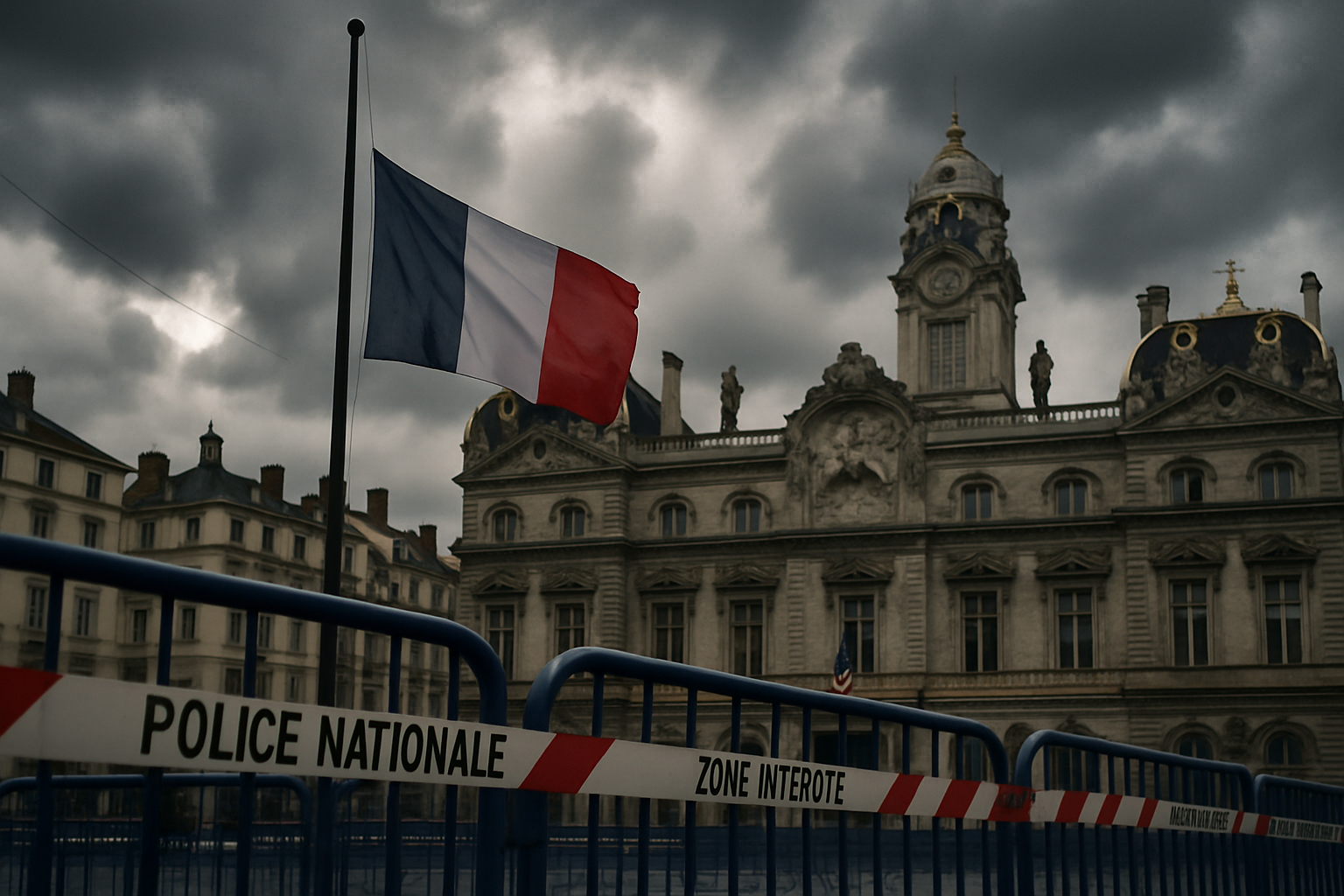
French authorities arrested nine people Tuesday over the fatal beating of 23-year-old far-right activist Quentin Deranque on the sidelines of a protest in Lyon last week, escalating political tensions ahead of key elections and implicating a parliamentary assistant linked to Jean-Luc Mélenchon's La France Insoumise party.
The arrests mark a dramatic escalation in one of France's most politically charged criminal investigations in years, with the case now reaching directly into the National Assembly through the detention of Jacques-Elie Favrot, a parliamentary assistant to La France Insoumise (LFI) deputy Raphaël Arnault.
The Incident and Investigation
Deranque, a 23-year-old nationalist activist associated with the far-right movement, died from injuries sustained during violent clashes that erupted on the margins of a conference featuring pro-Palestinian MEP Rima Hassan in Lyon. The young activist was hospitalized Thursday following the beating and succumbed to his injuries, prompting authorities to open an investigation for aggravated manslaughter.
According to French media reports, the confrontation involved members of far-right and far-left groups, with the violence occurring during heightened political tensions in France's third-largest city. The incident has become a flashpoint for broader concerns about political violence and the deterioration of democratic discourse in France.
Parliamentary Connection Deepens Crisis
The investigation took on national significance with the arrest of Jacques-Elie Favrot, identified as a parliamentary assistant to LFI deputy Raphaël Arnault. At this stage, authorities have not indicated the degree of involvement of each arrested individual in the alleged crimes, but the connection to La France Insoumise has sent shockwaves through French politics.
The case has particular resonance given that some of those detained were reportedly former members of "La Jeune Garde," an antifascist group, according to Portuguese media sources. This detail underscores the ideological dimensions of the confrontation that led to Deranque's death.
"We ask for forgiveness because I don't like prisoners."
— Jorge Rodríguez, Opposition Figure (unrelated context from Venezuela)
Political Firestorm Erupts
The arrests have unleashed a fierce political battle, with government ministers and far-right leaders launching unprecedented attacks on La France Insoumise even before the investigation's conclusions are known. Justice Minister Gérald Darmanin and other government officials have blamed the "ultra-left" for the killing, dramatically escalating the political rhetoric.
Far-right leader Jordan Bardella declared that Jean-Luc Mélenchon's "moral and political responsibility" is "immense" in the wake of the incident. The accusations have put Mélenchon and his party on the defensive, with the LFI leader facing calls to "clean house" from Interior Minister Sébastien Lecornu.
In response, Mélenchon condemned all violence "that carries the risk of inflicting death" during a conference Tuesday evening. However, his party has found itself increasingly isolated, with even the Socialist Party distancing itself from LFI in the aftermath of the arrests.
Government Response and New Restrictions
The crisis has prompted immediate policy responses from the government. Authorities announced new restrictions on political meetings in universities following Deranque's death, reflecting broader concerns about campus-based political confrontations.
The government's aggressive response has been characterized by some observers as premature, given that the investigation remains ongoing and the specific roles of those arrested have not been established. Critics argue that the political exploitation of the tragedy undermines the principle of presumption of innocence.
Historical Context of Political Violence
The death of Quentin Deranque occurs against a backdrop of increasing political polarization in France, where confrontations between extremist groups have become more frequent and violent. The incident recalls previous episodes of political violence that have marked French politics in recent years.
European observers have noted similar patterns of political radicalization across the continent, with violent confrontations between far-right and far-left groups becoming a growing concern for democratic institutions. The Lyon incident represents a particularly tragic escalation of these tensions.
Impact on French Politics
The political ramifications extend far beyond the immediate criminal investigation. La France Insoumise, already under pressure from various scandals and internal disputes, now faces its most serious crisis since its formation. The party's isolation in the National Assembly has become more pronounced, with former allies in the left-wing coalition maintaining their distance.
For the far-right, Deranque's death has become a rallying cry and a tool for attacking their political opponents. The National Rally and other far-right movements have seized on the incident to portray themselves as victims of left-wing violence, despite their own history of inflammatory rhetoric and connections to violent incidents.
Legal Proceedings and Investigations
The investigation continues under the direction of Lyon prosecutors, who face the delicate task of establishing the facts while navigating intense political pressure. The charges of aggravated manslaughter carry serious penalties, and the high-profile nature of the case ensures intense scrutiny of every aspect of the legal proceedings.
Authorities have emphasized that the investigation will proceed according to legal standards regardless of political considerations. However, the involvement of a parliamentary assistant and the broader political implications ensure that the case will remain in the national spotlight throughout the judicial process.
European and International Reactions
The incident has attracted attention across Europe, with media in Germany, Italy, Sweden, and other countries reporting on the political crisis in France. The death has been characterized as symptomatic of broader challenges facing European democracies as they grapple with rising political extremism and violence.
International observers have expressed concern about the deterioration of political discourse in France and the potential for further violence as the country approaches important electoral periods. The incident serves as a warning about the dangers of political radicalization in democratic societies.
Looking Forward
As investigations continue and the political fallout intensifies, France faces fundamental questions about how to address political violence while maintaining democratic norms. The death of Quentin Deranque has become a test case for the country's ability to manage political extremism through legal rather than violent means.
The case also highlights the urgent need for political leaders across the spectrum to tone down inflammatory rhetoric and work toward de-escalation of political tensions. The transformation of a young man's death into a political weapon demonstrates the dangerous spiral of extremism that threatens democratic institutions.
The coming weeks will be crucial in determining whether French political leaders can rise above partisan considerations to address the underlying causes of political violence, or whether the tragedy will become another step in the escalation of political confrontation that has marked recent years in France and across Europe.