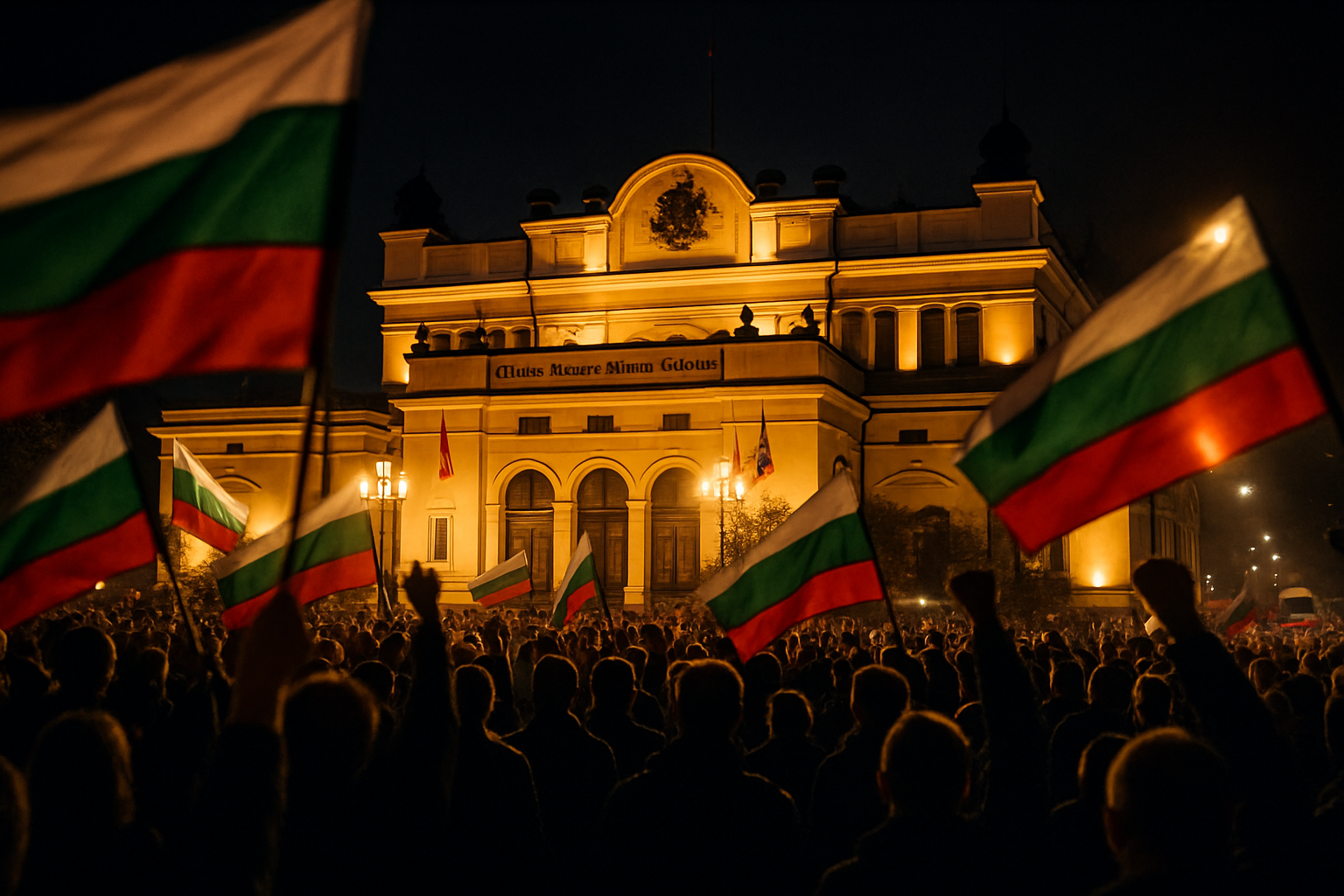
Former Bulgarian President Rumen Radev delivered a stunning electoral victory on April 19, 2026, as his Progressive Bulgaria coalition secured an absolute majority with 45% of the vote, ending five years of unprecedented political instability that has plagued the EU's poorest member state.
According to final results from polling agency "Mira" with 100% parallel counting, Progressive Bulgaria captured 135 mandates in the 240-seat parliament - the first absolute majority achieved by any party since 1997. The historic victory marks a dramatic political realignment in a country that has endured eight parliamentary elections since the 2021 crisis began.
"Progressive Bulgaria wins decisively, this is a victory of hope over distrust, a victory of freedom over fear," Radev declared in a victory speech to supporters gathered outside his campaign headquarters. "This is also a victory of morality. People have rejected the self-interest of those who have ruled this country for years."
Collapse of Traditional Power Structures
The election delivered devastating blows to Bulgaria's traditional political establishment. The formerly dominant GERB-SDS party, led by long-time strongman Boyko Borissov, collapsed to just 12.3% of the vote and 36 mandates - its worst performance since formation. The party that once controlled Bulgarian politics for over a decade found itself relegated to third place behind the PP-DB coalition.
The Democratic Party for Solidarity (DPS) managed to secure 21 mandates with 6.8% of the vote, while the nationalist "Vazrazhdane" (Revival) party scraped into parliament with 4.2% and 12 mandates. Several established parties, including the Bulgarian Socialist Party (BSP), the "Velichie" (Greatness) party, and the party "There is Such a People" (ITN), failed to cross the electoral threshold.
"Progressive Bulgaria can do whatever it wants in parliament," commented sociologist Parvan Simeonov, founder of the "Mira" polling agency, speaking to Bulgarian National Television.
— Parvan Simeonov, Polling Expert
End of Governmental Paralysis
The decisive victory brings to a close the most turbulent period in modern Bulgarian democratic history. Since the mass anti-corruption protests of 2020-2021 that toppled Borissov's government, Bulgaria has been trapped in a cycle of snap elections, caretaker administrations, and failed coalition negotiations that prevented any government from completing a full term.
The political crisis severely hampered Bulgaria's ability to absorb EU funds, implement necessary reforms, and address pressing domestic challenges including brain drain, demographic decline, and economic stagnation. The country's recent entry into the eurozone on January 1, 2026, had raised hopes for increased stability, but the governmental paralysis continued to undermine investor confidence and policy implementation.
Radev's Progressive Bulgaria campaigned on a platform promising to "end the oligarchy" that has dominated Bulgarian politics and business for decades. The party's comprehensive reform agenda includes stronger anti-corruption measures, judicial independence, media freedom restoration, and a renewed focus on European integration.
International Concerns and Opportunities
While Radev's victory ends Bulgaria's political instability, it raises new questions about the country's future direction within the European Union. During his presidency from 2017 to early 2026, Radev maintained notably pro-Russian positions, opposing military aid to Ukraine and criticizing EU sanctions against Moscow - positions that earned him comparisons to Hungary's Viktor Orbán.
European leaders have expressed cautious optimism about the potential for renewed stability while monitoring Radev's commitment to EU values and policies. As president, Radev consistently advocated for renewed dialogue with Russia and questioned the effectiveness of economic sanctions, creating tension with Brussels during the Ukraine conflict.
The timing of the victory is particularly significant given recent developments in Hungarian politics, where Viktor Orbán suffered a historic defeat to opposition forces led by Péter Magyar's Tisza Party just one week earlier. The Hungarian election had been seen as a test case for European democracy under foreign interference pressure.
Democratic Mandate and Reform Agenda
With an absolute parliamentary majority, Progressive Bulgaria now possesses unprecedented authority to implement its reform agenda without the need for coalition negotiations that have stymied previous governments. Radev has announced that all current caretaker ministers must submit their resignations, signaling a complete governmental restructuring.
The party's 240-page electoral platform promises comprehensive reforms across multiple sectors. Key priorities include implementing wealth taxes on Bulgaria's oligarchs, strengthening judicial independence through constitutional reforms, dismantling media monopolies, and accelerating European integration processes that stalled during the political crisis.
On the European front, Progressive Bulgaria has committed to working more constructively with EU institutions while maintaining Bulgaria's national interests. This represents a potential shift from the confrontational approach that characterized some aspects of Radev's presidency, particularly regarding sanctions policy and military assistance to Ukraine.
Economic and Social Challenges Ahead
Despite the electoral triumph, Radev's government faces enormous challenges in addressing Bulgaria's structural problems. The country remains the EU's poorest member state, with persistent issues including widespread emigration, aging demographics, inadequate infrastructure, and limited innovation capacity.
The brain drain phenomenon has been particularly severe, with hundreds of thousands of educated Bulgarians leaving for Western Europe over the past decade. Progressive Bulgaria has pledged to create economic opportunities that will encourage young Bulgarians to remain in the country and potentially entice emigrants to return.
Corruption remains a pervasive challenge despite years of EU pressure and conditionality mechanisms. The party's promise to dismantle oligarchic networks will be tested against entrenched interests that have survived multiple changes of government. Success in this area will be crucial for maintaining public support and unlocking additional EU funding streams.
Regional and Global Implications
Bulgaria's political stabilization comes at a critical moment for European cohesion. With Hungary's recent election removing Viktor Orbán from power and ending Budapest's obstruction of EU decision-making, the potential for restored Bulgarian-EU cooperation could significantly strengthen European unity during ongoing global challenges.
The victory also demonstrates the continued appeal of pro-European political platforms in post-communist EU member states, despite growing eurosceptic sentiment in some quarters. Progressive Bulgaria's success in combining European integration advocacy with promises to address domestic inequality and corruption may provide a template for other centrist parties across the region.
Radev's relationship with Russia will be closely watched by both Brussels and Washington. His past positions supporting dialogue with Moscow and questioning sanctions effectiveness will face immediate testing as the new government develops its foreign policy approach amid ongoing international tensions.
Looking Forward: Stability and Reform
As Bulgaria prepares for its first stable government since 2021, expectations are high for meaningful progress on long-delayed reforms and policy initiatives. The combination of electoral legitimacy, parliamentary majority, and clear mandate provides Radev with tools that his predecessors lacked during the crisis period.
The international community will be monitoring Bulgaria's progress closely, particularly regarding rule of law improvements that could unlock frozen EU funds worth billions of euros. Success in implementing reforms while maintaining European integration momentum could position Bulgaria as a regional success story rather than a source of concern for EU institutional stability.
For ordinary Bulgarians, the election result represents hope for an end to the governmental dysfunction that has hindered progress on healthcare, education, infrastructure, and economic development. Whether Progressive Bulgaria can translate its decisive electoral victory into effective governance will determine both the party's political future and Bulgaria's trajectory within the European Union.
The historic nature of this victory - the first absolute majority in nearly three decades - provides Radev with both unprecedented opportunity and enormous responsibility to deliver on promises that captured the imagination of Bulgarian voters seeking change after years of political turmoil and institutional paralysis.